Asset Panda Review: Is This Asset Tracking Platform Right for Your Needs In 2026?
Asset Panda has built a strong reputation in the asset management space, serving organizations that need to track everything from IT equipment to heavy machinery. With its configurable platform and mobile-first approach, it has become a popular solution for businesses looking to move beyond spreadsheets and manual tracking methods.
To write this Asset Panda review, we've analyzed the platform extensively. We believe it's the ideal choice if:
- You need configurable fields and reports for asset tracking
- Your primary focus is asset tracking rather than fleet management
- You value strong customer support during implementation
- Manual scanning workflows meet your operational needs
- Offline mode is a must
- You're comfortable with custom-quoted pricing
However, Asset Panda might not be the best choice if:
- You need online collaboration across teams, suppliers, and customers
- You prefer a modern interface with minimal training requirements
- You want AI-powered interaction for faster workflows
- You have complex, multi-step workflows requiring digitalization
- You have advanced inventory/stock management or rental/leasing management needs
- You have advanced financial management needs
In this case, you should consider Bulbthings: an all-in-one asset, fleet, and inventory management platform built on a low-code architecture with AI-powered capabilities. Where Asset Panda offers configurable asset tracking, Bulbthings extends into comprehensive operations management with extensive collaboration features, a full AI agent for natural language interaction, and workflow automation designed for mid-sized companies with operational complexity.
Because of that, I've included a detailed look at Bulbthings later in this Asset Panda review, as the alternative for organizations needing broader operational coverage.
If you're ready to explore an all-in-one approach to asset and fleet management, you can start your free trial with Bulbthings here.
Table of contents:
- What is Asset Panda?
- Asset Panda Pros & Cons
- Asset Panda Review: How it Works & Key Features
- Where Asset Panda Falls Short
- Top Asset Panda Alternative: Bulbthings
- Asset Panda or Bulbthings: Comparison Summary
- Final Verdict
What is Asset Panda?
Asset Panda is a cloud-based asset tracking and management platform founded in 2012 by Rex Kurzius.
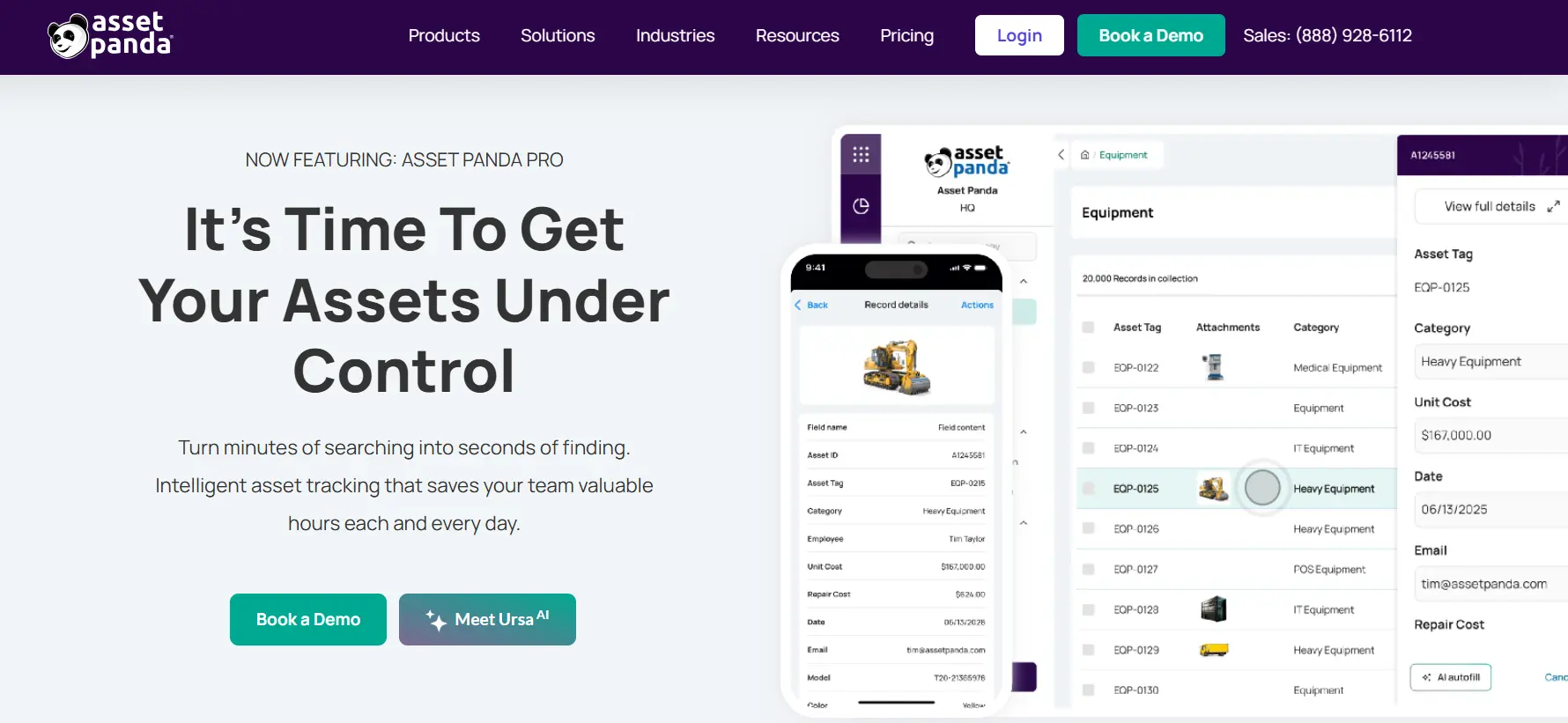
The company emerged from Kurzius's own frustrations as an entrepreneur. During his other ventures, he struggled to keep track of acquired equipment using traditional methods. This firsthand experience with cumbersome, expensive, and inflexible asset management solutions drove the creation of Asset Panda.
Today, Asset Panda serves organizations looking to track and manage the entire lifecycle of their physical and digital assets, from acquisition to disposal. The platform is accessible via web interface and mobile apps for iOS and Android, with a built-in barcode and QR code scanner that eliminates the need for dedicated scanning hardware.
The platform's core strength lies in its configurability. Users can create custom fields, workflows, and reports without coding, allowing businesses to tailor the software to their specific needs. Key functionalities include asset tracking, maintenance management, check-in/checkout processes, and depreciation calculation.
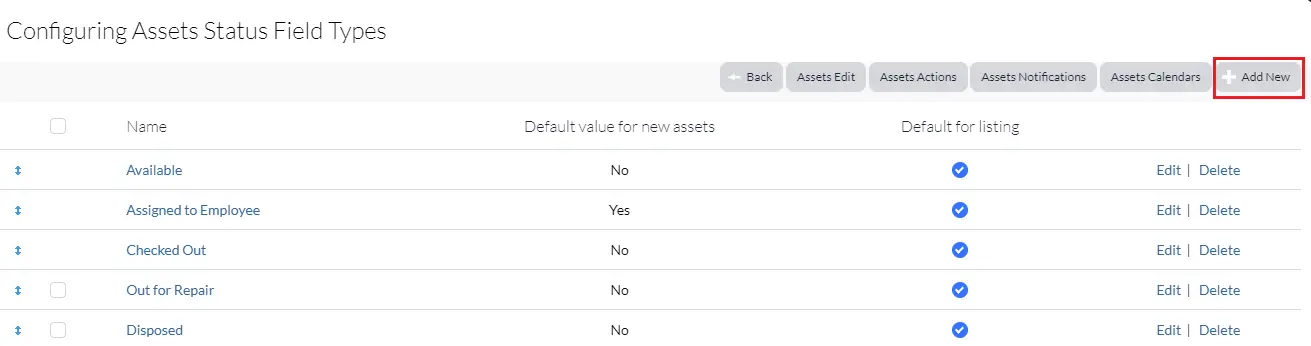
Source: Asset Panda
Asset Panda has achieved SOC 2 Type II compliance and is headquartered in Frisco, Texas with an estimated 90-100 employees. The platform targets a wide range of industries, including IT departments, education, healthcare, construction, and government, with ideal customers being organizations that need flexible asset tracking and have resources to invest in configuration and setup.
Asset Panda Pros & Cons
| Pros | Cons |
|---|---|
| ✅ Configurable fields, workflows, and reports | ❌ Pricing requires custom quotes with no public transparency |
| ✅ Robust mobile app with built-in barcode and QR scanner | ❌ Steep learning curve due to traditional interface design |
| ✅ Strong customer support with dedicated onboarding | ❌ GPS location is stamp-based, not real-time tracking |
| ✅ Comprehensive maintenance management features | ❌ Limited dedicated fleet management capabilities |
| ✅ SOC 2 Type II compliant | ❌ No IoT, RFID, or telematics integration |
| ✅ Full offline mode available in Pro platform | ❌ No AI capabilities for natural language interaction |
Asset Panda Review: How it Works & Key Features
Asset Tracking: Configurable fields and mobile scanning create a flexible tracking foundation.
Asset Panda's tracking system centers on creating detailed digital records for each asset.
Users can generate and print custom barcodes or QR codes directly from the platform, then scan these tags using the mobile app to instantly access asset information.
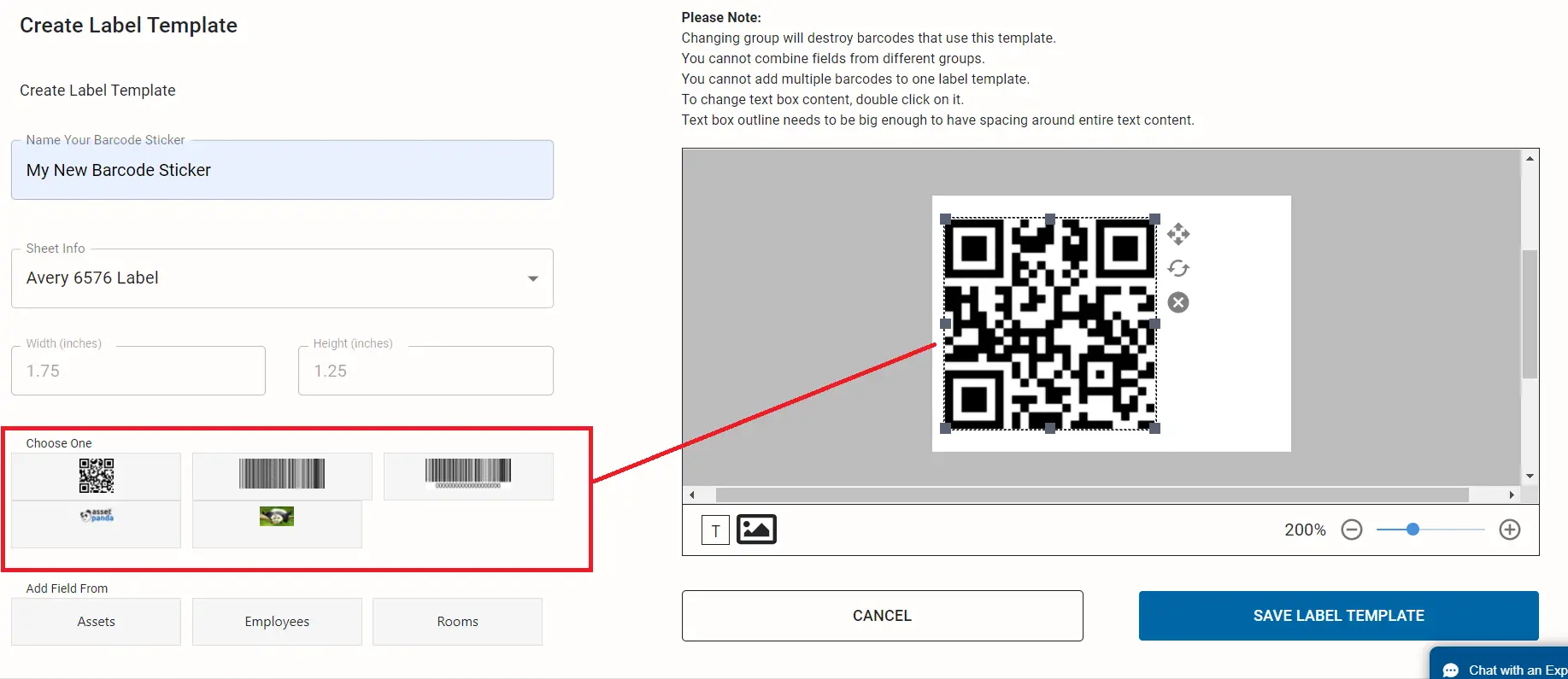
Source: Asset Panda
The platform supports extensive custom fields, including text, date, numeric, dropdown lists, and formula fields for custom calculations. This allows organizations to track whatever information matters to them, whether that's purchase dates, warranty expirations, insurance policy details, or custom operational data.
GPS location tracking works through a "stamp" or "pindrop" system: when a user performs an action on an asset via the mobile app, the GPS coordinates of the device are captured and logged in the asset's history. This creates a historical trail of the asset's locations but not a continuous real-time tracking.
The platform maintains a complete action history for every asset, recording who performed each action, what it was, and when and where it occurred. This audit trail proves valuable for compliance checks and understanding asset lifecycle patterns.
Mobile Apps: Full desktop functionality extends to smartphones and tablets.
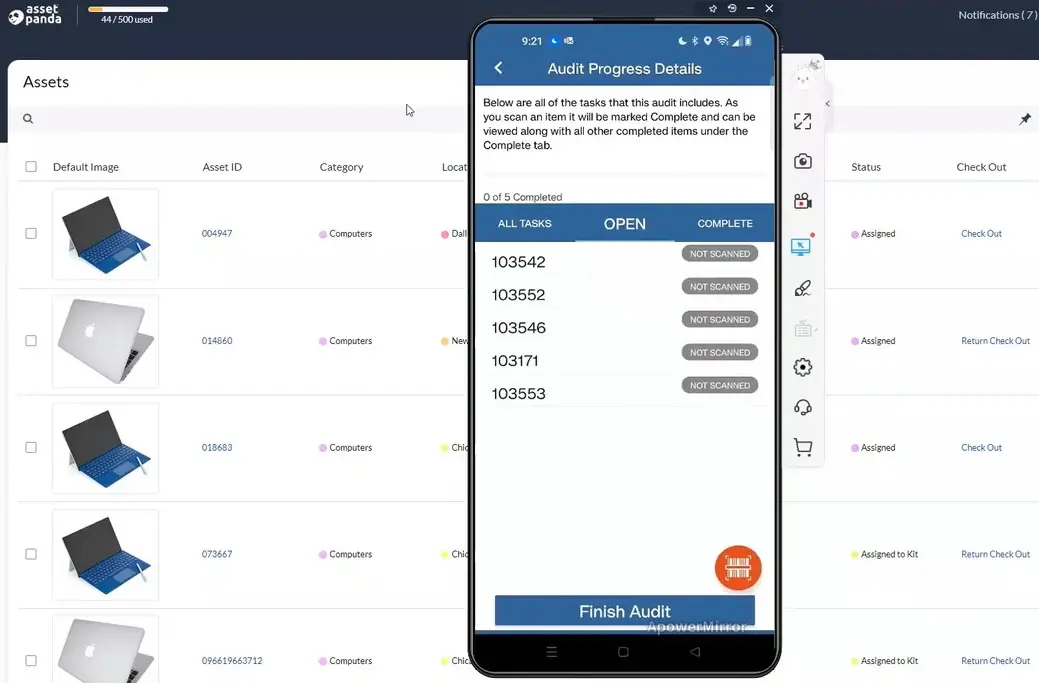
Asset Panda's mobile apps for iOS and Android offer nearly all the features of the desktop version.
Source: Asset Panda
The built-in barcode scanner uses the device's camera, eliminating the need for dedicated scanning hardware. Users can search for assets, update status information, and attach photos and documents directly from the field.
Role-based permissions control what data users can access and modify, ensuring team members see information relevant to their responsibilities.
With Asset Panda Pro, the mobile app includes full offline mode, allowing field teams to scan barcodes and update records without an internet connection. Changes sync automatically when connectivity is restored.
Maintenance Management: Preventive scheduling and work order automation reduce equipment downtime.
The maintenance management feature enables organizations to schedule preventive maintenance based on time intervals. Users can create work orders, assign them to technicians, and track completion status through the platform.
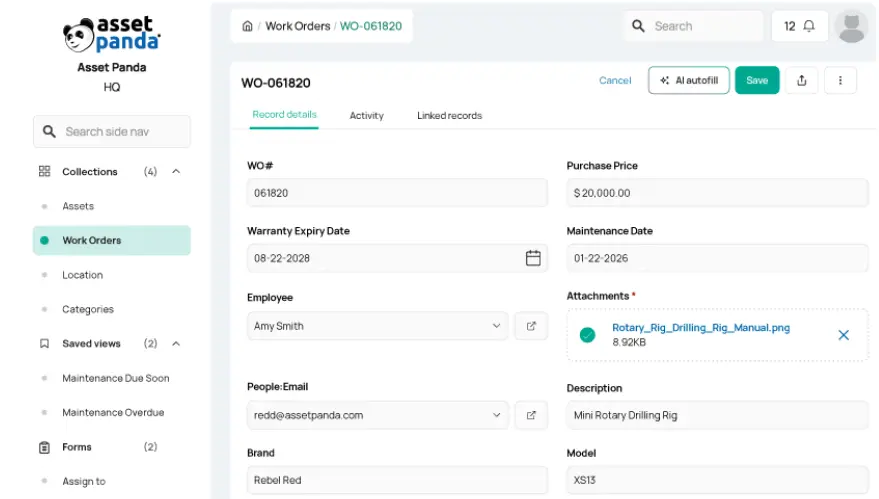
Work order management includes customizable forms to capture specific information for each task. Technicians can receive and update work orders from the mobile app, marking tasks complete in the field. The system maintains detailed repair histories for each asset, providing insights into maintenance patterns and costs.
Automated alerts can be configured for various events: approaching maintenance dates, overdue tasks, or warranty expirations. Notifications can be sent via email, Slack, or Microsoft Teams to keep relevant personnel informed.
Customizable Workflows & Reporting: Configuration options adapt to existing processes.
Asset Panda's workflow capabilities are built around "Actions" and "Automations".
Users define actions that can be performed on assets (such as check-out, inspect, or schedule maintenance), while automations use conditional logic to trigger system responses.
Triggers can include record events, form submissions, and scheduled times. When triggered, the system can send notifications, update field values, generate reports, create new records, or send data to external applications via webhooks.
The reporting suite includes group reports, action history reports, and change logs. Users can select specific data fields, apply filters, sort results, and choose output formats (PDF, CSV, Excel). Reports can be scheduled for automatic delivery to stakeholders.
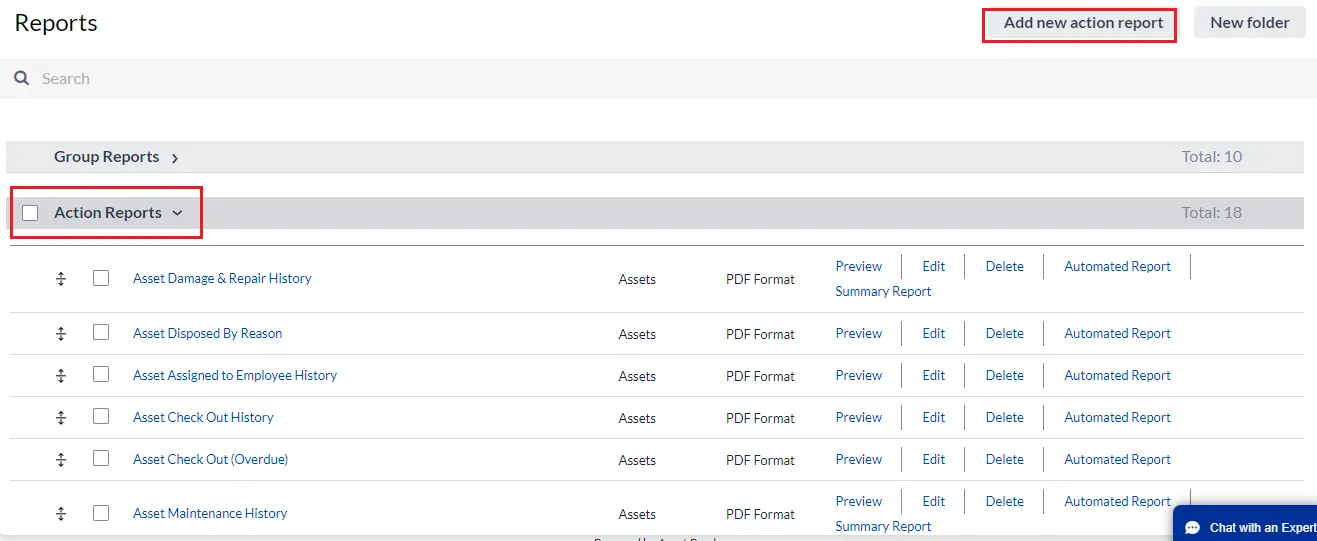
Source: Asset Panda
Customizable dashboards display key metrics through various chart types and widgets. Each user can configure their own dashboard to reflect the data most relevant to their role.
Check-in/Checkout Management: Barcode-based custody tracking with electronic signatures.
The check-in/checkout system allows organizations to track asset custody through a simple workflow. Users scan an asset's barcode, complete a customizable form (capturing assignee, due date, condition notes), and submit. The asset's status updates automatically.
Electronic signature capture enhances accountability: the person receiving an asset can sign digitally. For more formal requirements, Asset Panda integrates with DocuSign for legally binding signatures.
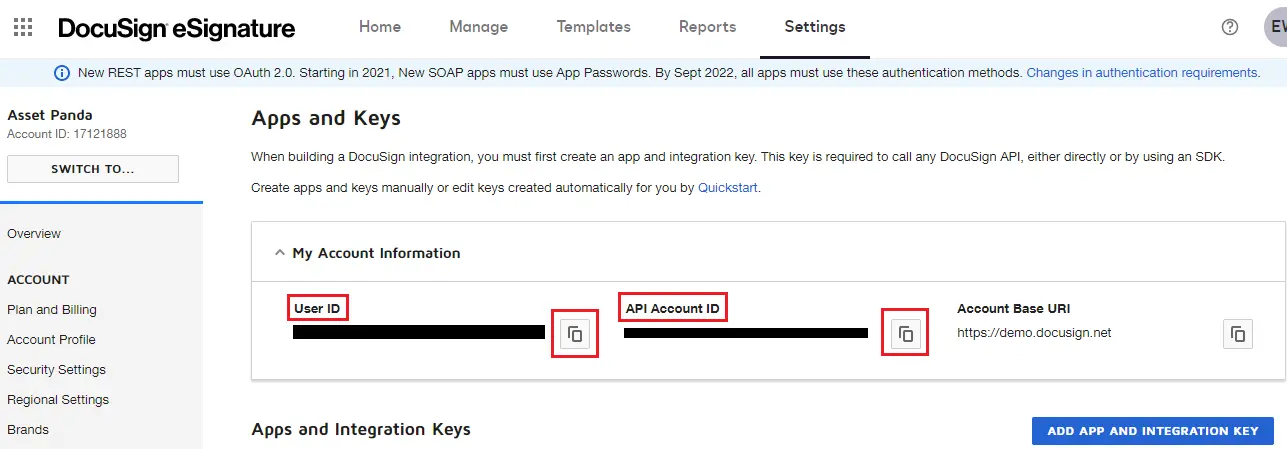
Source: Asset Panda
Due date assignment allows users to specify return dates, and the system can help identify overdue assets. The platform can filter views to show only available assets or only checked-out items, simplifying the booking process.
Where Asset Panda Falls Short
While Asset Panda serves organizations well for configurable asset tracking, several limitations become apparent for those with broader operational needs or modern workflow requirements.
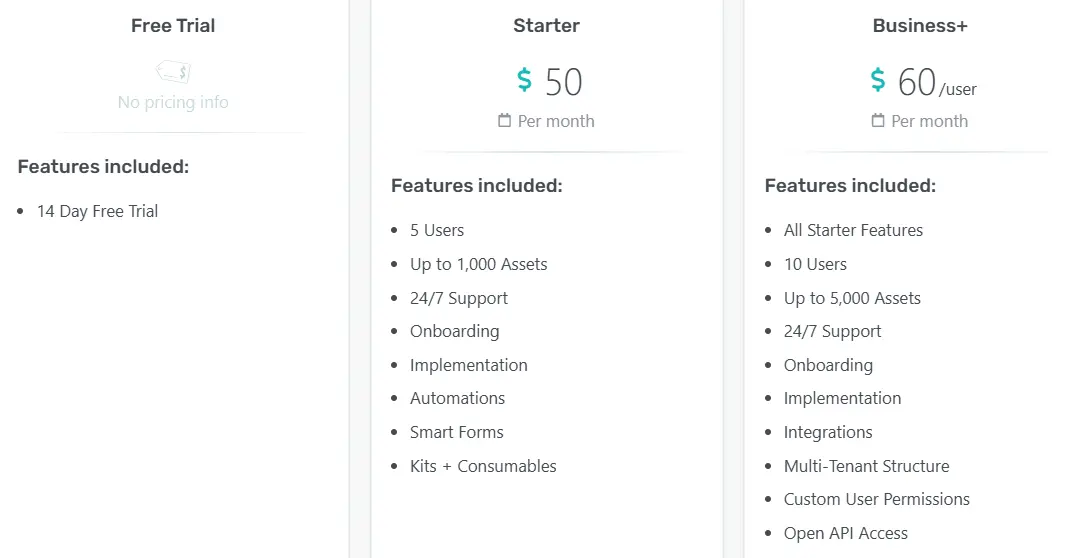
Opaque Pricing Structure: Asset Panda doesn't publish pricing on its website, requiring organizations to request custom quotes. While the platform uses asset-based pricing with unlimited users included on most plans, the lack of transparency makes budgeting and comparison shopping difficult.
Some tiers (like Business+ at $60 per user per month) do involve per-seat costs, which can add up for larger teams needing advanced features.
No Real-Time GPS Tracking: The GPS functionality captures location only when a user scans or updates an asset. There's no continuous tracking for vehicles or mobile equipment. Organizations needing to know where their assets are at any given moment, rather than where they were last scanned, will find this limitation significant.
Limited Fleet Management: While Asset Panda can track vehicles as assets and manage their maintenance schedules, it doesn't include dedicated fleet management capabilities such as mileage, fuel consumption reporting, fines and damages management. There's no telematics integration for monitoring fuel consumption or engine diagnostics, and no route optimization. Organizations with vehicle fleets requiring real-time monitoring may need separate software.
Limited financial management: no contracts management, costs import and TCO calculation, customer quotation and invoicing, e-shop website plug-in.
No AI Capabilities: Asset Panda operates through traditional menu-driven navigation and manual data entry. There's no AI agent for natural language interaction, no image recognition for asset creation, and no AI-generated insights or reports. Organizations looking for modern, AI-assisted workflows won't find them here.
No IoT or Telematics Integration: The platform relies primarily on manual scanning and user-initiated updates. Asset Panda does not support RFID at this time, and there's no integration with Bluetooth beacons or LoRa networks for automated data collection. Businesses wanting connected assets that report their own status and location must look elsewhere.
Traditional Interface Design: The platform's interface follows a conventional design with extensive menus, buttons, and navigation options. Multiple user reviews note a steep learning curve, and the extensive configuration options can be overwhelming for new users. Organizations without dedicated time for training may struggle to achieve full adoption across their teams.
Workflow Digitalization Constraints: While Asset Panda offers configuration options, organizations with complex, multi-step workflows that need digitalization may find the platform's architecture limiting. Custom workflow requirements can sometimes be difficult to accommodate or may require significant additional investment.
Top Asset Panda Alternative: Bulbthings
Bulbthings addresses several of Asset Panda's limitations by providing an all-in-one platform built on a low-code architecture that extends beyond asset tracking to include extensive collaboration features, inventory and stock management, rental and leasing workflows, fleet management, AI-powered interaction, and unlimited user access.
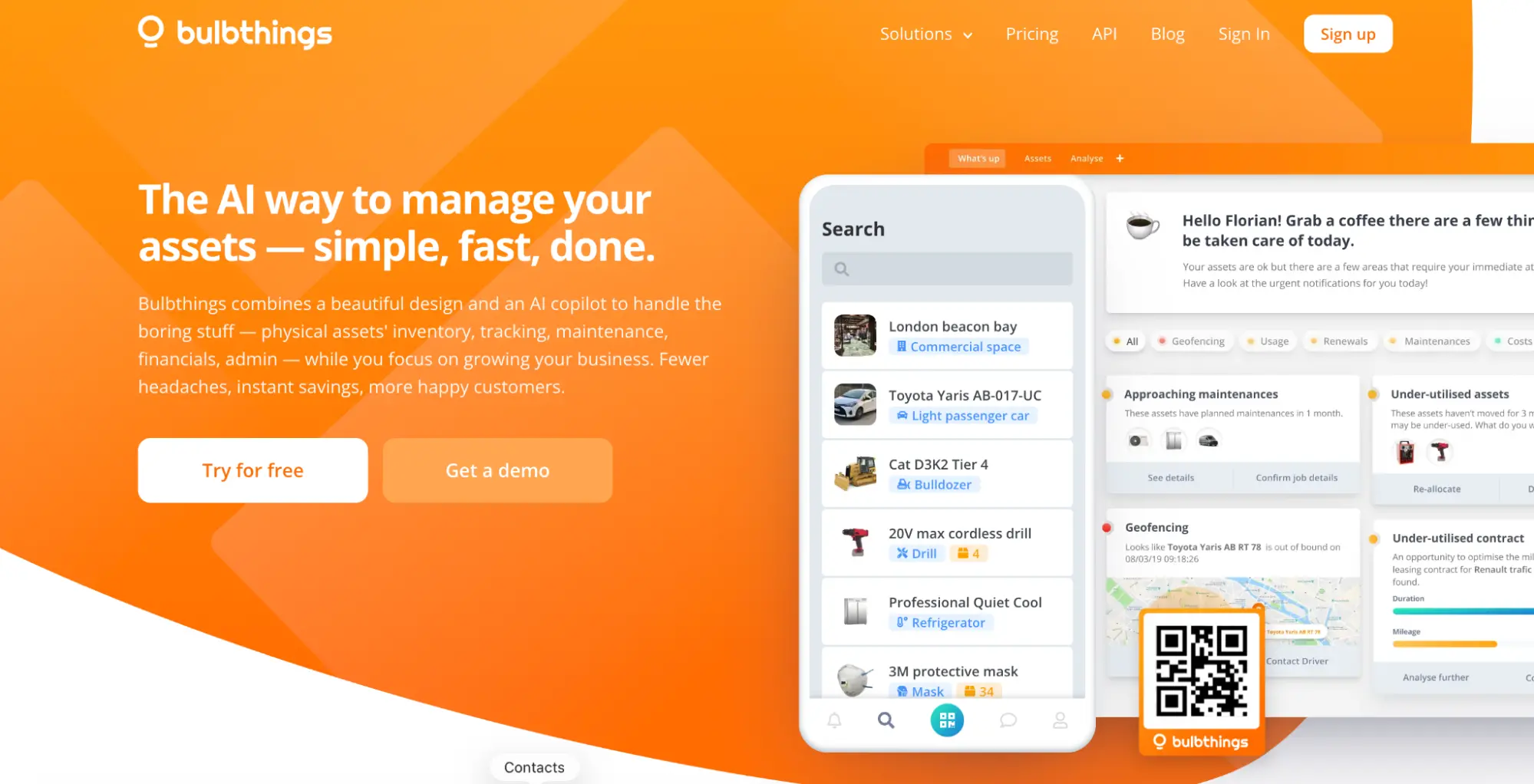
Founded in 2014 by Leslie Depond and Yann Depond, Bulbthings was purpose-built for growing businesses with an innovative approach to asset tracking—supporting operational assets in the broadest sense and unifying tracking, workflows, and asset intelligence in one platform.
Asset Inventory & Tracking: Multi-class asset management with unlimited user access.
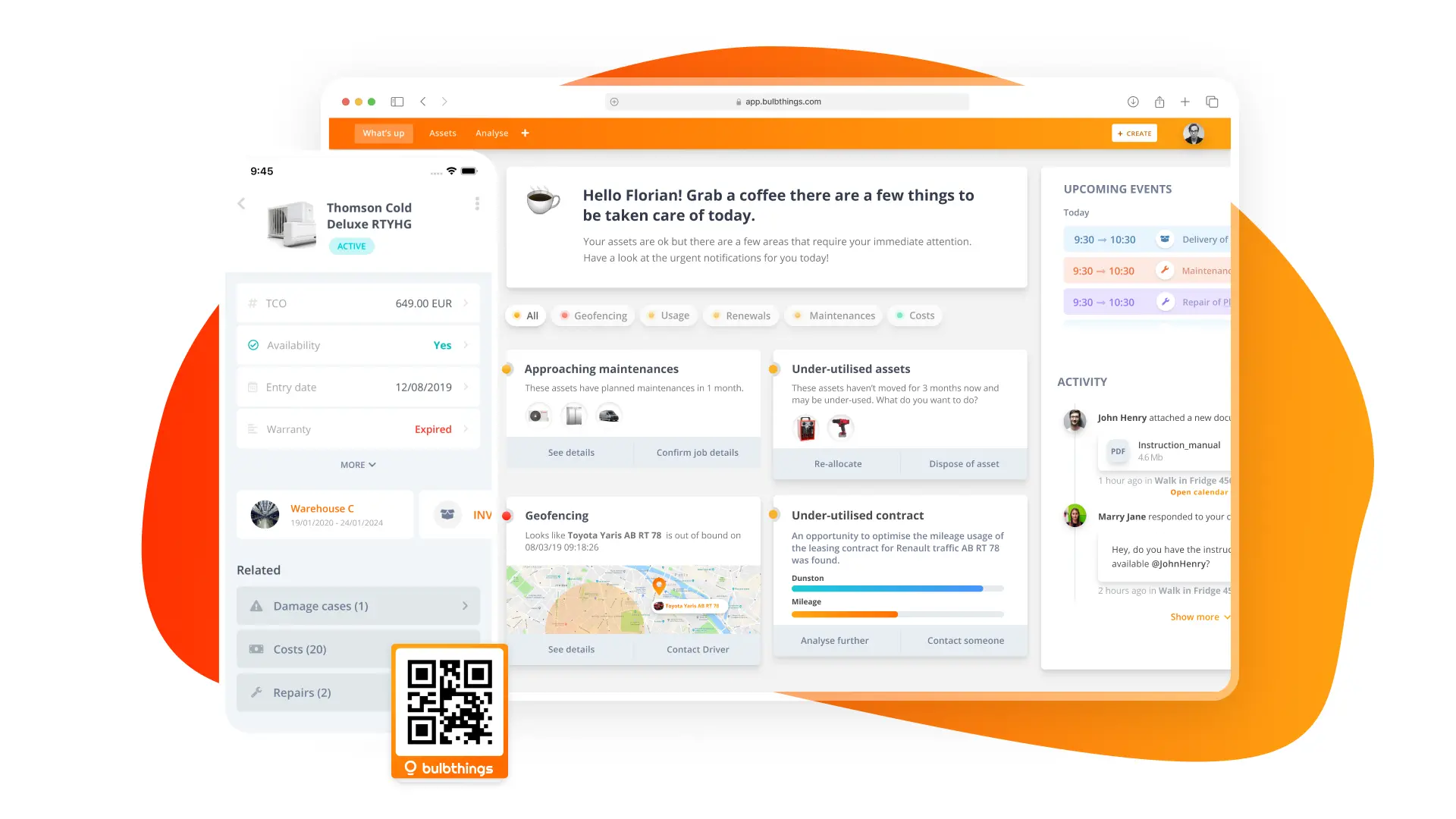
Bulbthings provides a centralized platform for tracking all asset families in one system.
Source: Bulbthings
This includes vehicles, buildings and facilities, IT equipment, production machinery, and even low-value consumables tracked by quantity.
This multi-class approach eliminates the need for separate specialized tools for different asset types. Users can create detailed asset profiles with customizable fields, attach photos and documents, and organize assets into categories and subcategories. The mobile app includes a built-in scanner for both QR codes and NFC tags, enabling quick asset identification and updates from the field.
Assets can be added through multiple methods: using Bulb AI with image recognition, importing spreadsheets through an automated import module, using QR codes to tag assets and add them to Bulbthings, or manual entry.
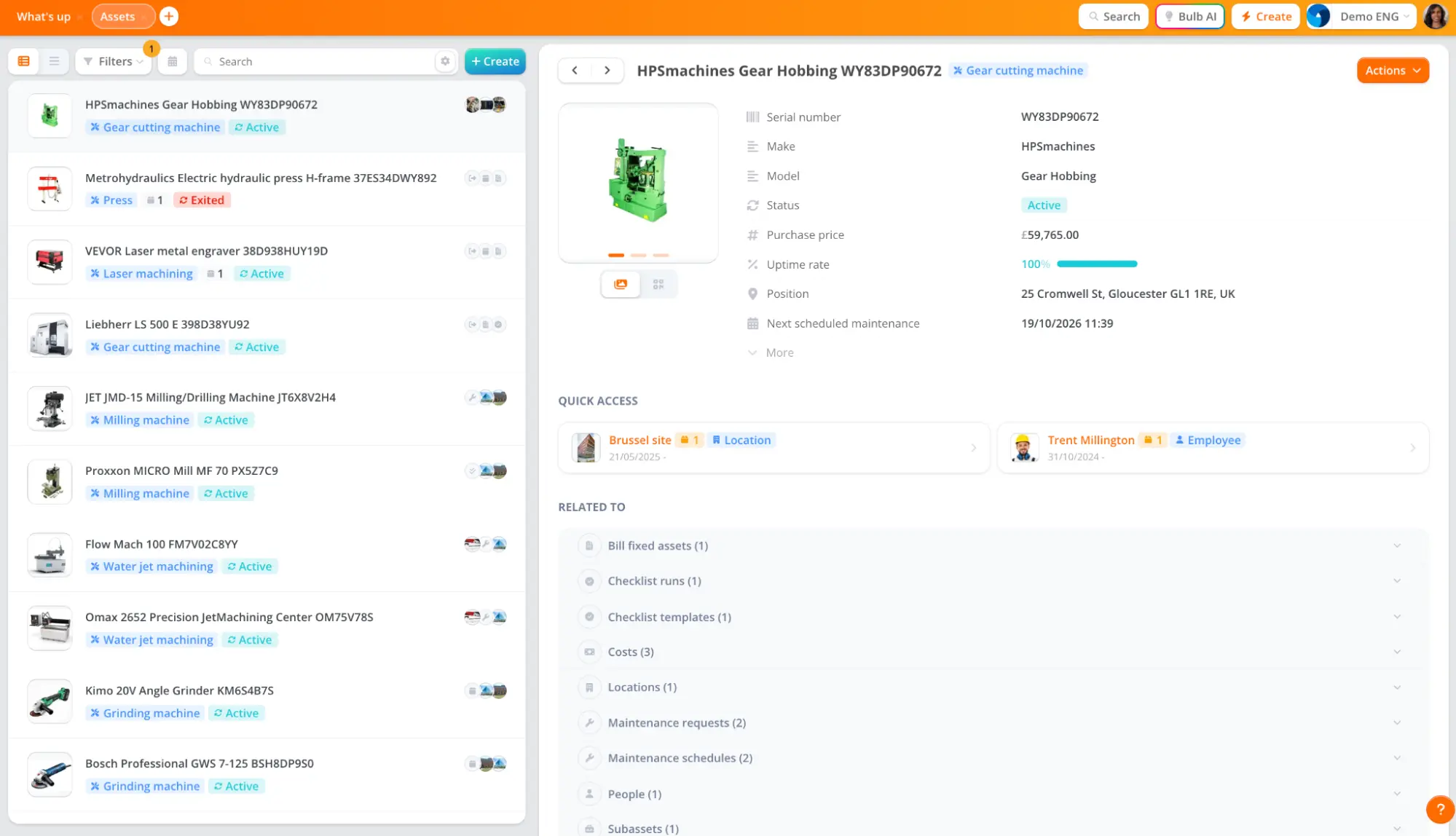
Asset profiles maintain complete histories of allocations to locations or people, bookings, maintenance activities, service or financial contracts, and conversations.
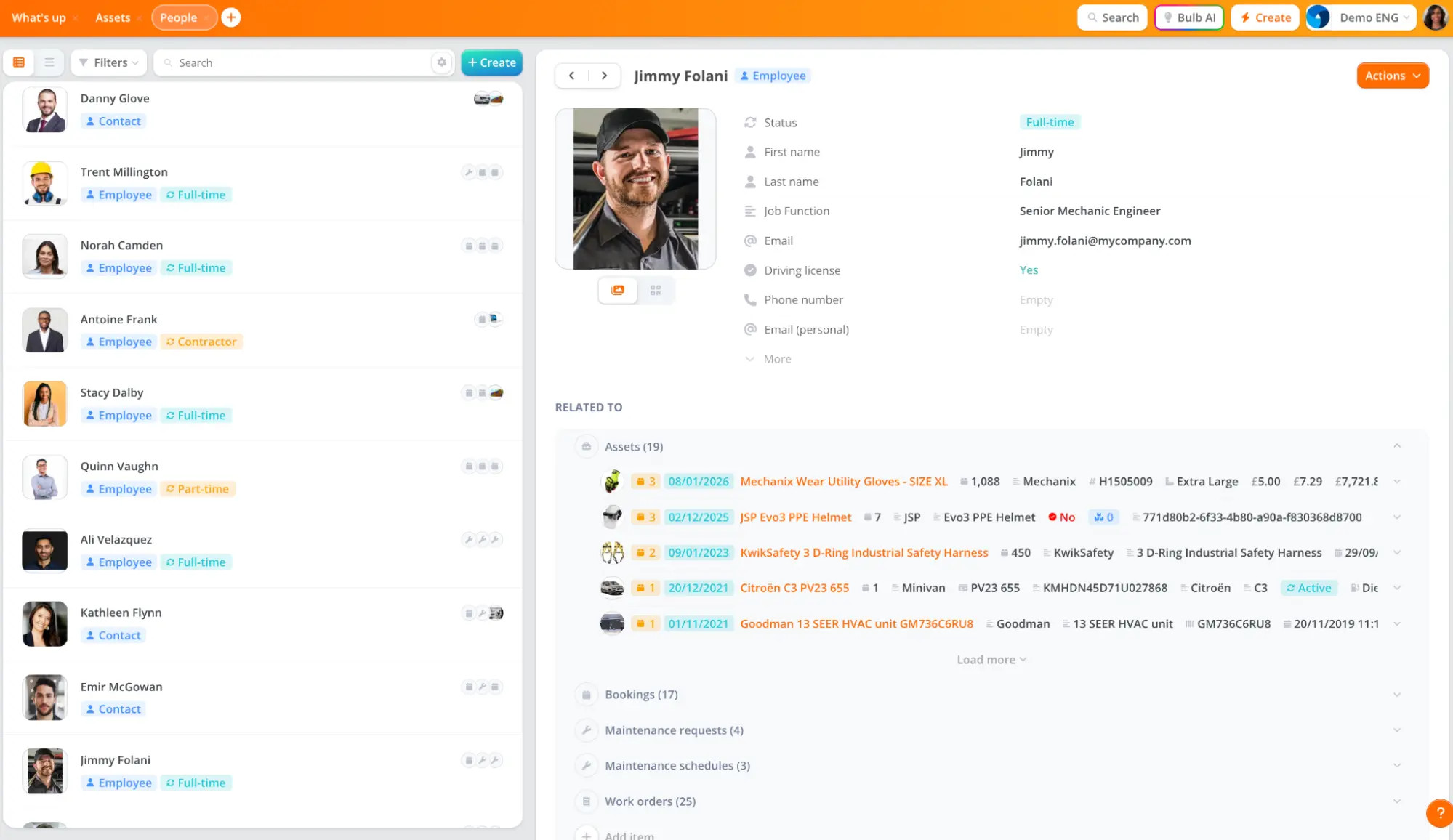
A simple tab system enables multiple ways to visualize assets: registers, stock levels, floor maps (indoor) and GPS maps (outdoor) views for location tracking, and planning views for tracking activities e.g.bookings, work orders, contracts
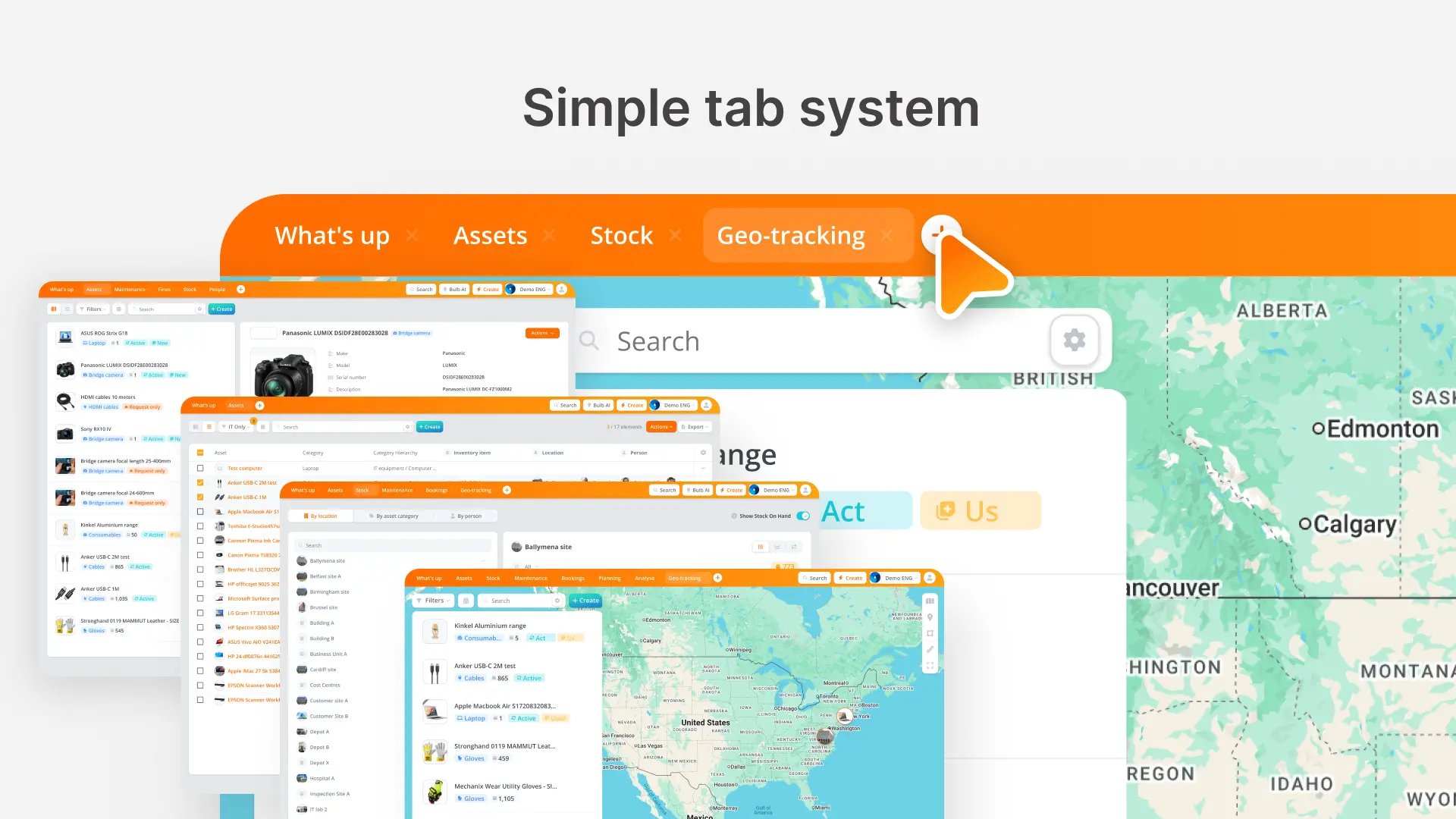
Bulbthings allows unlimited users at no extra cost, encouraging broader collaboration within organizations and with third parties such as suppliers or customers.
Modern, Intuitive Design: Reduced training requirements.
Bulbthings features a modern, sleek interface designed to be instantly understandable while remaining powerful and customizable.
This design philosophy and self-onboarding features reduce the training and onboarding burden compared to traditional asset management software with complex menu structures.
Combined with Bulb AI's natural language interaction, new users can become productive quickly. They can simply ask the AI how to accomplish tasks rather than navigating through documentation or extensive training sessions.
The Customer Success Team provides friendly assistance with onboarding and quick workspace setup. Bulbthings also provides digital project management services for bigger projects.
Mobile Collaboration for Internal Teams, Suppliers, and Customers
Bulbthings is built for extensive, cross-teams collaboration.
Granular roles and permissions
Granular, fine-tuned roles and permissions can be configured based on virtually any criteria, ensuring each user, whether internal staff, field technicians, suppliers, or customers, sees only what they need and can only perform relevant actions.
Mobile and QR codes
Any user can use the mobile app and QR codes according to their roles and permissions. For example: field technicians can lookup data, update asset information, manage work orders, and communicate with the office in real-time.
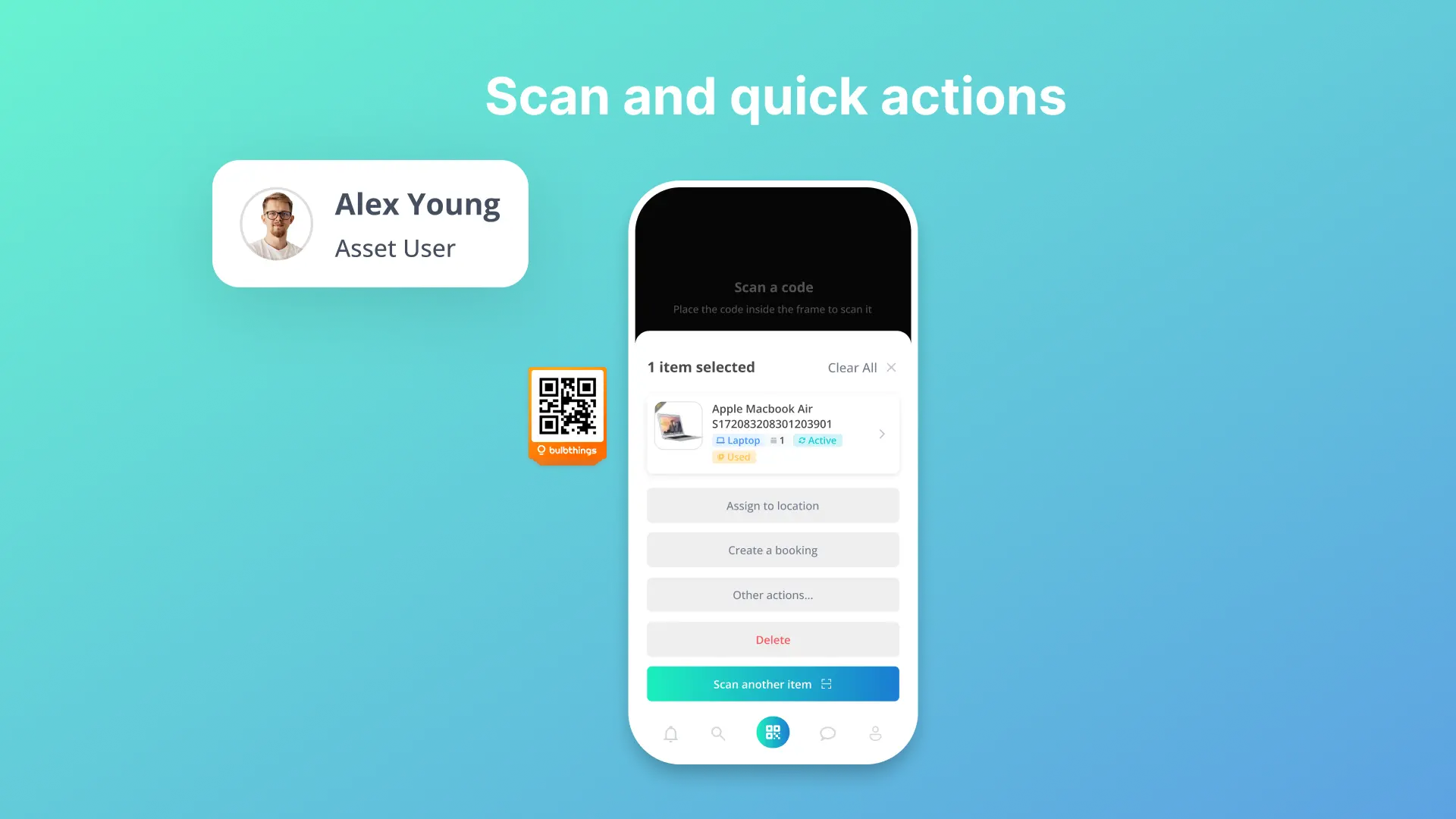
The platform treats mobile access as central to operations, recognizing that most asset management activities happen away from a desk.
Team Discussions
Bulbthings emphasizes collaboration through its mobile app, functioning as what might be called "WhatsApp for assets".
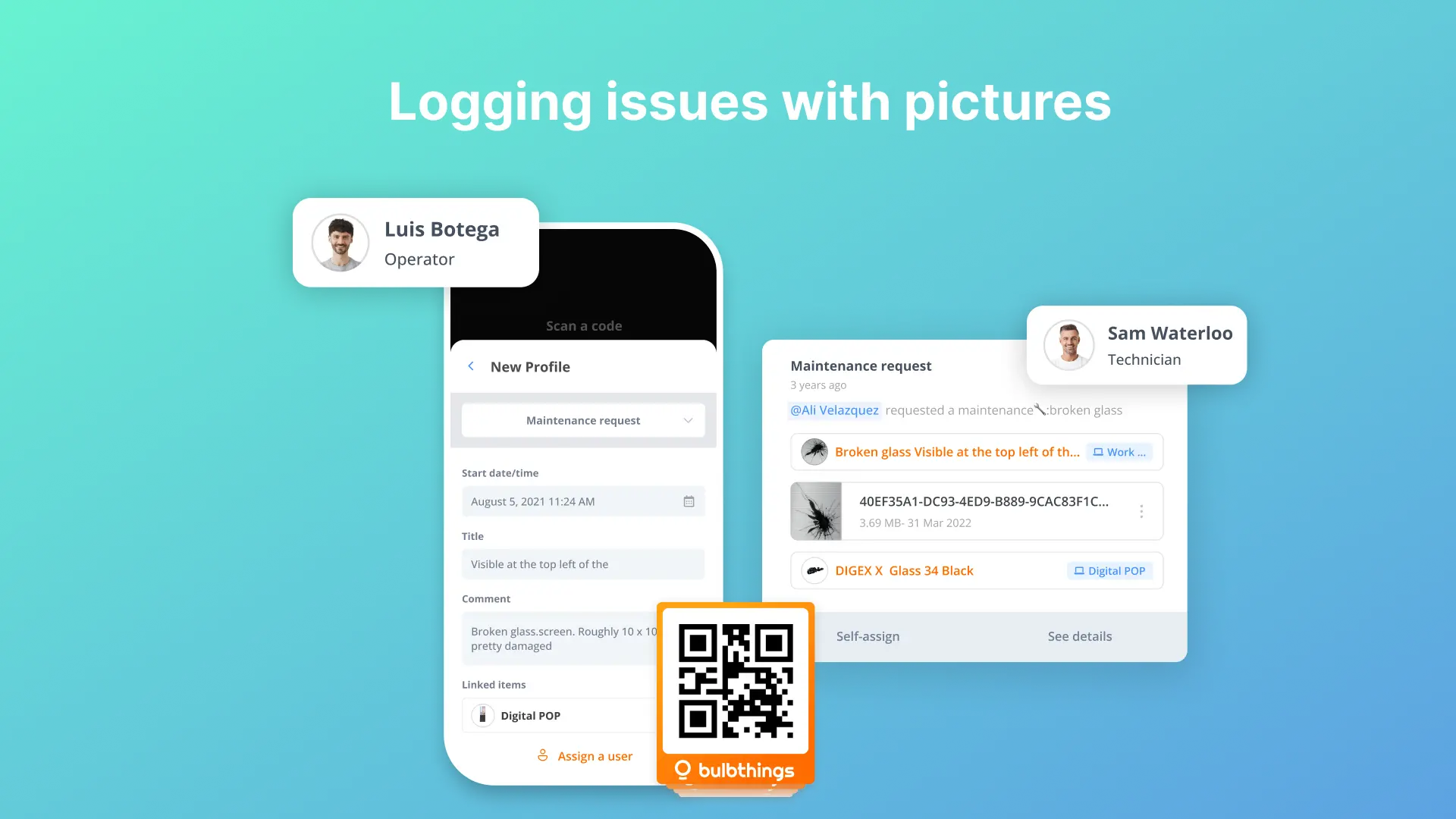
Team members can start conversations directly within an asset's profile, using @mentions to notify specific colleagues. Photos and documents can be attached to provide context for issues or questions.
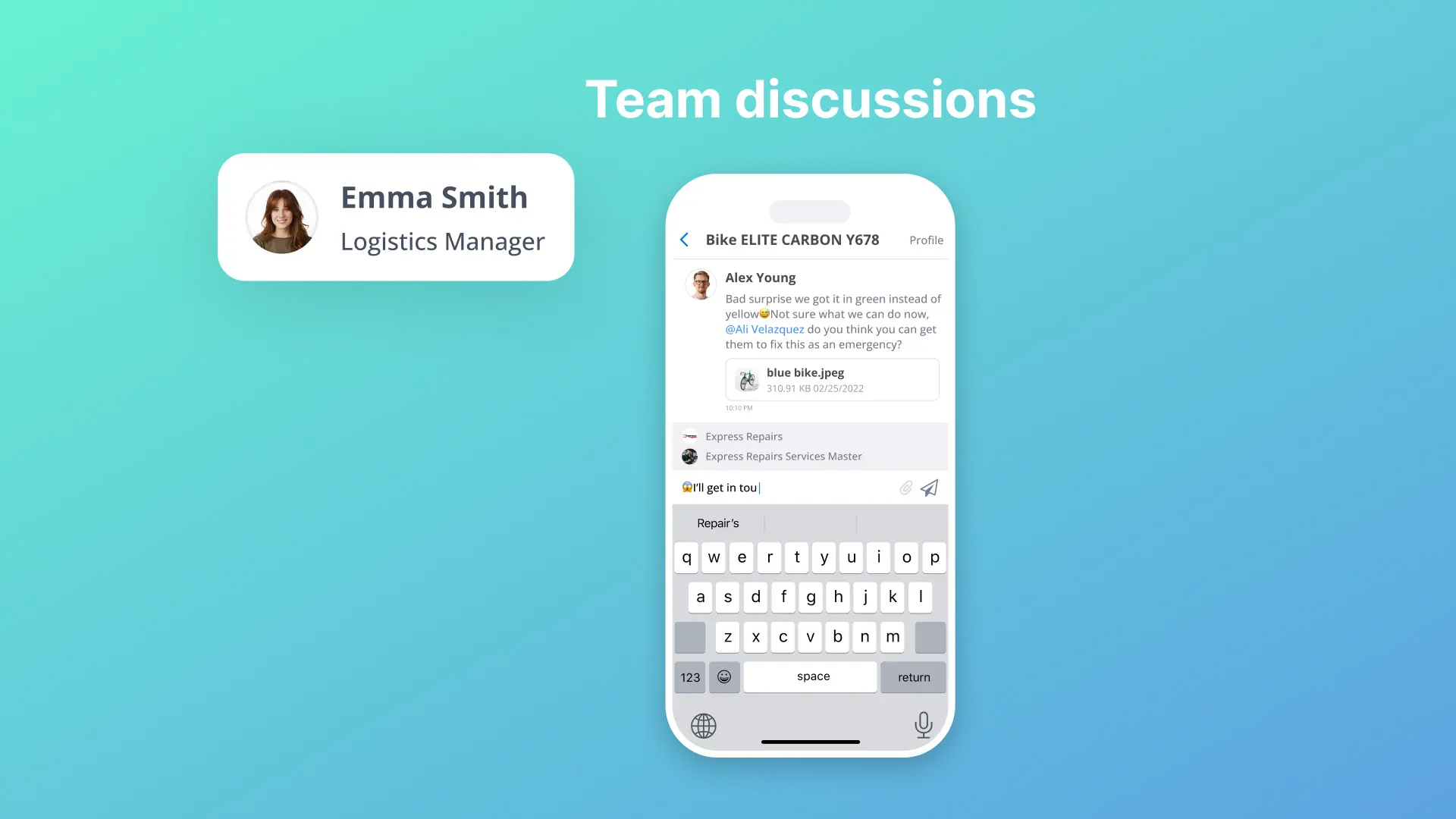
All conversations become part of the asset's permanent record, creating a searchable history of communications. This contextual approach keeps discussions organized and accessible, rather than scattered across email chains or messaging apps.
Public data/users
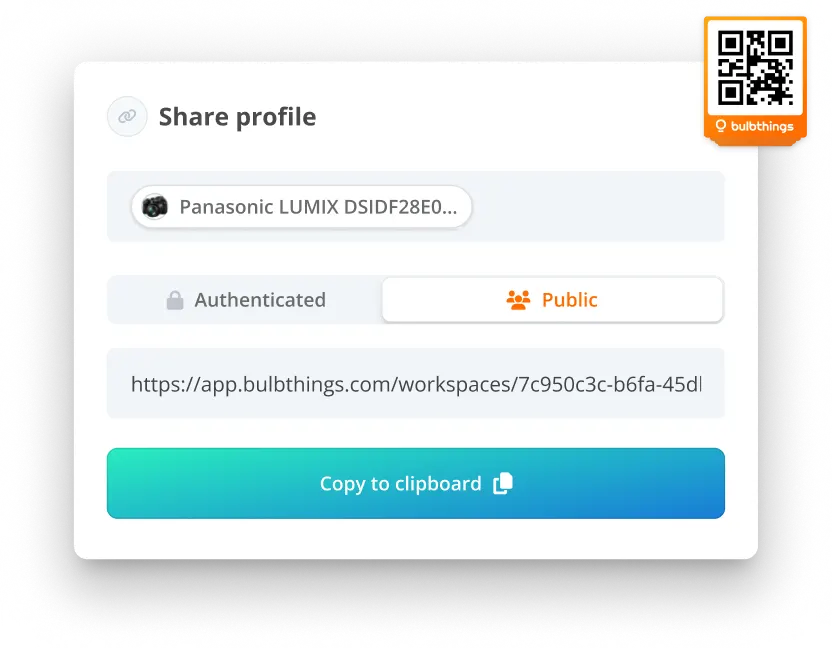
Allows sharing of public information via link or QR code. Some examples:
- Allow office users to scan public QR codes to log an issue or maintenance request using their smartphone's camera (without needing to download the mobile app).
- Send email notifications to suppliers with a link to relevant work orders or contracts. They can take appropriate action which in turn will update information and status of these documents.
Collaboration across teams
- Workspace management: allows several workspaces for different teams
- Collaborative workflows across internal teams but also suppliers and customers. People are notified or can take actions according to their roles and permissions.
- Cross-country collaboration: support multi-language, currency and metrics
AI-Powered Asset Management: Natural language interaction through Bulb AI.
Bulbthings features Bulb AI, a full AI agent that functions as a copilot for asset management.
Unlike limited AI features that only handle specific functions like predictive analytics, Bulb AI allows users to interact with the entire platform through natural language.
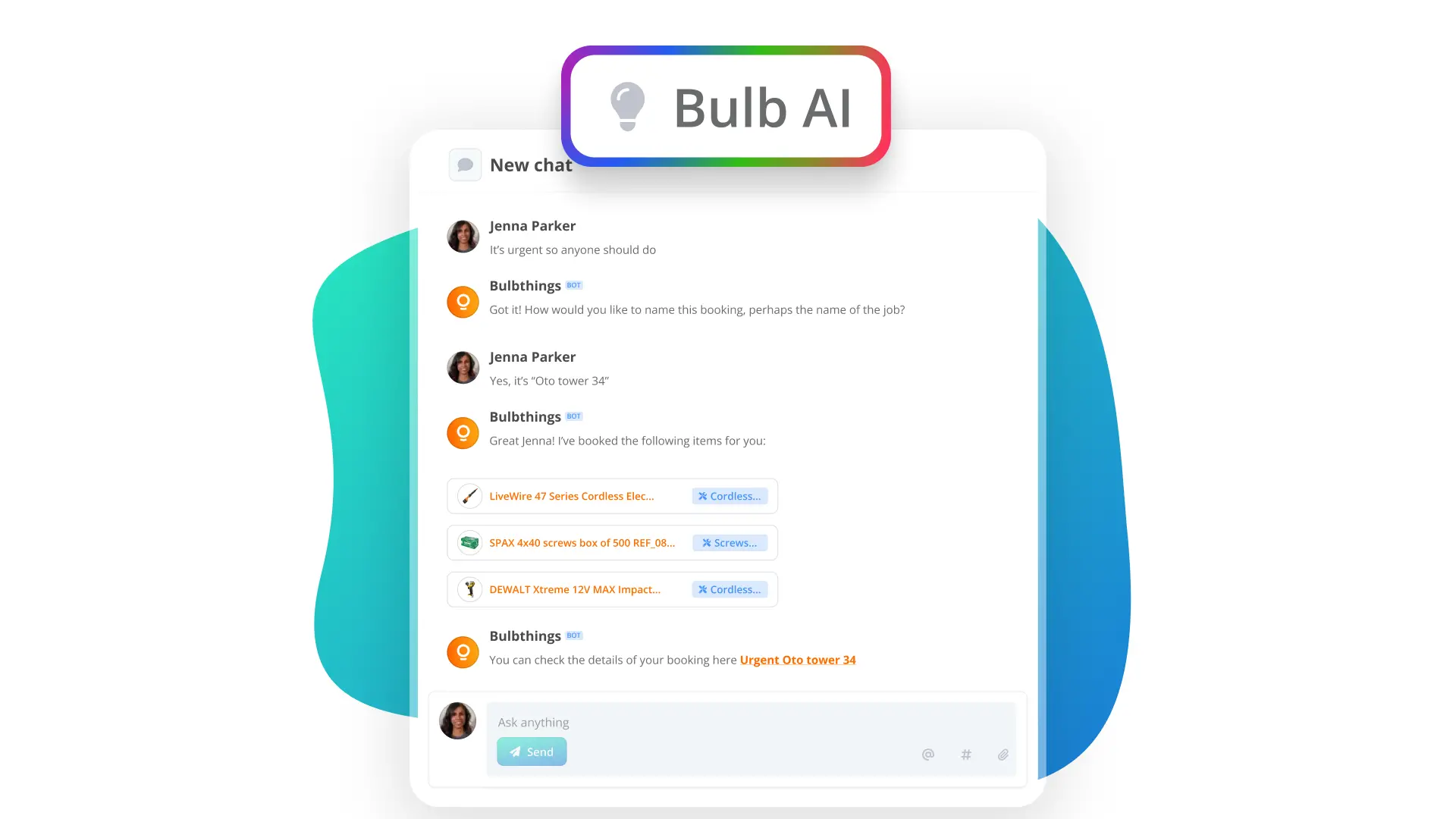
Users can ask Bulb AI to create assets, make bookings, assign equipment, log maintenance, create maintenance schedules, generate instant reports, and query the system, all through conversational commands. This eliminates the need to navigate menus or remember where specific functions are located.
The AI includes image recognition capabilities: users can take a picture of an asset via the mobile app and ask Bulb AI to create it in the system. This accelerates asset onboarding and reduces manual data entry.
Bulb AI delivers three key advantages: instant onboarding without learning complex navigation, productivity gains through faster execution (especially for bulk actions on large asset volumes), and actionable insights generated automatically from your data.
Advanced Stock Management
In addition to equipment tracking, Bulbthings offers extensive inventory and stock management features for items managed in bulk and consumables.
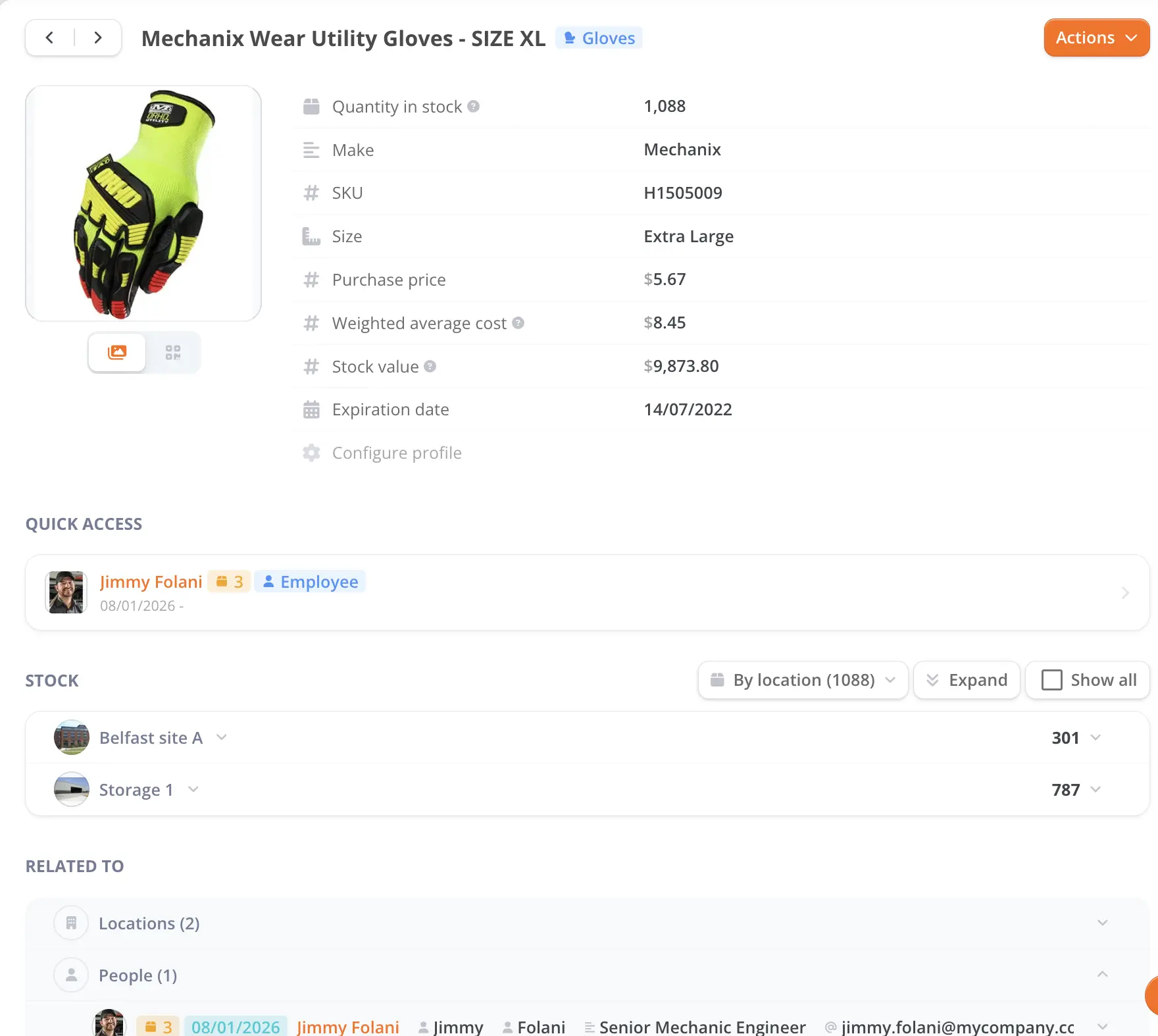
- Stock intake
- Stock allocation to locations and people (e.g. PPE, materials tracking)
- Multi-location management
- Stock value calculation
- Alert on minimum/maximum stock levels
- Stock levels trends and reporting
Vehicles and Plant Fleet Management
Bulbthings includes comprehensive fleet management capabilities beyond basic asset tracking.
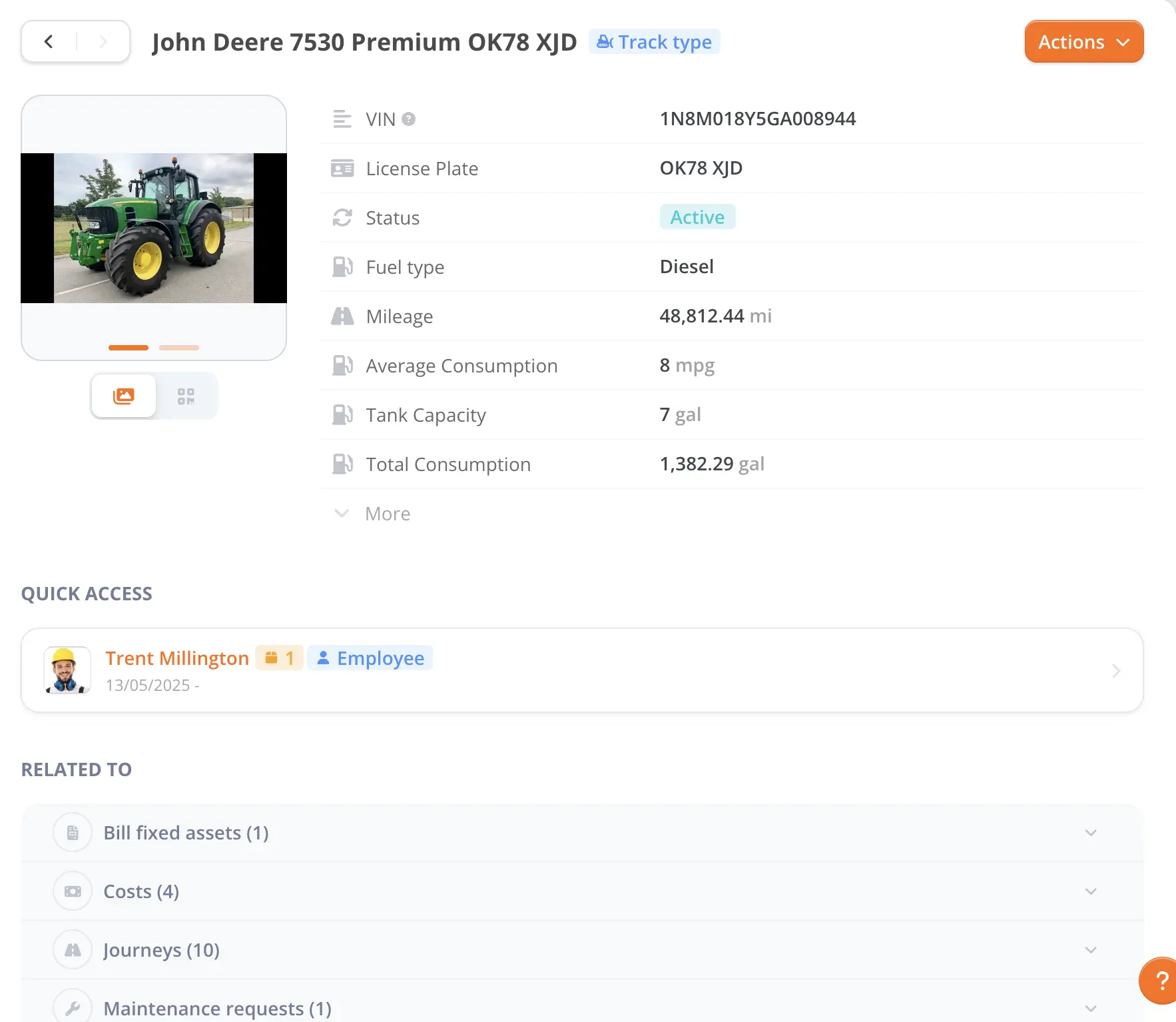
This includes mileage, fuel consumption tracking, drivers incident reporting, fines and damages management, end of life management.
For corporate fleets: leasing contracts quotation and comparison and ordering from suppliers.
Fleets cost import (maintenance, fuel, financing or depreciation) and TCO calculation.
Service Providers and Rental/Leasing Management
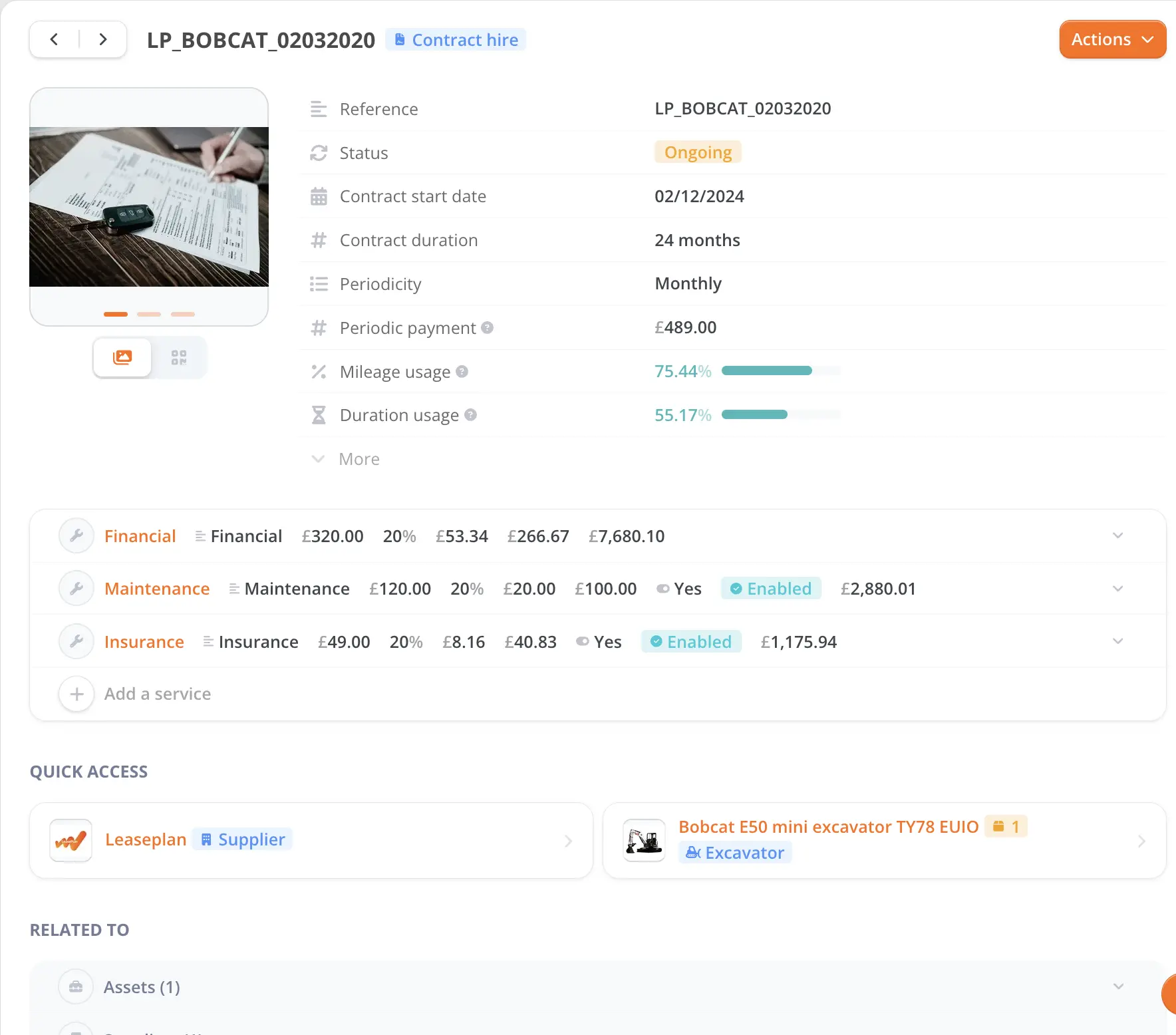
Bulbthings offers comprehensive solutions for rental companies and maintenance service providers.
Front-office:
- Customer records with optional CRM integration
- Optional e-shop website plug-in for public shopping
- Maintenance Service Providers jobs quotation and invoicing
- Rental companies short term or long-term rental contracts quotation and invoicing
- Rent or lease: equipment, machinery, plant, vehicles or properties
Product asset in back-office:
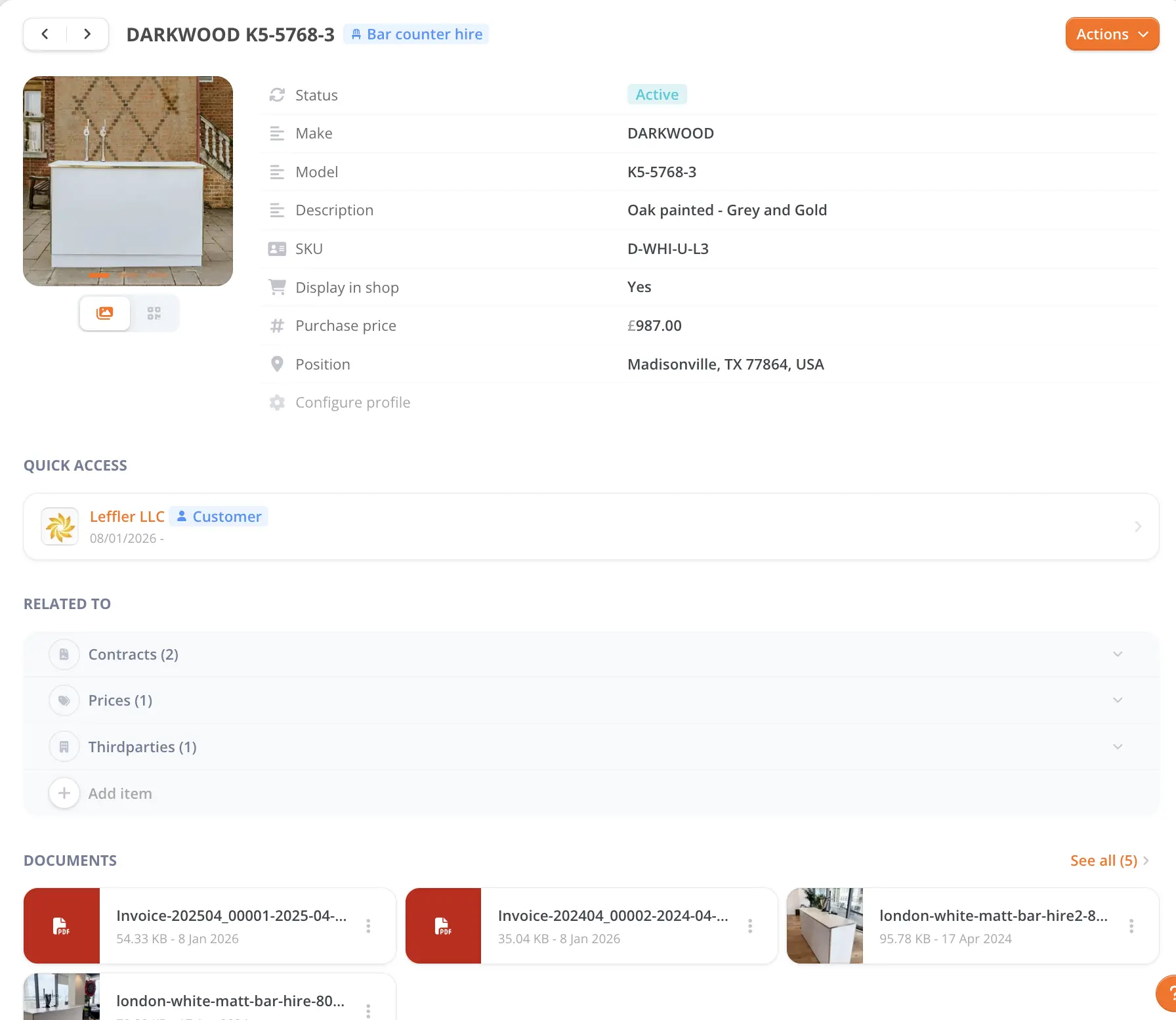
Public e-shop:
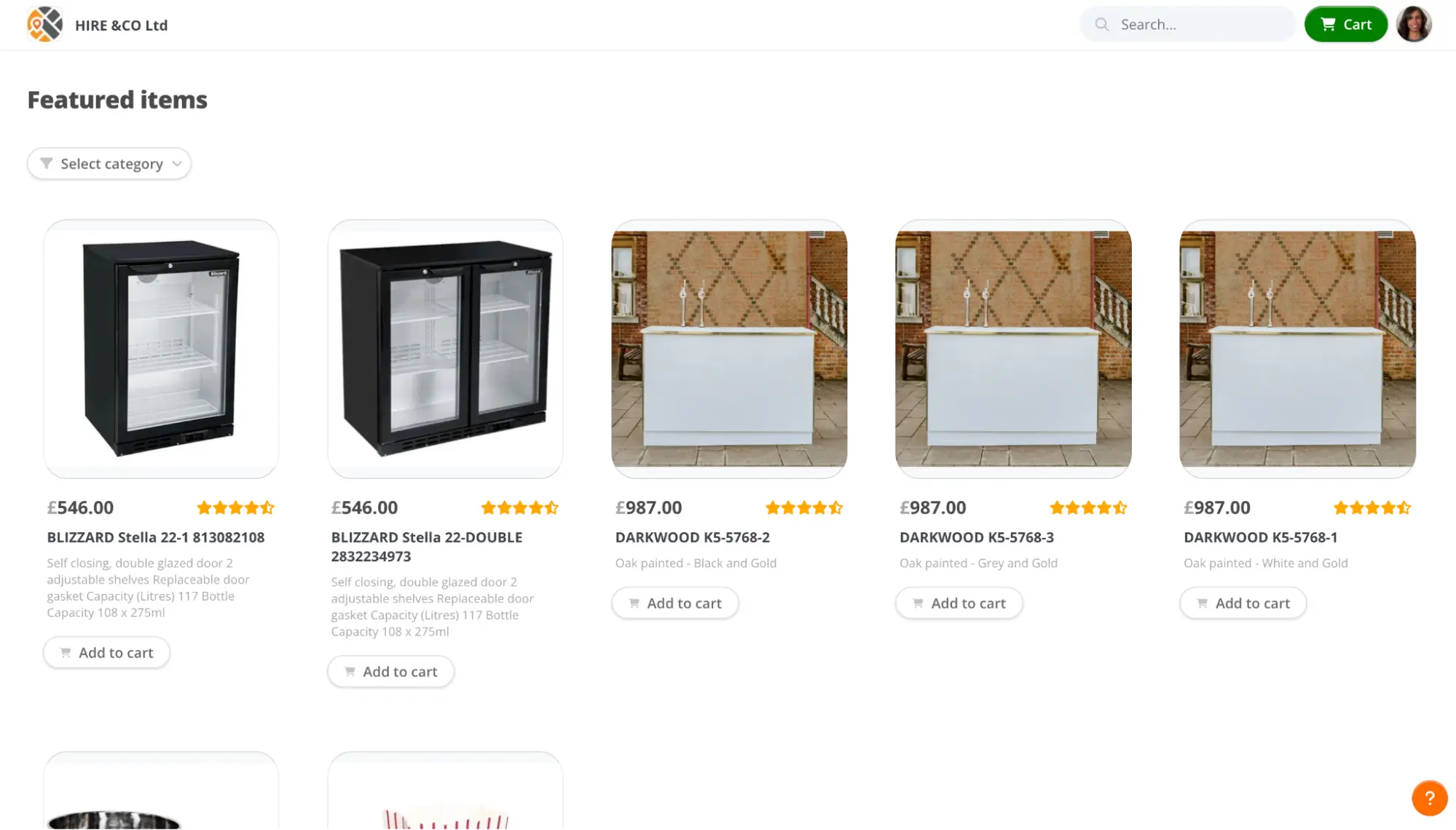
Logistics:
- Supplier records, Orders and Delivery management
- End of rental checks/inspections
Back-office operations:
- Stock management (for rental equipment, products and consumables)
- Maintenance management (service reports, workshop management)
- Financial management and reporting
Telematics and IoT Connectivity: Automated data collection from connected assets.
As an optional add-on, the platform connects with GPS tracking devices and On-Board Diagnostic (OBD) systems to provide real-time vehicle location and status.
Fleet managers can monitor fuel consumption, mileage, and engine diagnostics remotely.
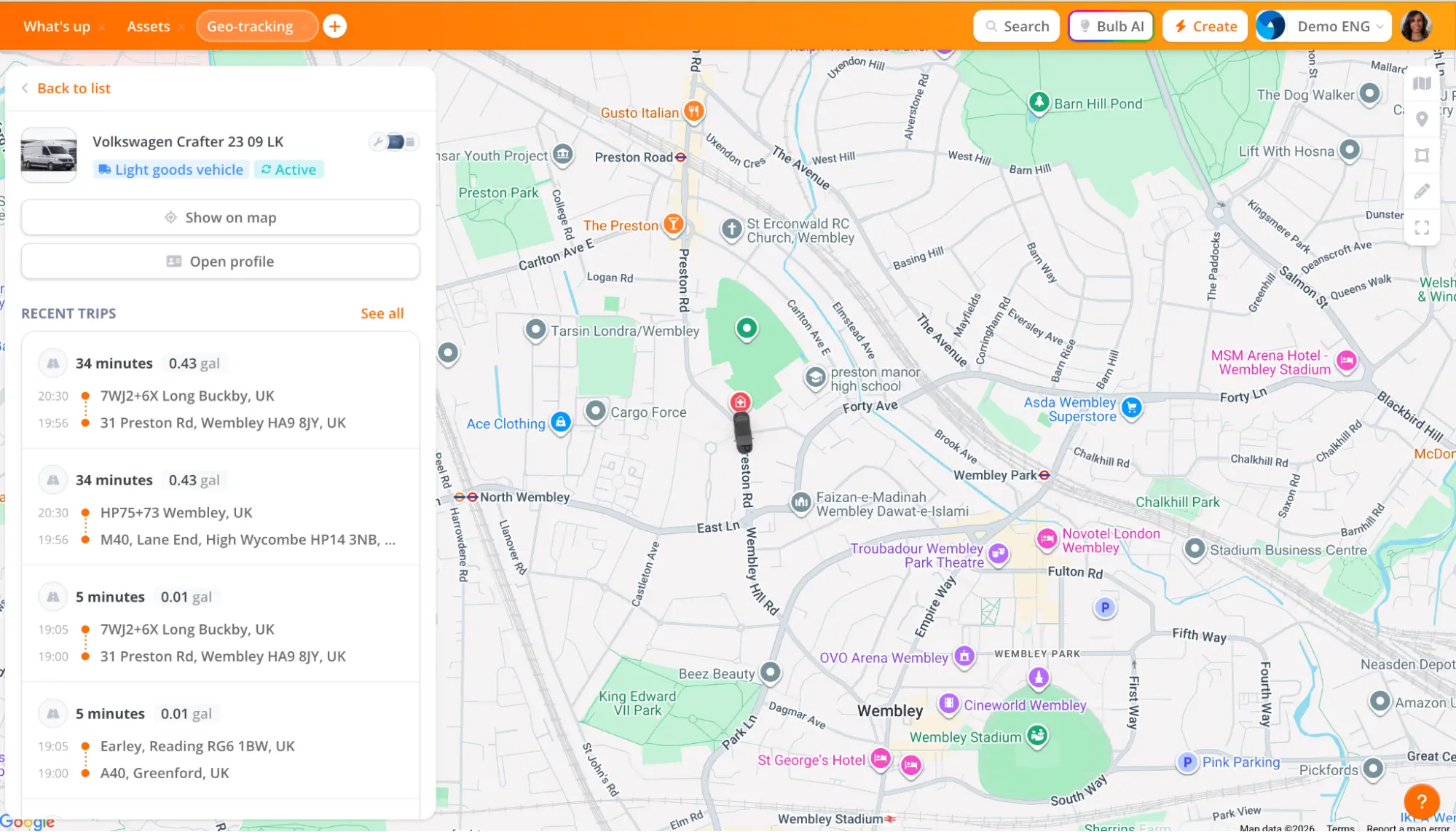
The system analyzes trip data and driving behavior to identify opportunities for improving fuel economy and reducing operational costs. Administrative tasks like compliance checking and fine management are integrated into the platform.
The system can even automatically generate alerts for upcoming renewals and maintenance requirements based on mileage or time intervals.
Bulbthings also integrates with a range of IoT technologies, including RFID, Bluetooth beacons, and LoRa networks. This enables automated data collection from various asset classes (vehicles, machines, buildings) without relying on manual scanning.
Connected assets can report their location, usage, consumption, and condition data in real-time. This connected approach improves data accuracy and reduces reliance on manual updates from field workers.
The platform consolidates data from multiple sources: connected devices, supplier invoices, user inputs, and existing business systems.
This aggregated data feeds into analytics for calculating Total Cost of Ownership and identifying cost-saving opportunities.
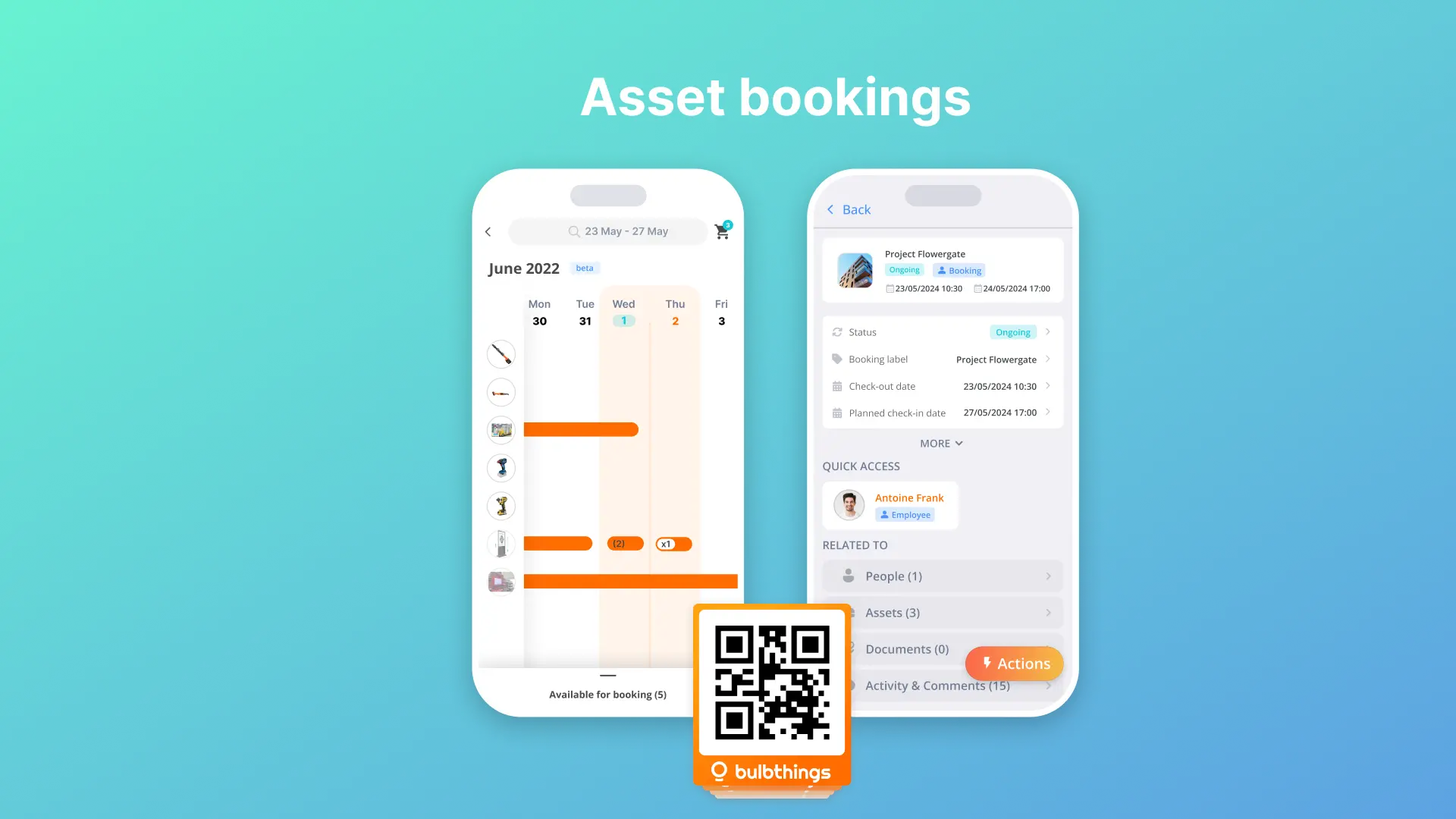
Low-Code Workflow Automation: Actual digitalization processes.
Bulbthings come with off-the shelf workflows by industry. These standard features meet the needs of first-time asset management tool practitioners wanting a quick start or organizations with few assets and simple processes.
Bulbthings was built as a low-code platform from the ground up, enabling customization of workflows, validation processes, checklists, and forms without extensive development resources.
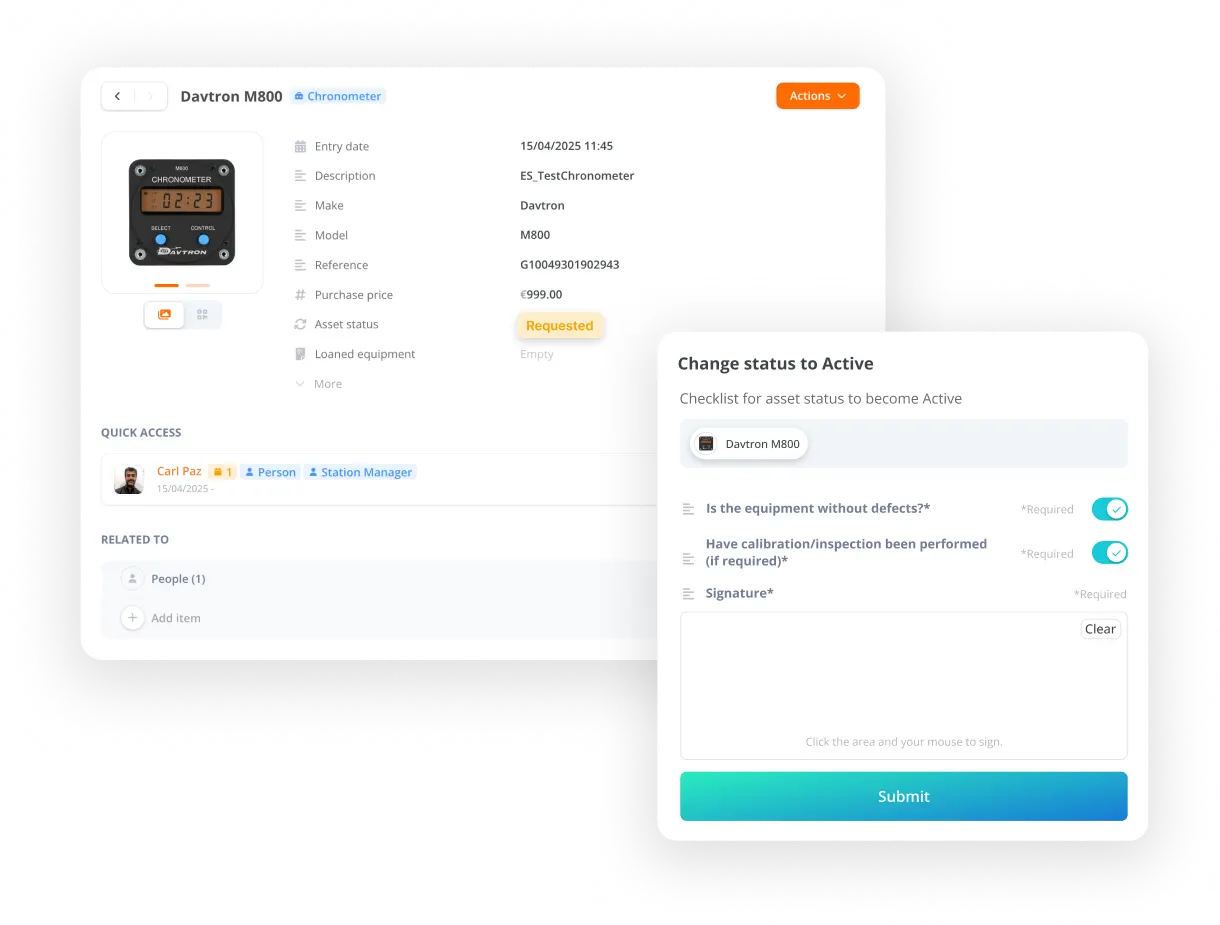
This architecture accommodates more complex, multi-step workflows that organizations need to digitalize; the kind of requirements that can be difficult or costly to implement in platforms built on older foundations.
The platform supports financial management and equipment rental workflows, enabling organizations to track costs, manage rental operations, and handle the financial aspects of their asset lifecycle within the same system.
Advanced reporting and customizable analytics dashboard are also available if you need them.
Pricing Philosophy: Asset-based model with unlimited users.
Bulbthings uses a usage-based pricing model calculated on factors like industry, number of assets, and selected feature packs.
The key differentiator is that unlimited users are included at no extra cost.
This pricing philosophy encourages organizations to provide access to everyone who interacts with assets: office staff, field technicians, managers, suppliers, and even customers. There's no per-seat calculation to limit adoption or create administrative overhead around license management. Discounts of 10-15% are offered for semi-annual or annual subscriptions commitments.
Additional services are available separately: QR code labels start from €250 per 1,000 units, customizations and projects at €550 per day.
Asset Panda or Bulbthings: Comparison Summary
| Asset Panda | Bulbthings | |
|---|---|---|
| Core Focus | Configurable asset tracking | Digitalization of asset-centric workflows and activities |
| Industry focus | Cross-industry | Cross-industry with workspace pre-configured by industry (e.g. construction, manufacturing, property managers, entertainment, education,healthcare) |
| Target Users | Organizations needing field configurability | Mid-sized companies operations |
| User Interface | Traditional design with extensive menus | Modern, intuitive design |
| Learning Curve | Steeper due to interface complexity | Reduced through modern UX and AI assistance; Self-onboarding and online payment available |
| Collaboration | Basic features | Enterprise-grade with extensive features |
| AI Agent | Not available | Full AI copilot with natural language and image recognition |
| Users Included | Unlimited on most plans | Unlimited on all plans |
| Serialised Asset tracking | Advanced | Advanced |
| Inventory/Stock Management | Basic tracking | Advanced with stock levels, alerts, and value calculation |
| Maintenance management | Advanced | Advanced with workshop, labor and financial management |
| Fleet Management | Limited | Comprehensive with mileage, fuel, and TCO tracking |
| Rental/Leasing Management | Not available | Full front-office, logistics, and back-office workflows |
| Financial Management | Basic depreciation and inflation calculation | Advanced with costs calculation and customer invoicing |
| GPS Tracking | Location stamps when scanned | Location stamps when scanned; Real-time GPS tracking optional |
| Telematics and IoT Integration | Not supported | RFID, Bluetooth, LoRa, NFC connectivity (optional) |
| Platform Architecture | Traditional configuration-based | Low-code with AI capabilities |
| Mobile Offline Mode | Full offline in Pro platform | Limited |
| Reporting and Analytics | Customizable reports and dashboards | Online or scheduled reports; Customizable BI dashboards and charts |
| Pricing Model | Asset-based with custom quotes required | Asset-based with transparent structure; Self-onboarding and online payment; Custom pricing from 1000 assets or digitalisation projects |
| Best For | Asset tracking with manual workflows | Broad operational coverage with collaboration and AI |
Final Verdict
The choice between Asset Panda and Bulbthings depends on what your organization prioritizes most in asset management.
Choose Asset Panda if your primary requirement is configurable asset tracking and you are more comfortable with traditional, menu-driven interfaces. The platform rewards organizations willing to invest time in setup and training with a system that can be tailored to specific tracking needs.
Asset Panda's strengths include solid maintenance management, strong onboarding support, and a robust mobile experience with offline capabilities. With extensive collaboration, AI-powered workflows, advanced inventory/stock management, financial management and fleet management requirements, Asset Panda delivers a reliable asset tracking foundation.
Get started with Asset Panda here.
Choose Bulbthings if you’re a mid-sized company managing growing operational complexity—tracking hundreds to thousands of assets across multiple locations, diverse asset classes, and collaborative workflows that need to be digitized. It’s ideal for organizations that want:
- A modern interface that reduces training requirements and accelerates adoption
- Extensive collaboration features across internal teams, suppliers, and customers
- AI-powered interaction through Bulb AI for faster onboarding, increased productivity, and actionable insights
- Advanced inventory/stock management with stock levels, alerts, and value tracking
- Rental and leasing management with full front-office, logistics, and back-office workflows
- Low-code workflow automation that adapts to complex operational processes (with shorter timelines and more reasonable budget compared to Enterprise software providers)