Asset Panda vs UpKeep (vs Bulbthings): which Asset Management Platform actually fits your business in 2026?
Choosing between Asset Panda vs UpKeep for managing your physical assets often comes down to these five critical questions:
- Do you need a highly customizable asset tracking platform, or a streamlined maintenance-focused CMMS?
- Is your priority tracking the full lifecycle of diverse assets, or optimizing work orders and technician workflows?
- Are you looking for usage-based pricing that scales with assets, or are you comfortable with per-user pricing that scales with your team?
- Do you need deep configurability that matches your exact processes, or would you rather trade some flexibility for a faster learning curve?
- Is your team primarily mobile-based and field-driven, or split between office management and on-the-ground execution?
In short, here’s what we recommend:
👉 Asset Panda is a highly configurable, cloud-based asset tracking platform designed to manage the entire lifecycle of physical and digital assets. Its no-code customization engine lets you create tailored fields, workflows, and reports for virtually any industry. While Asset Panda allows users to customize fields, forms, and automations, the scope of its configurability remains bounded, and the interface can feel complex, often requiring significant time investment to learn. With robust mobile apps featuring built-in barcode scanning, it’s a powerful choice for larger organizations or public-sector entities that can afford the learning curve and need flexibility above all else.
👉 UpKeep is a mobile-first Computerized Maintenance Management System (CMMS) built to streamline work orders, preventive maintenance, and asset tracking for maintenance teams. Its intuitive interface and AI-powered productivity features make it easy for technicians to adopt quickly, even those transitioning from paper-based systems. UpKeep also stands out with strong resource management capabilities such as technician planning, and it manufactures its own IoT sensor products for real-time monitoring. While UpKeep excels at maintenance workflows and team communication, its per-user pricing can escalate quickly, customization may not match dedicated asset management platforms, and advanced features like analytics and automation are locked behind higher-tier plans.
Both platforms are strong in their respective domains. Asset Panda gives you deep asset lifecycle tracking with extreme flexibility, while UpKeep provides an excellent maintenance-first workflow for field teams. But what if your business needs both comprehensive asset management and streamlined maintenance, without the steep learning curve of one or the limitations of the other?
👉 Bulbthings is a collaborative asset management platform built for the digitalization of asset-centric workflows for growing businesses. Its standout capability is team collaboration: internal teams, suppliers, and customers can all work together on assets through built-in conversations, @mentions, and photo sharing, think of it as structured, organized communication directly tied to your assets. With a modern, intuitive interface that requires virtually no training, a purpose-built AI agent (Bulb AI) that lets you manage assets through natural language and image recognition, and advanced capabilities spanning stock management, maintenance (CMMS), vehicles and plant fleet management, and financial analytics, Bulbthings turns multi-step asset workflows into simple, collaborative processes. Its usage-based pricing with unlimited users means everyone who needs access, staff, technicians, suppliers, customers, can collaborate without driving up costs. A Free Plan is also available for smaller teams getting started 🧡.
If managing assets, maintenance, and fleet operations from a single, AI-powered collaborative platform sounds like the right fit for your business, see how Bulbthings works with a free trial.
Table of contents:
- Asset Panda vs UpKeep vs Bulbthings at a glance
- The core difference: Asset tracking vs maintenance management vs collaborative asset workflows
- Asset Panda delivers unmatched configurability (at a cost)
- UpKeep wins on maintenance workflows and mobile simplicity
- Bulbthings combines both worlds with collaboration and AI-powered ease
- Pricing models reveal who each platform is really built for
- Mobile capabilities matter more than you think
- Reporting and analytics show different levels of depth
- Asset Panda vs UpKeep vs Bulbthings: Which should you choose?
Asset Panda vs UpKeep vs Bulbthings at a glance
| Asset Panda | Upkeep | Bulbthings | |
|---|---|---|---|
| Primary focus | Asset lifecycle tracking & customization | Maintenance & work order management | Collaborative asset workflow digitalization |
| Collaboration | ⭐⭐ Limited to shared access and notifications | ⭐⭐⭐ Team messaging and work order communication | ⭐⭐⭐⭐⭐ Built-in conversations, @mentions, photo sharing across teams, suppliers & customers |
| Ease of use | ⭐⭐⭐ Steep learning curve due to deep customization | ⭐⭐⭐⭐⭐ Intuitive, minimal training needed | ⭐⭐⭐⭐⭐ Modern interface, virtually no training required |
| AI capabilities | ⭐⭐⭐ UrsaAI for setup, search & workflow creation | ⭐⭐⭐ UpKeep Intelligence productivity helpers (Nova AI agent available as add-on) | ⭐⭐⭐⭐⭐ Fully unified AI copilot agent (Bulb AI) for all platform actions via natural language and voice command |
| Workflow cuztomization | ⭐⭐⭐⭐ Extensive field and form configuration | ⭐⭐⭐ More limited customization options | ⭐⭐⭐⭐⭐ Low-code architecture with end-to-end workflow customization and AI-assisted configuration |
| Mobile app | ⭐⭐⭐⭐ Barcode scanning and offline mode (some features may be limited compared to desktop) | ⭐⭐⭐⭐ Excellent mobile-first design with offline mode (limited to work orders) | ⭐⭐⭐⭐ Full asset management access for all users per roles and permissions, built-in QR/NFC scanner; limited offline mode |
| Asset tracking | ⭐⭐⭐⭐ Solid asset location assignments, check-in / check-out and asset kitting features. Does not provide a consolidated view of assets on outdoor maps (Google maps or OpenStreet maps) or indoor floor maps. | ⭐⭐⭐ More limited asset tracking options. Allows to position assets on a floor plan. No check-in check-out features. | ⭐⭐⭐⭐ Advanced asset tracking features with asset assignments, advanced bookings and check-in / check/out workflows. Provides consolidated outdoor maps (Google map and OpenStreet) and the ability to position assets on floor maps. Allows real-time tracking of vehicles on the same outdoor map and vehicles journeys history (telematics option required). |
| Maintenance management | ⭐⭐⭐ Available but not core focus | ⭐⭐⭐⭐⭐ Purpose-built CMMS with strong resource management and technician planning | ⭐⭐⭐⭐ Comprehensive CMMS with customizable checklists, parts and labour tracking, service reports, invoicing, and simple workshop management |
| Stock and inventory management | ⭐⭐⭐ Basic inventory tracking | ⭐⭐⭐ Parts inventory for maintenance | ⭐⭐⭐⭐⭐ Advanced stock management with alerts, allocation & reporting |
| Financial management | ⭐⭐⭐ Depreciation calculation (straight-line and four additional methods) | ⭐⭐ Basic cost tracking within work orders | ⭐⭐⭐⭐⭐ TCO calculation, cost analysis, invoicing & contract management |
| Equipment/fleet rental and leasing management | ⭐ Not available | ⭐ Not available | ⭐⭐⭐⭐⭐ Full rental/leasing workflow (front-office, logistics & back-office) |
| Vehicles and plant fleet management | ⭐⭐ No dedicated fleet features | ⭐⭐⭐ Available as a feature area | ⭐⭐⭐⭐⭐ Dedicated fleet management with mileage, fuel, damages, fines, driver checks, leasing contracts & TCO |
| IoT and telematics devices | ⭐ Not available | ⭐⭐⭐⭐⭐ Manufactures own BLE trackers and IoT devices | ⭐⭐⭐ Select BLE trackers, Telematics and IoT partners integrations |
| API and SDK for developers | ⭐⭐⭐ REST API available for integrations | ⭐⭐⭐ REST API for integrations | ⭐⭐⭐⭐⭐ REST API & Javascript/Typescript SDK available to build integrations, cuztomizations or new apps. |
| Pricing model | Per user/month (starts at $50/user) | Per user/month (starts at $20/user) | Usage-based with unlimited users and a free plan 🎁 available up to 100 assets |
| Best for | Larger organizations or public-sector entities needing extreme asset customization | Mid-size to large companies where asset maintenance is the primary concern | Mid-size to large companies that heavily rely on assets for daily operations or customer services |
The core difference: Asset tracking vs maintenance management vs collaborative asset workflows
Understanding the fundamental philosophy behind each platform explains why comparing them can feel like comparing apples to oranges.
Asset Panda was born from a frustration with rigid, one-size-fits-all asset tracking systems. Founder Rex Kurzius, a serial entrepreneur, struggled with tracking company equipment across his various businesses and built a platform that could be configured to match any company’s exact workflows.
The result is an extremely flexible tool, but one that requires investment in setup and training to unlock its full potential.

UpKeep came from the opposite direction.
Founder Ryan Chan was a process-development engineer who watched maintenance technicians waste time walking back and forth to a central computer to get their work orders. He built a mobile-first CMMS that puts the technician experience front and center. The platform excels at getting maintenance teams up and running quickly, but its asset tracking capabilities, while solid, play a supporting role to its maintenance workflow focus.
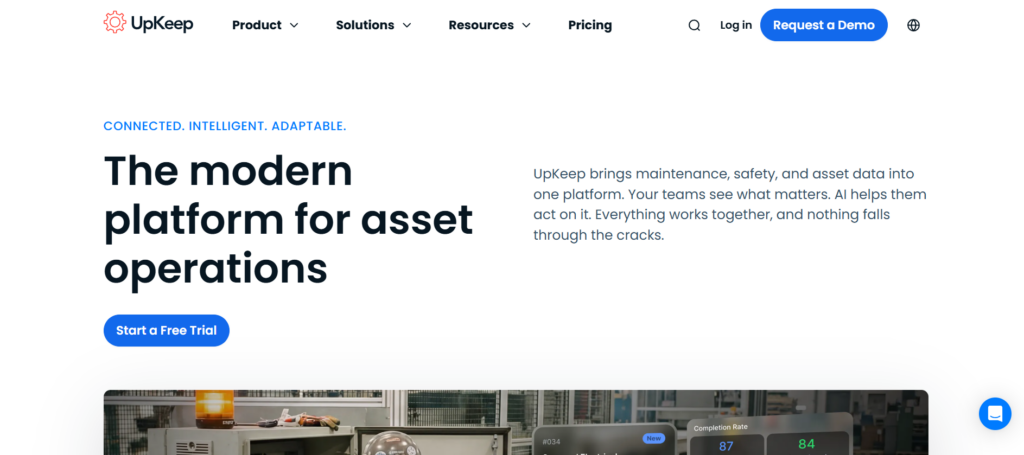
Bulbthings recognized that most growing businesses don’t neatly fall into one category.
They manage equipment, vehicles, tools, consumables, and facilities, and they need tracking, maintenance, and analytics for all of them, along with seamless collaboration between the many people involved.
Rather than forcing companies to stitch together multiple specialized tools, Bulbthings built a single platform that covers asset tracking, maintenance management, stock management, vehicles and plant fleet management, and financial analytics, all designed around collaborative workflows and unified by an AI agent that simplifies interactions across the board.
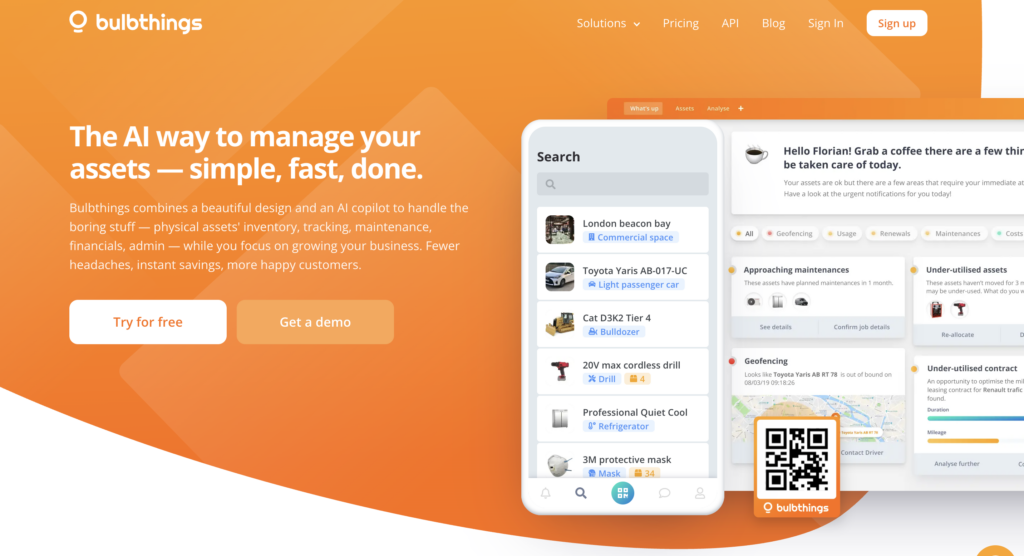
Co-founder Yann Depond has over 25 years of experience in asset and fleet management, having previously founded a leading European cloud-based fleet management software (acquired by BNP Paribas). Co-founder & CEO Leslie Depond spent 12 years as a technology strategy consultant at PwC and Accenture.
For many organizations, the choice comes down to this:
- Do you need maximum configurability for asset tracking (Asset Panda)?
- Do you need the best possible maintenance workflow for your technicians (UpKeep)?
- Or do you need a collaborative platform that handles asset tracking, maintenance, stock management, and fleet operations without the steep learning curve or the gaps (Bulbthings)?
Asset Panda delivers great configurability (at a cost)
If your organization has highly specific requirements for how assets are tracked, categorized, and managed, Asset Panda deserves serious consideration.
The platform’s no-code customization engine allows you to create unlimited custom fields, build tailored workflows, and design reports that match your exact business processes without needing a developer.
However, it’s worth noting that while the “no-code” label suggests broad flexibility, the customization operates within a defined scope, and the interface itself can feel overwhelming, meaning most teams will still need to invest significant time learning the system before they can take full advantage of its configurability.
Asset Panda supports the full asset lifecycle, from procurement to disposal, including depreciation calculation with five different methods (Straight-Line, Declining Balance, Sum of the Years’ Digits, Units of Production, and Double Declining Balance).
Its audit trail is comprehensive and tamper-proof, logging every action taken on every asset, which is invaluable for organizations in regulated industries. With SOC 2 Type II certification and 256-bit encryption, the security credentials are solid.
The mobile app mirrors the full desktop experience, complete with built-in barcode and QR code scanning that turns any smartphone into a scanning device.
Higher-tier plans add a full offline mode, which is essential for teams working in areas with spotty connectivity. That said, some features appear to be more limited on mobile compared to the desktop version, so teams should verify that the specific capabilities they need are available in the mobile app.
Asset Panda also integrates with a respectable list of tools, including Jira, ServiceNow, Zendesk, Jamf Pro, Microsoft Intune, and QuickBooks, with a REST API available for custom integrations.
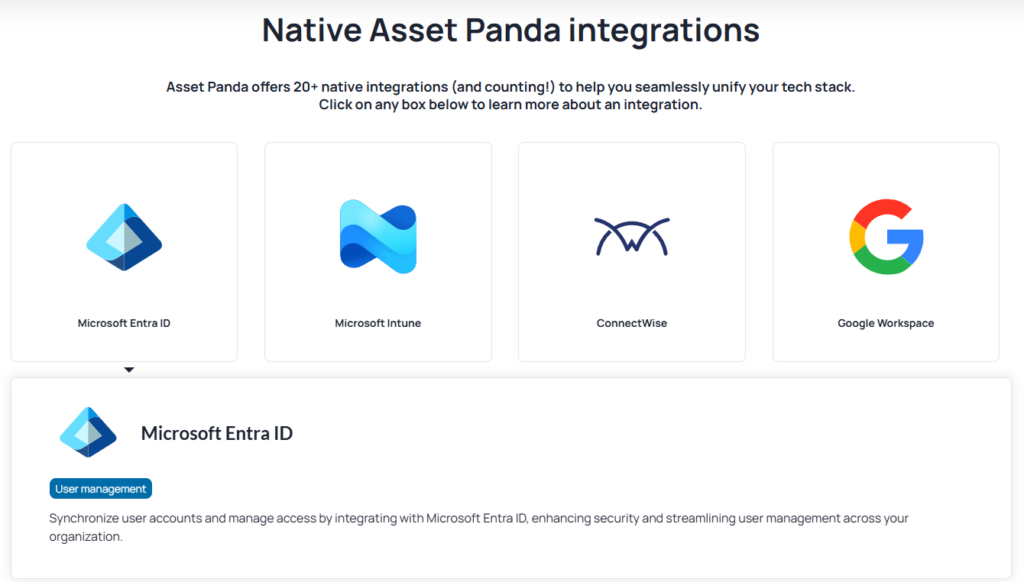
Source: Asset Panda
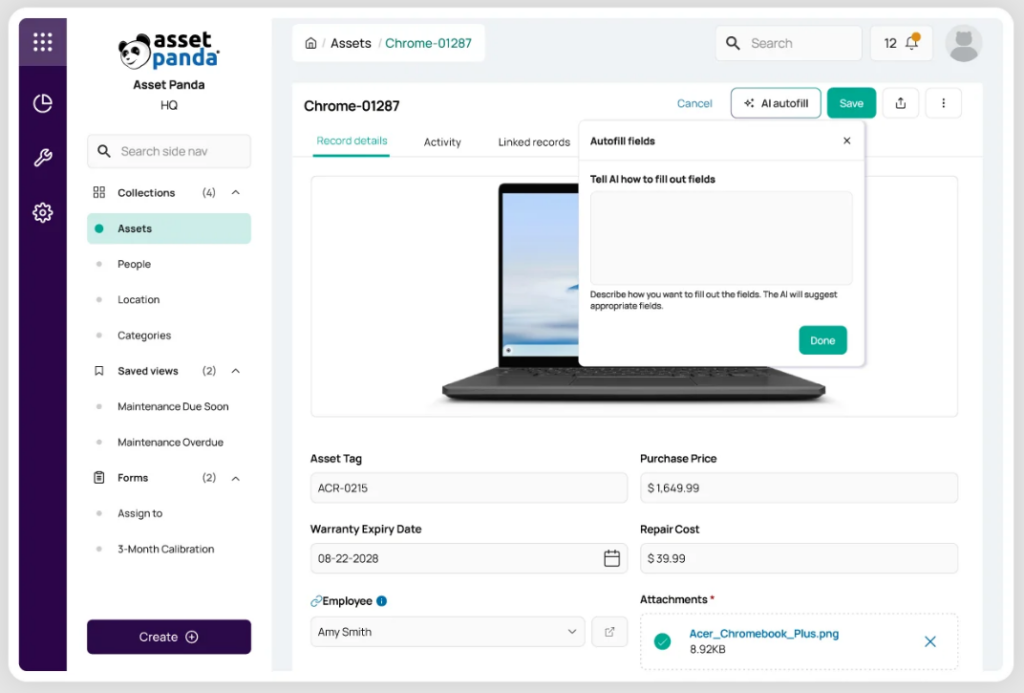
Asset Panda has also introduced UrsaAI, an AI assistant that helps with setup and configuration tasks like field autofill, column mapping during imports, natural language search, and workflow creation.
UrsaAI offers two modes, Ask Mode for step-by-step guidance and Agent Mode for automated task execution, and supports translation in 20+ languages. It’s a useful addition, particularly for accelerating onboarding and database setup, though its scope is currently focused more on configuration and search than on day-to-day operational actions like logging maintenance or generating reports through conversation.
Source: Asset Panda
But all this power comes with trade-offs.
The learning curve is steep. The same flexibility that makes the platform so configurable can overwhelm new users during initial setup. Some users report that the interface feels less polished compared to more modern competitors.
The maintenance management capabilities, while functional, are not Asset Panda’s core strength.
You can create work orders and schedule preventive maintenance, but the workflows lack the polish and depth of a purpose-built CMMS. Financial management is limited to depreciation and inflation calculation, there’s no Total Cost of Ownership analysis, contract management, or customer invoicing.
And while Asset Panda can track vehicles as general assets, it lacks dedicated fleet management features like mileage tracking, fuel consumption reporting, or fines and damages management.
UpKeep wins on maintenance workflows and mobile simplicity
UpKeep is a platform that maintenance technicians tend to enjoy using. That’s not a small thing in a world where software adoption is often the biggest barrier to getting value from a new tool.
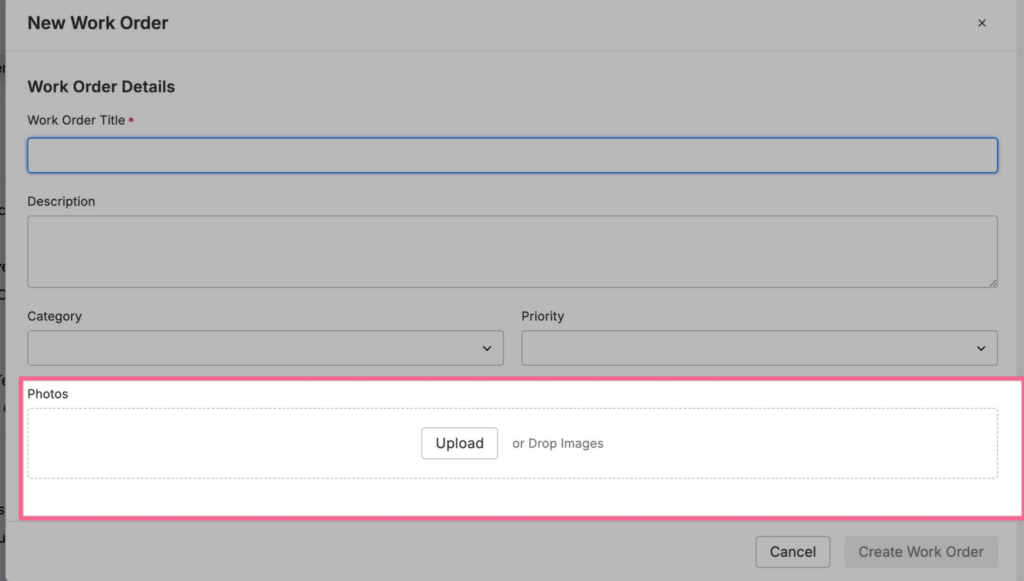
The mobile app is excellent. Technicians can create work orders on the spot by snapping a photo of broken equipment, scan QR codes to instantly access an asset’s full maintenance history, and update job statuses in real-time from the field.
The offline mode (limited to work orders) ensures they can keep working even without a connection, with data syncing automatically once they’re back online. Push notifications keep everyone informed, and GPS-based reminders can even prompt technicians to start or stop a timer when they arrive at or leave a work site.
Source: UpKeep
UpKeep’s preventive maintenance capabilities are strong, and the platform also offers robust resource management features such as technician planning and scheduling optimization.
PM triggers can be set based on time intervals, usage-based meters (like operating hours or mileage), or a combination of both. The platform even supports seasonal scheduling, allowing you to pause work order generation during off-seasons for equipment like HVAC systems. Custom checklists ensure that technicians follow standardized procedures, and failed inspection items can automatically trigger follow-up work orders.
The UpKeep Intelligence suite adds practical AI-powered productivity helpers embedded into existing workflows.
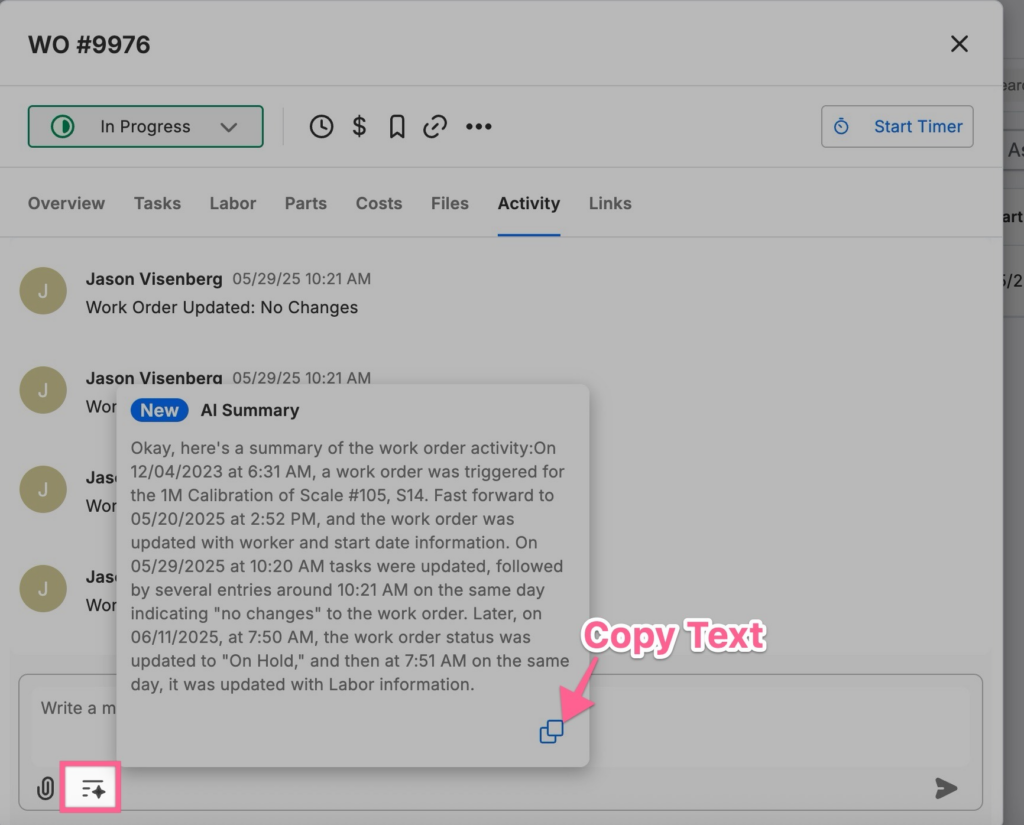
Voice-to-create work orders reduce administrative friction, AI-generated summaries help managers stay on top of operations, and smart scheduling suggestions optimize technician assignments based on priority and availability.
UpKeep also offers Nova, a conversational AI agent that can analyze maintenance data and take actions like creating work orders and assigning technicians through natural language, though Nova is a separate add-on with credit-based pricing rather than included in standard plans. UpKeep is also planning to launch its own AI agent developer, which would expand its customization capabilities in the future.
Source: Upkeep
Another notable strength is that UpKeep manufactures its own IoT sensor products, including BLE trackers and IoT devices, giving maintenance teams direct access to real-time monitoring hardware from the same vendor.
Where UpKeep falls short is in the breadth of its asset tracking and management capabilities.
While it handles asset tracking, maintenance history, and basic parts inventory, it’s not designed to be a comprehensive asset lifecycle platform. Stock management is limited to parts and supplies for maintenance, there’s no broader inventory management with stock allocation, value calculation, or min/max alerts.
The customization options, while decent, don’t approach the depth of Bulbthings or even Asset Panda.
Bulbthings combines both worlds with collaboration and AI-powered ease
While Asset Panda focuses on asset tracking depth and UpKeep focuses on maintenance workflow excellence, Bulbthings aims to do both, and – as a truly all-in-one platform for growing businesses – adds collaboration, stock management, vehicles and plant fleet management, rental/leasing operations, and financial analytics on top.
Collaboration across teams, suppliers, and customers
Bulbthings’ strongest differentiator is how it handles collaboration.
It was designed from the ground up as a collaborative workspace where internal teams, suppliers, and customers can all interact around assets based on their roles.
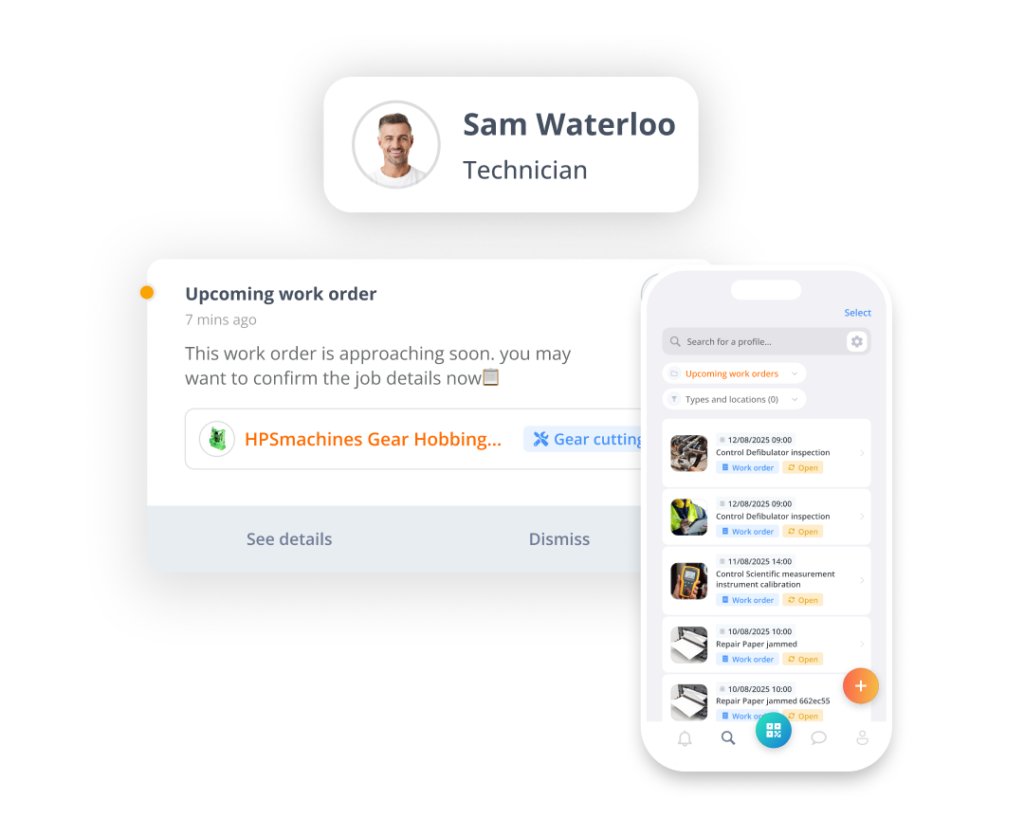
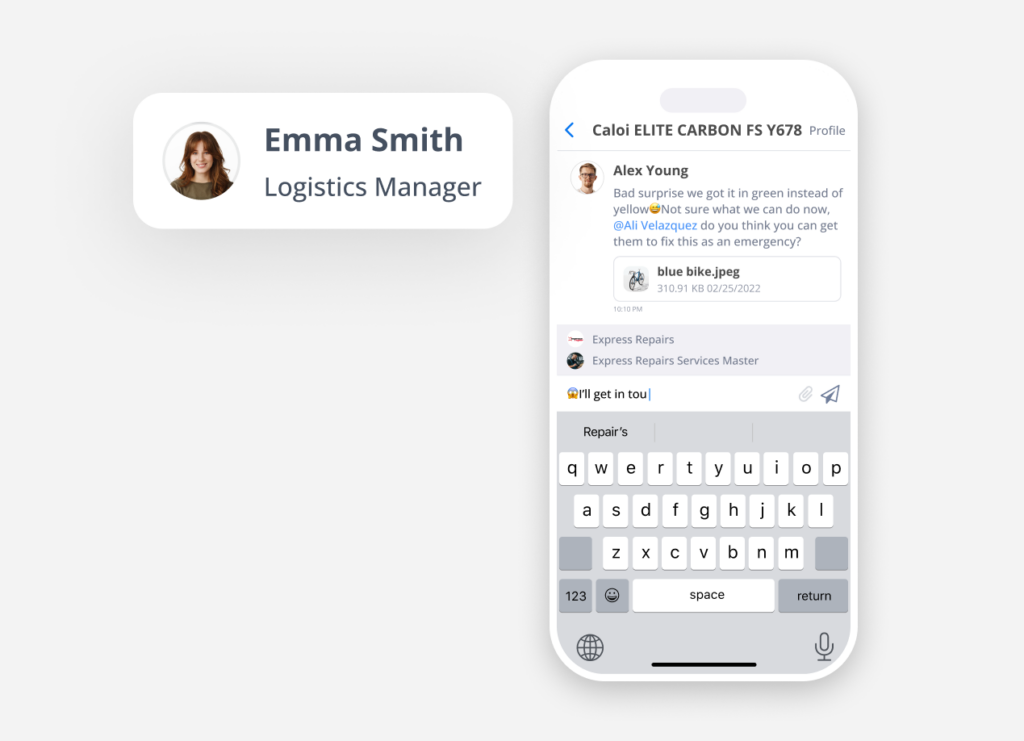
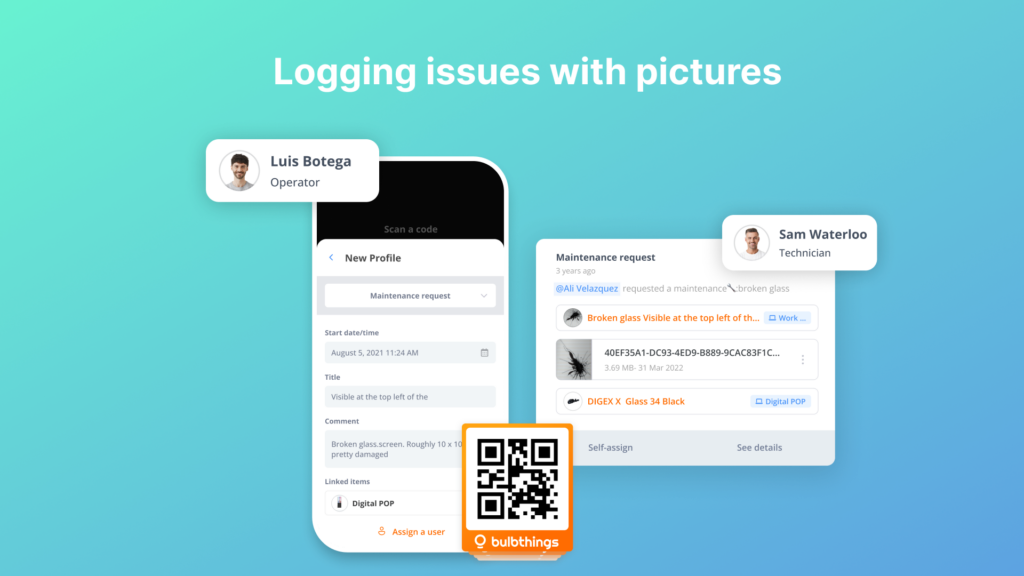
Built-in conversations with @mentions and photo sharing let team members communicate directly within an asset’s profile, keeping discussions contextual and tied to the asset rather than scattered across email threads or messaging apps.
External people (staff, suppliers, partners etc.) can receive information via shared public links email without needing a Bulbthings account, and anyone can scan an asset’s public QR code to view public data and log an issue or request without downloading the app.

The platform offers granular, fine-tuned roles and permissions that can be configured based on virtually any criteria, ensuring that each user, whether an internal manager, a field technician, a supplier, or a customer, sees only what’s relevant to their role.
Combined with multi-language support (with unlimited translations powered by the Google Translate API, automatically applied to both the web platform and the mobile app), multi-currency, and multi-metrics support, this makes Bulbthings particularly suited for organizations that operate across countries and need structured collaboration with external partners.
Modern, intuitive design
Bulbthings features a modern, sleek interface that requires significantly less training than traditional asset management software.
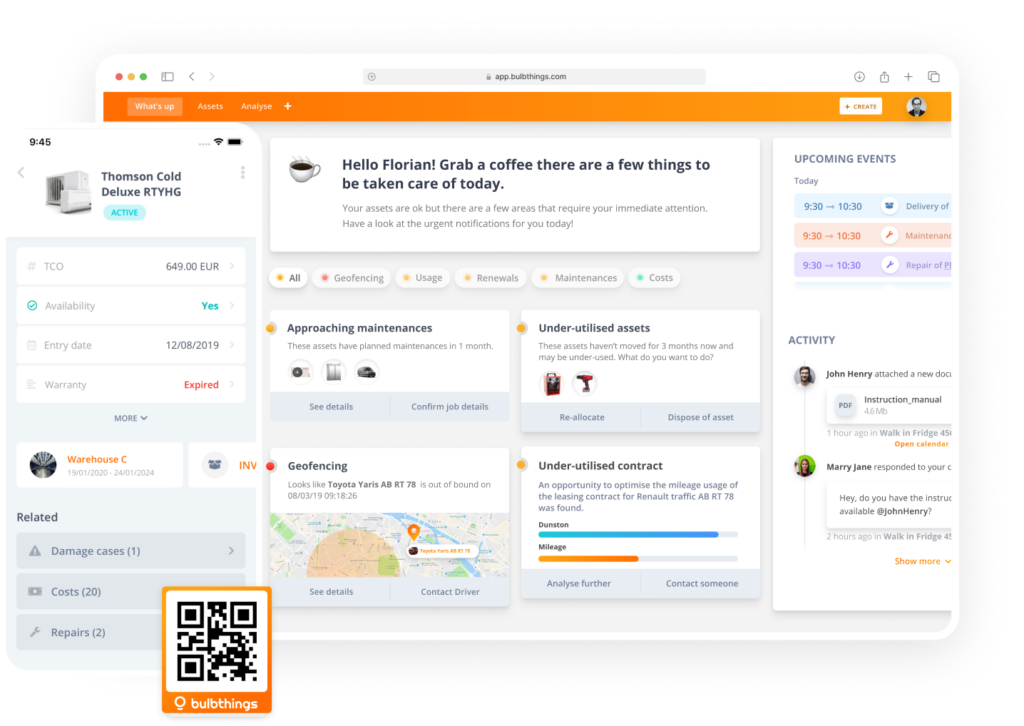
The design philosophy prioritizes instant understanding: users can get productive without extensive onboarding, which is especially valuable for organizations where many different people, not just dedicated asset managers, need to interact with the system.
Bulbthings’ philosophy is that anything not extremely intuitive should either be handled by their Customer Success team or by the upcoming AI agent developer, so users never have to struggle with configuration complexity on their own.
AI-powered asset management with Bulb AI
Bulbthings’ AI agent (Bulb AI) is another differentiator.
Unlike UrsaAI’s focus on setup and configuration or UpKeep Intelligence’s embedded productivity helpers, Bulb AI functions as a unified operational copilot that is accessible from anywhere in the app (from a specific asset or work order or at the workspace level).

Users can add assets by taking a photo and letting the AI identify and populate the details. They can log maintenance requests through natural language commands, generate reports by simply asking a question, create maintenance schedules, book and assign equipment, and automate workflows, all through conversation rather than navigating menus.
For growing businesses that don’t have dedicated IT staff to set up and manage sophisticated software, this approach dramatically reduces the barrier to entry.
The future vision positions Bulb AI as the primary interaction method, with a Developer AI Agent in development that will allow customers to customize workflows using plain language.
Advanced stock management
Where Asset Panda offers basic inventory tracking and UpKeep limits inventory to maintenance parts, Bulbthings provides comprehensive stock management: stock intake, allocation to locations and people (e.g., PPE, materials tracking), stock value calculation, alerts on minimum and maximum stock levels, and stock level trends and reporting.
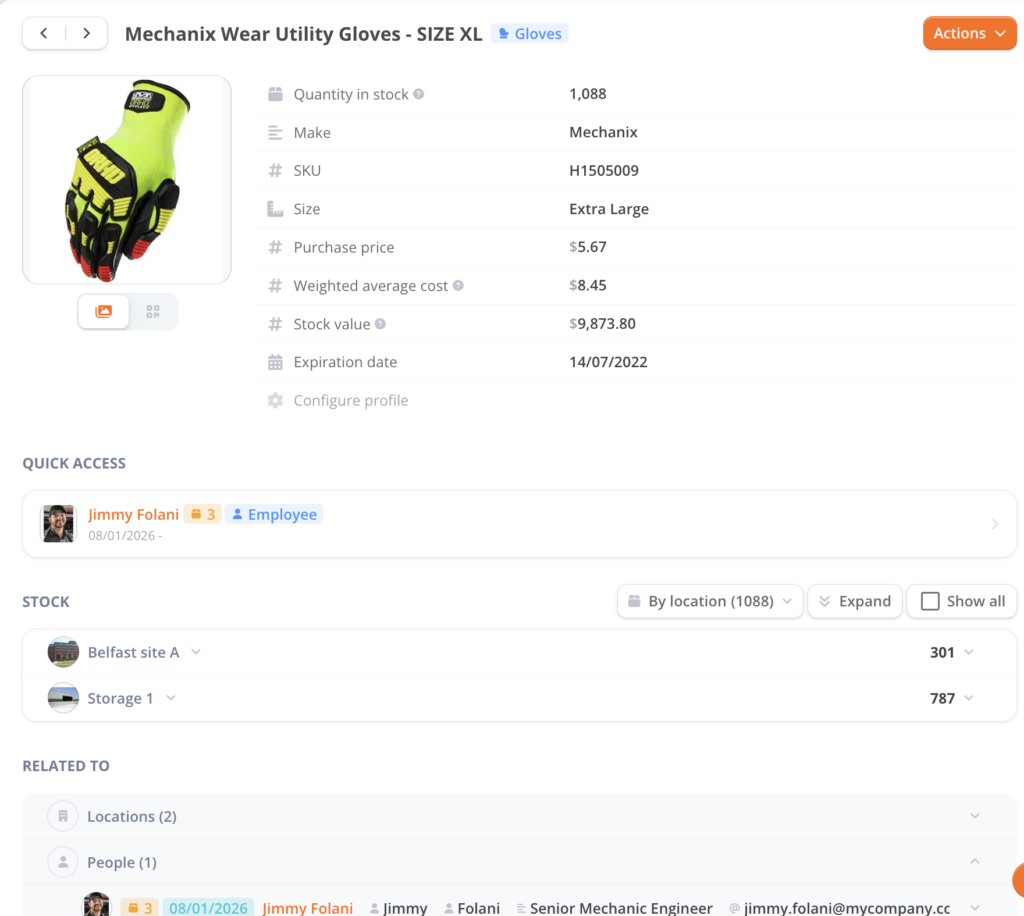
This is particularly valuable for organizations tracking lower-value bulk items and consumables alongside their serialized equipment.
Asset tracking and maintenance management
For serialized equipment like machinery and IT hardware, Bulbthings provides detailed profiles with customizable fields, maintenance histories, and documentation. Dynamic inventory views include registers, stock levels, floor maps (indoor) and GPS maps (outdoor), and planning views.

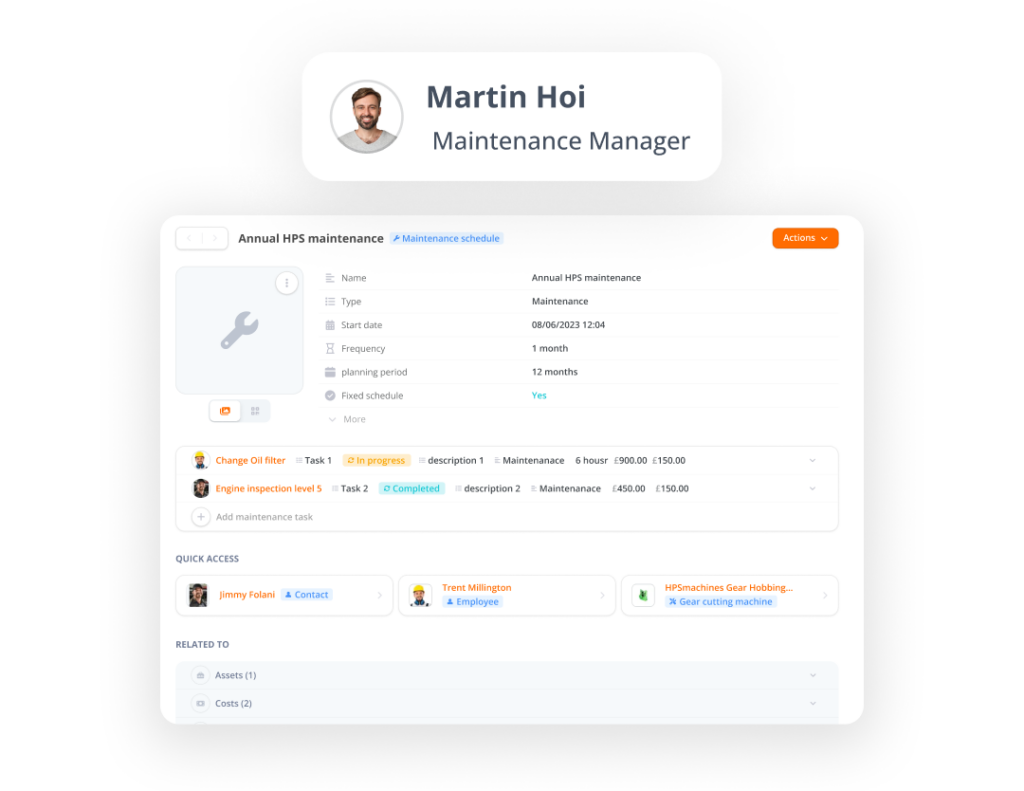
The maintenance management module handles both corrective and preventive workflows with fully customizable checklists, parts and labour tracking, and customizable service reports.
Work orders can be created by managers or generated automatically when a user scans an asset’s QR code and fills out a form describing the issue, even someone without a Bulbthings account.
Preventive maintenance schedules can be set by time intervals or usage-based meters, with automatic work order generation.
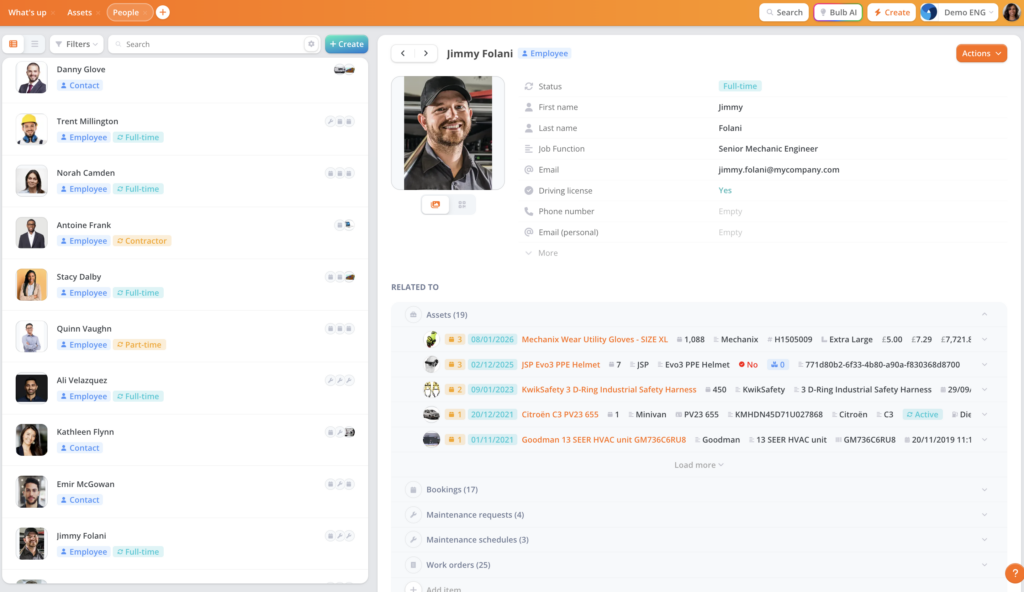
The platform also includes simple workshop management with resources allocation and optimization, along with invoicing management for service businesses. The built-in cost tracking automatically computes maintenance costs in real-time, which is particularly valuable for service businesses that need to invoice customers accurately.
Vehicles and plant fleet management
For organizations with vehicle fleets, Bulbthings offers dedicated fleet management capabilities that neither Asset Panda nor UpKeep can match:
- mileage tracking,
- end-of-life management,
- fuel consumption tracking,
- fines and damages management,
- and driver incident reporting and compliance.
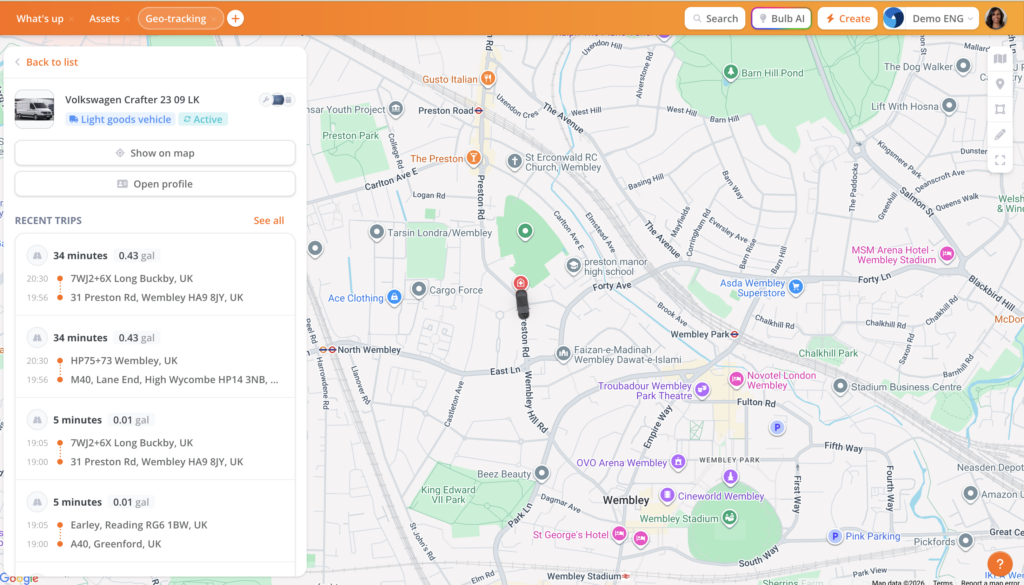
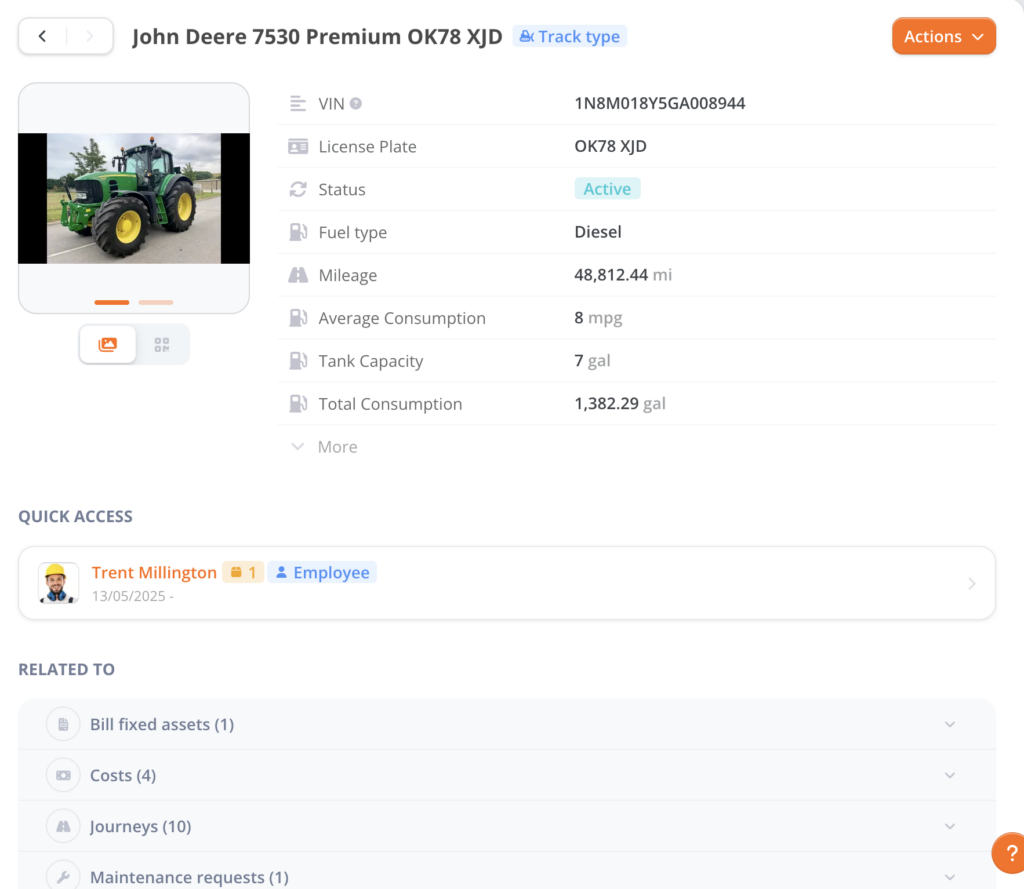
For corporate fleets specifically, the platform supports leasing contract quotation and comparison, ordering from suppliers, fleet cost import (maintenance, fuel, financing or depreciation), and TCO calculation. Optional telematics and IoT integration is available as an add-on for organizations that need real-time GPS tracking and sensor-based monitoring.
This makes Bulbthings a strong fit for mid-size companies that need to manage fleet maintenance alongside fleet administration and costs from a single platform.
Service providers and rental/leasing management
A capability unique to Bulbthings in this comparison is its comprehensive rental and leasing management.
This covers three operational areas: front-office operations (customer records, CRM integration, e-shop plug-in, quotation and invoicing), logistics (supplier records, orders, delivery management, end-of-rental checks), and back-office operations (stock management, maintenance management, financial reporting).
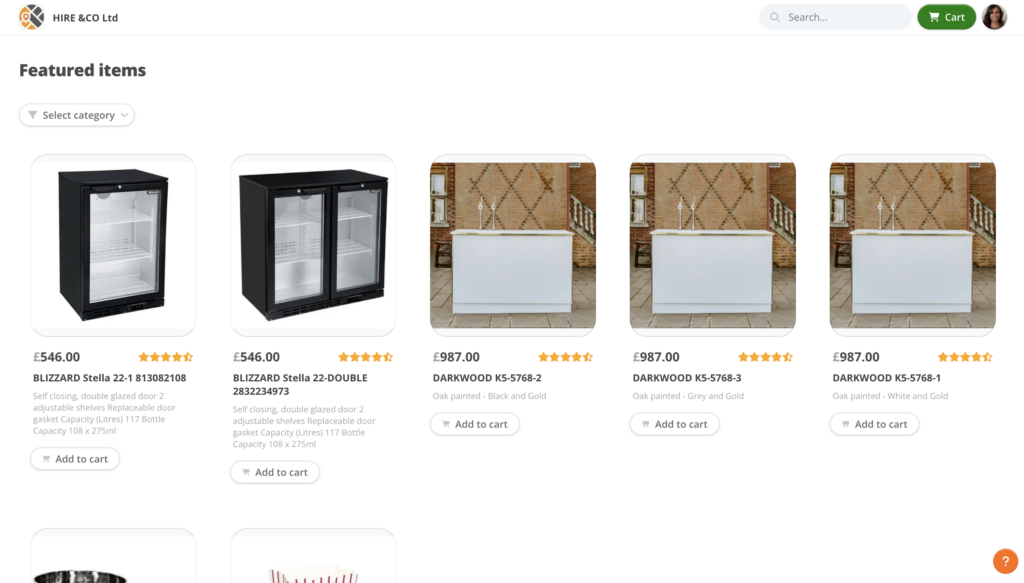
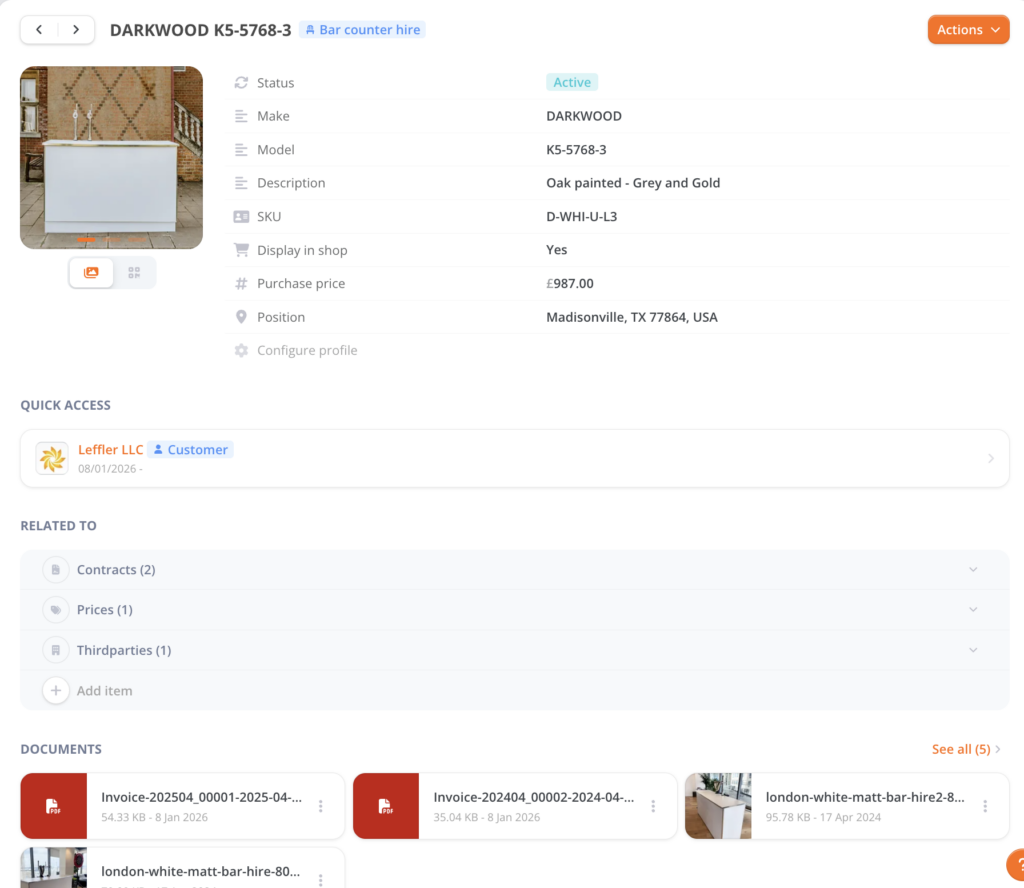
Neither Asset Panda nor UpKeep offers anything comparable for organizations with rental or leasing workflows.
This makes Bulbthings particularly well suited for mid-size companies that need to manage rental asset maintenance alongside inventory, tracking, and invoicing to their customers.
Low-code workflow automation
Bulbthings was built on a low-code/no-code architecture from the ground up, enabling true end-to-end workflow customization with no limitation in scope.
While some configurations can be done in a no-code manner (and are designed to be highly intuitive and natural), the platform’s low-code foundation allows customization of workflows, validation processes, checklists, and forms without requiring extensive development resources. The platform comes with off-the-shelf workflows by industry, so customers get pre-built solutions alongside customization capability.
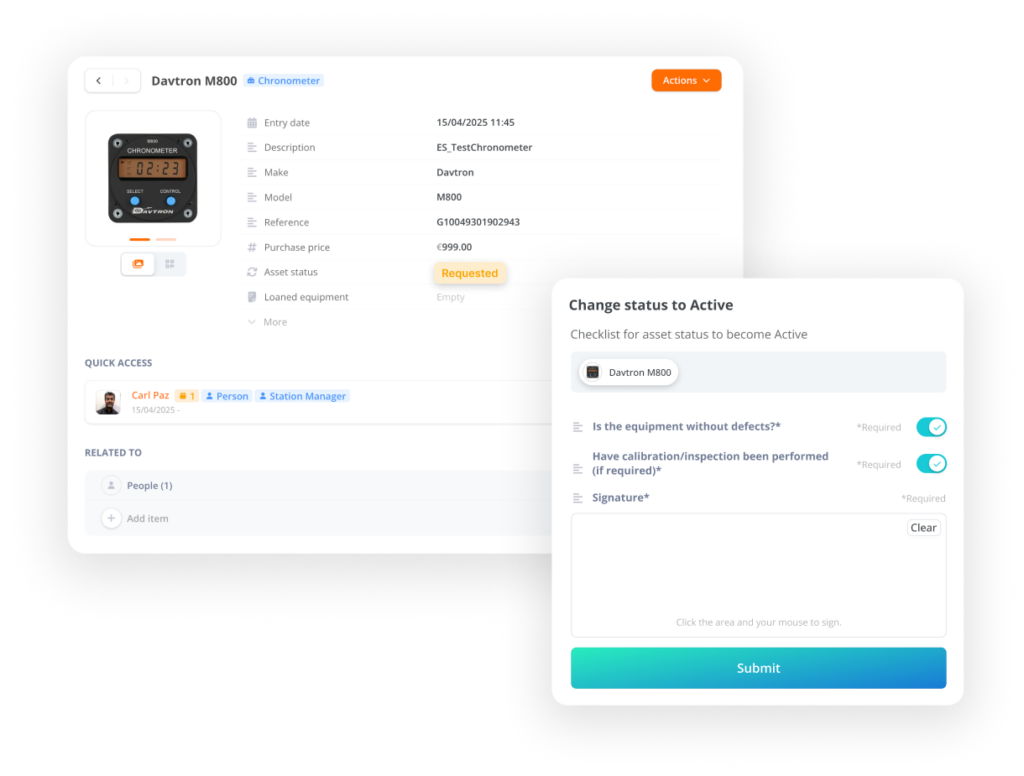
For developers who want to go further, Bulbthings also provides an API and SDK to extend the platform or build entirely new applications on top of it.
This architectural approach gives Bulbthings significantly more flexibility than platforms like Asset Panda, whose no-code engine, while powerful for field and form configuration, operates within a more limited scope.
When businesses have particular multi-step workflows they need to digitalize, Bulbthings’ low-code foundation can accommodate them, whereas older platforms built on more traditional architectures may struggle or require significantly more investment to achieve the same result.
Pricing models reveal who each platform is really built for
The pricing structures of these three platforms tell you everything about their target market and philosophy.
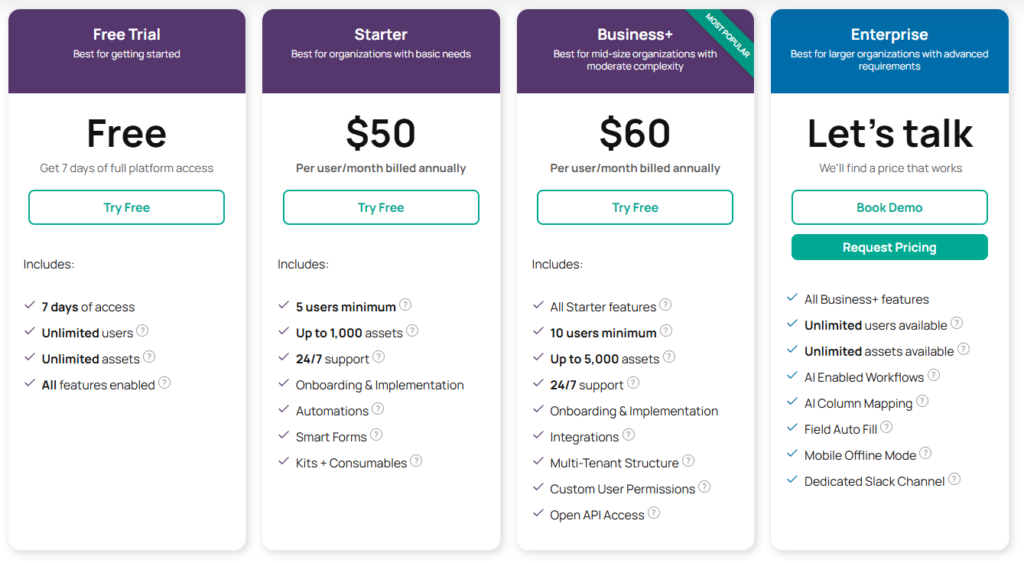
Asset Panda prices by user, starting at $50/user/month on the Starter plan (5-user minimum, up to 1,000 assets), $60/user/month on the Business+ plan (10-user minimum, up to 5,000 assets), and $75/user/month on the Enterprise plan (20-user minimum, up to 10,000 assets).
View-only “Collaborator” seats cost an additional $10/user/month. For a team of 10 users on the Business+ plan, you’re looking at $7,200 per year.
The pricing is asset-limited too, meaning organizations with large inventories may need to purchase additional asset blocks.
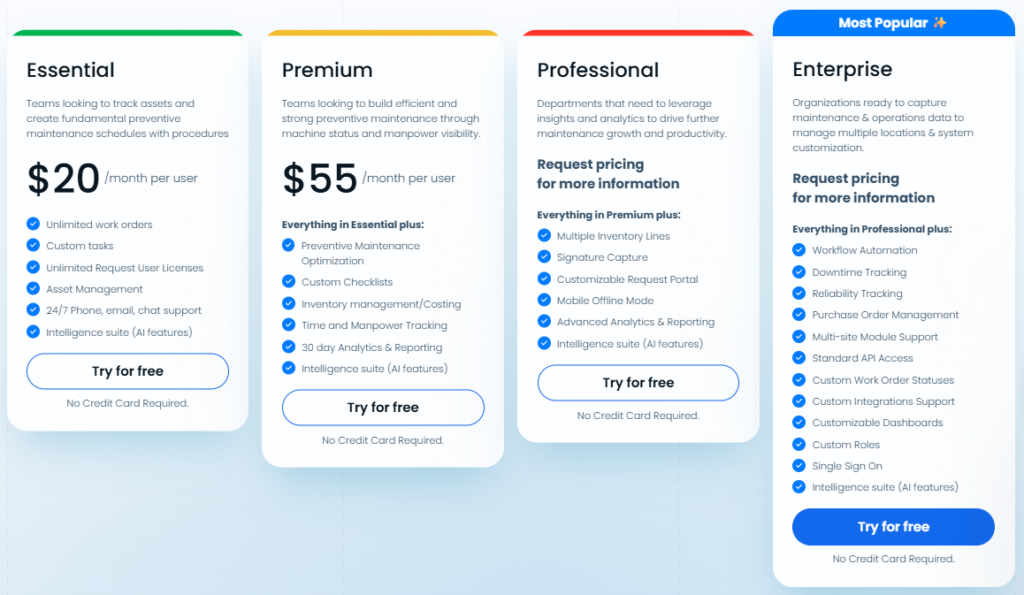
UpKeep starts more accessible at $20/user/month on the Essential plan, but the limitations are significant:
- no preventive maintenance optimization,
- no inventory management,
- no custom checklists,
- and no analytics.
The Premium plan at $55/user/month unlocks these core features but limits analytics to 30 days and still excludes workflow automation, downtime tracking, and multi-site support. Professional and Enterprise pricing requires a custom quote. For a team of 10 technicians on the Premium plan, the annual cost is $6,600, plus implementation fees of $500 to $5,000.
Bulbthings takes the most flexible approach with usage-based pricing that scales with the number of assets, not the number of users.
The Free Plan provides a solid starting point with up to 100 assets and 10 users, covering core features like asset tracking, maintenance management, bookings, and mobile access.
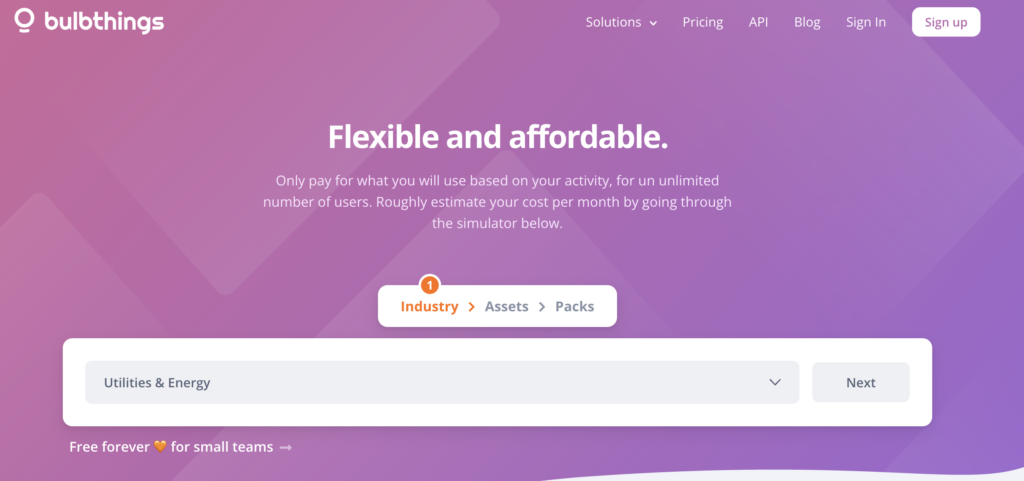
For teams that need more, paid plans scale based on the number of assets and feature packs selected, and users remain unlimited at every tier. This means a company with 100 field technicians and supervisors, 5 managers, and 3 suppliers can all access the platform without incurring additional per-user fees.
Additional services like QR code labels (from $250 per 1,000 units), and custom integrations are available as add-ons when needed.
The math gets particularly interesting for larger teams.
If you have 20 people who need access to your asset management system, Asset Panda and UpKeep both charge for every user, which can push annual costs well into five figures. Meanwhile, Bulbthings’ unlimited user model means the cost stays tied to the number of assets you manage, making it significantly more cost-effective for organizations that need broad team involvement
Mobile capabilities matter as well
For any team managing physical assets, mobile capabilities aren’t a nice-to-have feature; they’re the difference between a system that gets used and one that gathers digital dust.
UpKeep sets the standard here.
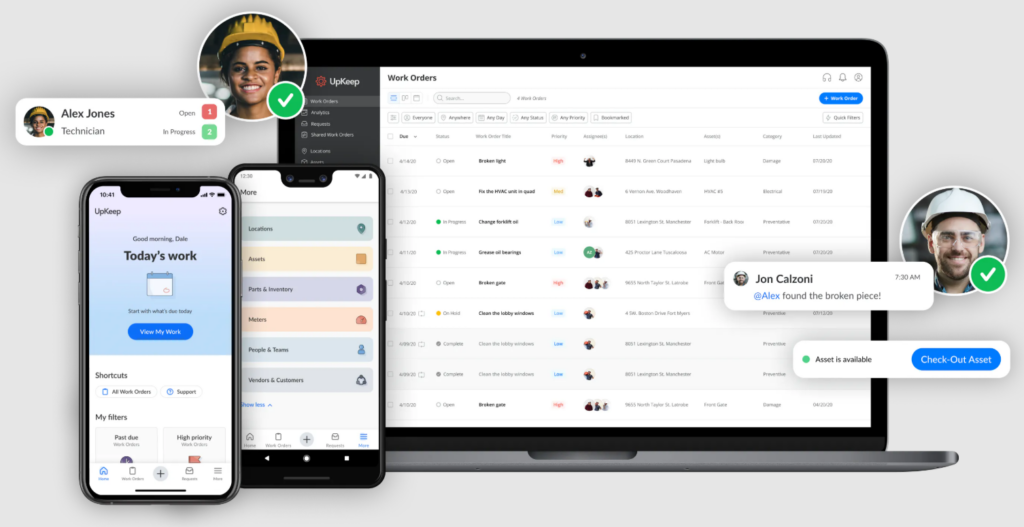
Its mobile-first design philosophy means the app isn’t an afterthought but the primary interface for many users. Technicians can do everything from their phones: create and update work orders, scan QR codes, log time and parts, capture photos, and communicate with managers. The offline mode (limited to work orders) works well, and GPS-based reminders add a layer of automation that field teams appreciate.
For pure maintenance workflow on mobile, UpKeep is hard to beat.
Source: UpKeep
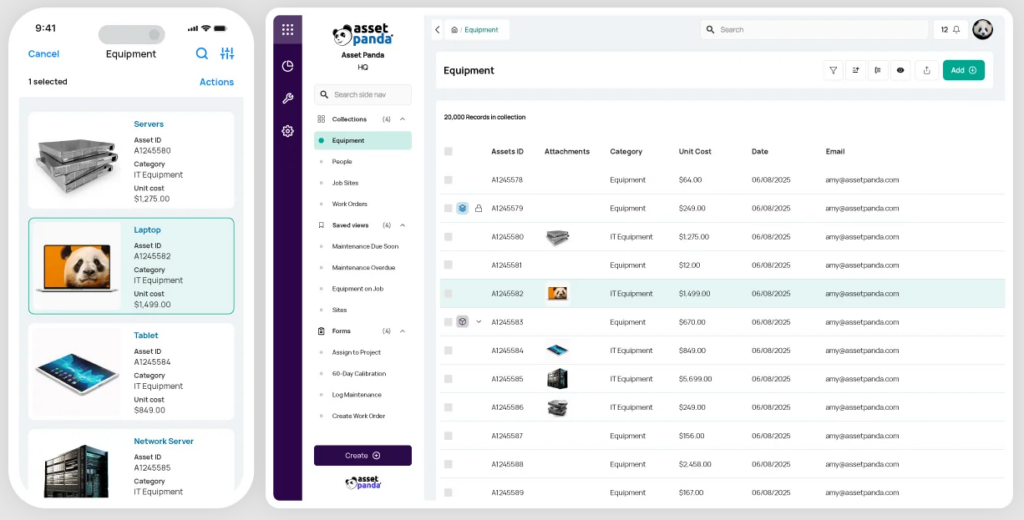
Asset Panda offers a full-featured mobile app that aims to mirror the desktop experience, which is both a strength and a potential limitation.
The app includes built-in barcode and QR code scanning, GPS tagging, digital signature capture, and the ability to attach photos, videos, and documents to asset records. Higher-tier plans add a full offline mode.
However, some users report that the app can be slow at times and experience occasional syncing issues, and certain features may be more limited on mobile compared to the desktop version. The interface also reflects the traditional design of the underlying platform.
Source: AssetPanda
Bulbthings provides its mobile app to all users, whether managers or field teams, giving them the ability to view data and take relevant actions according to their role and permissions.
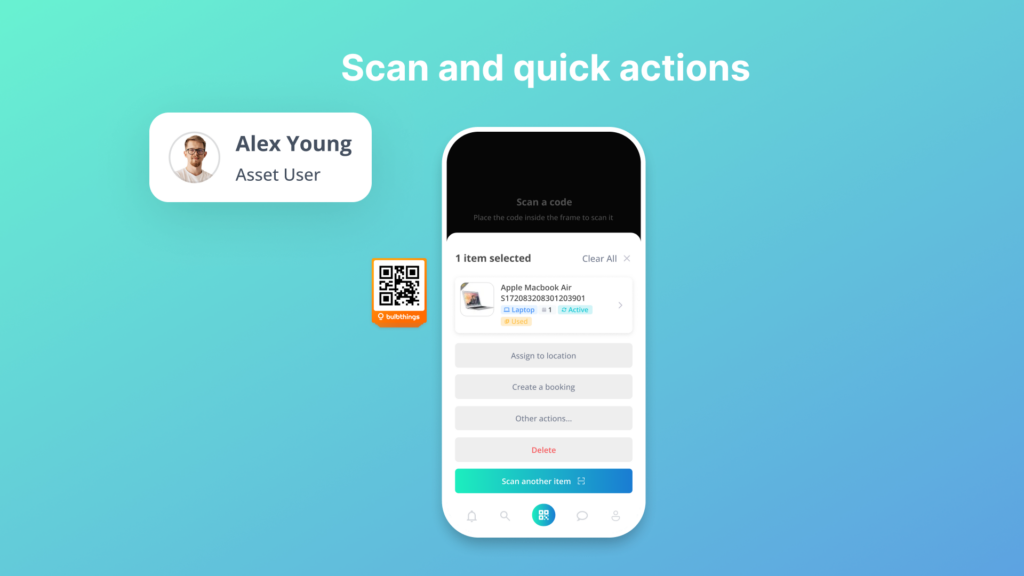
Essentially, everything users can do in the web app is available from the mobile app (including analytics and reports), with the exception of workspace configuration and settings. QR code and NFC scanning is fast and central to the experience, allowing users to look up assets, update statuses, log maintenance requests, book equipment, and execute work orders from the field.
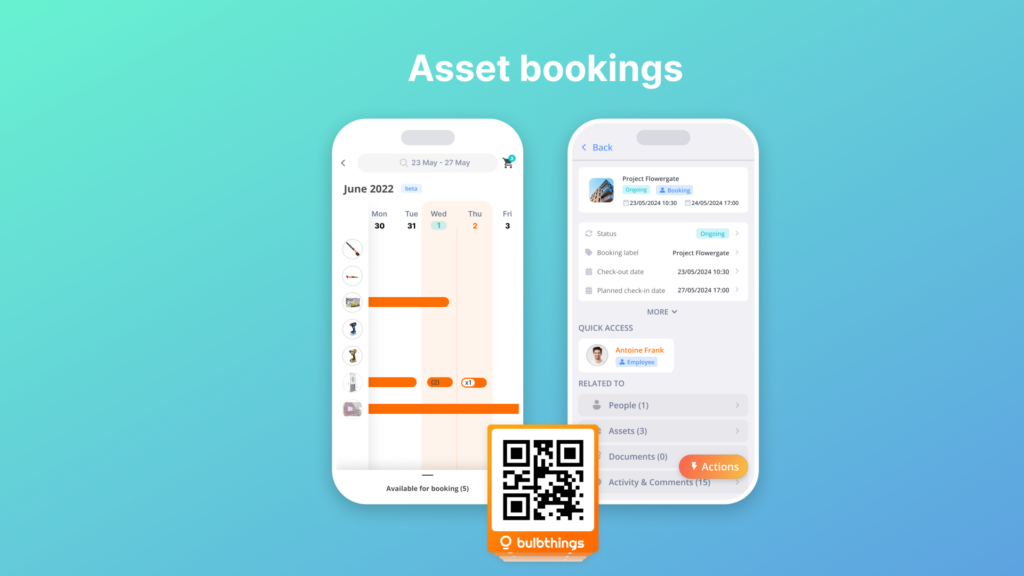
The built-in collaboration features, conversations, @mentions, and picture sharing, keep communication contextual and reduce the need for separate messaging apps.
Bulb AI is accessible from the mobile app, meaning a technician can snap a photo of a new piece of equipment and have the AI create an asset profile automatically. The mobile app has limited offline capabilities, so teams working in areas with consistently poor connectivity should factor this into their decision.
Reporting and analytics show different levels of depth
The value of any asset management platform ultimately depends on the insights it provides for better decision-making.
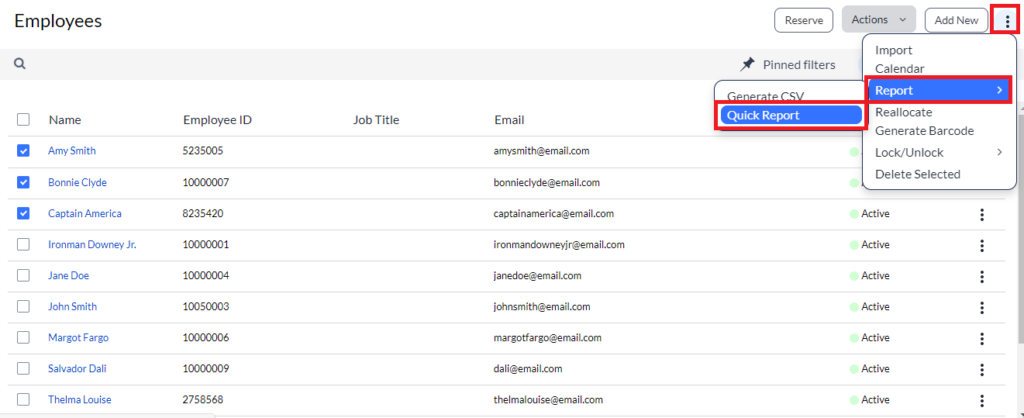
Asset Panda offers a robust custom report builder that lets users generate reports based on nearly any data field in the system.
Reports can be filtered, sorted, grouped, and exported in PDF, CSV, or Excel format. The dashboard includes customizable charts (pie, bar, line) and record counts. Scheduled report delivery automates the distribution of reports to stakeholders. The depreciation calculation capability is particularly strong, supporting five methods with detailed breakdowns per period.
However, some users find the reporting interface less intuitive than they’d like, and the analytics capabilities don’t include the kind of AI-driven insights that more modern platforms offer.
Source: Asset Panda
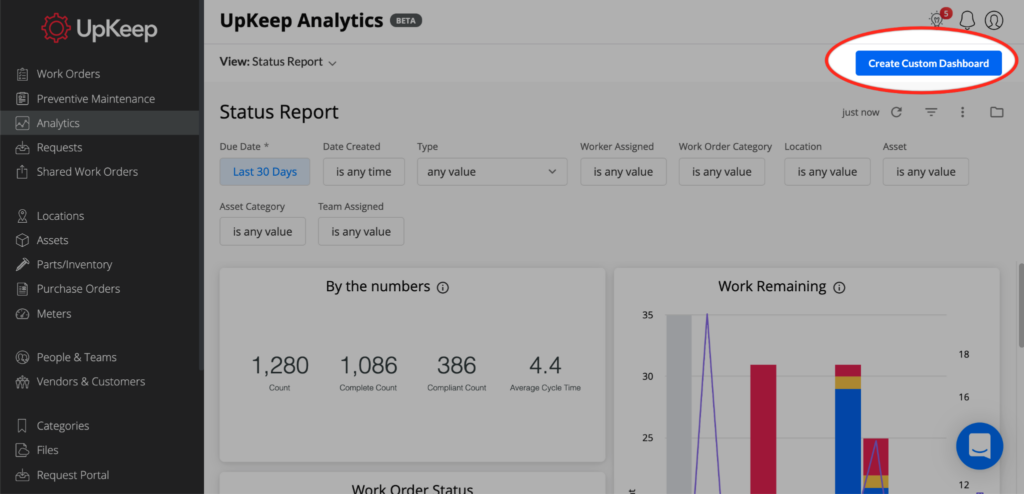
UpKeep provides a comprehensive analytics suite powered by Looker, with pre-built dashboards covering work orders, assets, parts, meters, requests, and users.
The ability to create custom dashboards with multiple visualization types gives managers flexibility in how they view their data. However, the analytics are limited to 30 days of history on the Premium plan, and full drill-down reporting requires the Professional tier.
Custom dashboards are only available on the Enterprise plan. For organizations that need deep historical analysis, this tiered approach can feel restrictive.
Source: UpKeep
Bulbthings provides dynamic reports and dashboards with real-time visualizations of key metrics.

Bulb AI adds a layer of accessibility to reporting: instead of navigating through menus to build a report, users can simply ask a question in natural language and receive instant insights. Smart alerts proactively notify users about issues and cost-saving opportunities, shifting the analytics experience from reactive querying to proactive intelligence.
It also offers a Total Cost of Ownership analysis capability, analyzing data from jobs, asset usage, contracts, and bills to calculate true ownership costs, helping businesses uncover expenses they didn’t know they had.
Asset Panda vs UpKeep vs Bulbthings: Which should you choose?
The best platform for your business depends on your specific priorities, team structure, and operational needs.
Choose Asset Panda if:
- You need extreme customization and control over how assets are tracked and categorized
- Your organization operates in a regulated industry where detailed audit trails and compliance documentation are important
- You have the time and resources to invest in a thorough implementation and training process
- Your primary challenge is asset lifecycle management rather than maintenance workflows
- You need sophisticated depreciation tracking for financial reporting
- You prefer a traditional app interface and can manage configurations in-house
- You’re a larger organization or public-sector entity where time availability for onboarding is less of a constraint
Get started with Asset Panda’s 7-day free trial to explore its customization capabilities.
Choose UpKeep if:
- Maintenance work order management is your primary operational challenge
- You need an excellent mobile experience for field technicians
- Your team values simplicity and fast adoption over deep customization
- You’re transitioning from paper-based or spreadsheet maintenance tracking
- You need strong preventive maintenance scheduling with time and usage-based triggers
- You need robust resource management features like technician planning and scheduling
- You want IoT monitoring hardware from the same vendor as your CMMS
- You’re a mid-size to large company in an industrial or maintenance services sector
Try UpKeep with their free trial to see how it streamlines maintenance workflows.
Choose Bulbthings if:
- You need structured collaboration across internal teams, suppliers, and customers, all working together on assets
- You manage multiple asset classes (equipment, vehicles, consumables, facilities) and want one platform for all of them
- You need instant onboarding with a modern interface and a full AI copilot, with no training required
- You need end-to-end collaborative and mobile asset management workflows with granular roles and permissions
- You need advanced stock management with intake, allocation, alerts, and reporting
- You have rental or leasing workflows that need front-office, logistics, and back-office support
- You want extreme flexibility to adapt the system to your exact workflows, with a Customer Success team to help enable sophisticated configurations
- Your team size makes per-user pricing expensive, and you want unlimited users for broad collaboration
- AI-powered automation and natural language interaction appeal to your team
- You want Total Cost of Ownership insights that go beyond basic depreciation reporting
- You’re a mid-size company that heavily relies on assets for daily operations or customer services
See how Bulbthings can simplify your asset management with a free trial.
The asset management landscape in 2026 is no longer just about choosing between tracking and maintenance. Growing businesses need both, along with collaborative workflows, stock management, fleet visibility, and financial insight.
Asset Panda remains a strong option for larger organizations or public-sector entities that need deep configurability and can invest the time in onboarding.
UpKeep is the clear choice for mid-size to large companies where maintenance operations are the primary concern.
Meanwhile, Bulbthings represents a different approach: a collaborative platform that digitalizes asset-centric workflows across teams, suppliers, and customers, powered by AI and designed for growing businesses that rely heavily on their assets for daily operations and customer services.
Sometimes the smartest choice isn’t the most specialized one. It’s the one that brings everyone together around the assets they manage.