Asset Panda vs AssetTiger (vs Bulbthings): which Asset Management Platform actually fits your business in 2026?

Choosing between Asset Panda and AssetTiger for your asset management needs often comes down to these five critical questions:
- Do you need deep customization and workflows you can tailor, or would a simpler, more affordable system serve you better?
- Are you managing a few hundred assets on a tight budget, or thousands of assets across multiple locations?
- Is your team primarily office-based, or do you have field workers who need robust mobile access and real-time collaboration?
- Do you need to manage just physical assets, or do you also need fleet management, maintenance scheduling, stock management, and financial tracking in one platform?
- Are you looking for a tool you can set up yourself, or do you need guided onboarding and dedicated support?
In short, here’s what we recommend:
👉 Asset Panda is a highly configurable, cloud-based asset tracking platform built for organizations that need extensive customization without writing code. Its workflow builder, unlimited user model, and mobile apps make it a strong choice for larger organizations or public entities willing to invest time in setup and configuration. While Asset Panda’s no-code approach allows administrators to customize fields, forms, and automations, the scope of what can be configured is limited, and the interface carries a learning curve.
👉 AssetTiger is a budget-friendly asset management system that offers a generous free plan for up to 250 assets, making it an attractive option for small businesses and non-profits. Its straightforward interface and unlimited users on paid plans provide solid core functionality at an unbeatable price point. While AssetTiger delivers on the basics, it lacks advanced features like GPS tracking, has limited integration capabilities with other business systems, and its mobile app experience has been reported as less polished than the web version.
Both platforms help organizations move beyond spreadsheets and gain better control over their physical assets. However, while Asset Panda offers maintenance and depreciation features, neither platform combines structured team collaboration across suppliers and customers, advanced stock management, rental and leasing workflows, and AI-driven asset management in a single system. That’s where Bulbthings comes in.
👉 Bulbthings is a modern platform that digitalizes asset-centric workflows and activities, bringing together teams, suppliers, and customers around your operational assets. Its standout collaboration features work like a “WhatsApp for assets,” giving every stakeholder structured, role-based access to the information they need. The Bulb AI agent lets users perform tasks through natural language, from creating assets via photo recognition to generating instant reports. And its low-code architecture means you can customize workflows, validation steps, and checklists without developer resources and with no limitation in scope. It also comes with an API and SDK for developers who want to extend the platform further or build entirely new applications on top of it.
For growing businesses that need more than just asset tracking, Bulbthings bridges the gap between simple inventory tools and siloed enterprise systems.
If managing all your operational assets in one collaborative, intelligent platform sounds like what your business needs, see how Bulbthings works with a free plan.
Table of contents:
- Asset Panda vs AssetTiger vs Bulbthings at a glance
- The real divide: Simple tracking vs digitalized asset workflows
- Asset Panda wins on customization, AssetTiger wins on price
- Bulbthings delivers what both platforms are missing
- Maintenance management separates the tools from the platforms
- Mobile capabilities reveal each platform’s priorities
- Pricing models reflect different philosophies
- Reporting and analytics vary dramatically
- Asset Panda vs AssetTiger vs Bulbthings: Which should you choose?
Asset Panda vs AssetTiger vs Bulbthings at a glance
| Asset Panda | Asset Tiger | Bulbthings | |
|---|---|---|---|
| Collaboration | ⭐⭐⭐ Internal team features only | ⭐⭐ Basic user management | ⭐⭐⭐⭐⭐ Cross-team, supplier, and customer collaboration with granular permissions |
| Ease of use | ⭐⭐⭐ Steep learning curve | ⭐⭐⭐⭐ Straightforward interface | ⭐⭐⭐⭐⭐ Modern, intuitive design with AI assistance |
| AI capabilities | ⭐⭐⭐ Ursa AI copilot (newer addition) | ⭐ None | ⭐⭐⭐⭐⭐ Fully unified AI copilot agent (Bulb AI) for all platform actions via natural language and voice command |
| Primary strength | ⭐⭐⭐⭐⭐ Deep no-code customization | ⭐⭐⭐⭐ Affordability and simplicity | ⭐⭐⭐⭐⭐ Digitalization of asset workflows across teams, suppliers, and customers |
| Inventory / Stock Management | ⭐⭐ Asset tracking with custom fields | ⭐⭐⭐ Basic asset inventory | ⭐⭐⭐⭐⭐ Advanced stock management with intake, allocation, alerts, and trends |
| Mobile app | ⭐⭐⭐⭐ Mobile apps with offline mode on Enterprise (some features limited to web) | ⭐⭐⭐ Functional but lacking polish | ⭐⭐⭐⭐⭐ Mobile-first with full feature access by role, QR scanning, and NFC |
| Maintenance Management | ⭐⭐⭐⭐ Customizable work orders and scheduling | ⭐⭐⭐ Basic maintenance scheduling | ⭐⭐⭐⭐⭐ Full CMMS with preventive and corrective workflows |
| Rental / Leasing Management | ⭐⭐ No dedicated module | ⭐ Not available | ⭐⭐⭐⭐⭐ Full rental and leasing workflows with front-office, logistics, and back-office |
| Financial Management | ⭐⭐ Depreciation and inflation tracking | ⭐ Basic depreciation | ⭐⭐⭐⭐⭐ Depreciation, TCO analytics, contracts management and invoicing |
| Fleet Management | ⭐⭐ Not a core capability | ⭐ No dedicated fleet module | ⭐⭐⭐⭐⭐ Vehicles and plant fleet management with mileage, fuel, and fines tracking |
| Workflow cuztomization | ⭐⭐⭐⭐ No-code configuration (limited in scope) | ⭐⭐ Limited customization | ⭐⭐⭐⭐⭐ Low-code/no-code architecture with customizable workflows, validations, and checklists |
| Free plan | ⭐⭐ 7-day trial only | ⭐⭐⭐⭐⭐ Free forever for up to 250 assets | ⭐⭐⭐⭐⭐ More features free forever for up to 100 assets but more features |
| Integrations | ⭐⭐⭐⭐ Jira, ServiceNow, Zendesk, and more | ⭐⭐ Limited integrations | ⭐⭐⭐⭐ ERP, accounting, CRM, and optional IoT/telematics |
| API for developers | ⭐⭐⭐ REST API for integrations | ⭐⭐⭐ REST API for integrations | ⭐⭐⭐⭐⭐ REST API and Javascript/Typescript SDK for integrations, customizations and new apps |
| Best for | Larger orgs or public entities willing to invest in custom configuration | Small teams on a budget | Growing businesses that need collaborative, digitalized asset workflows |
The real divide: Simple tracking vs digitalized asset workflows
The comparison between Asset Panda and AssetTiger is, on the surface, straightforward: one is more powerful and expensive, the other is simpler and cheaper.
But the real question most businesses should be asking is whether either platform covers enough of their operational needs and whether the people who use it daily can actually collaborate through it.
AssetTiger focuses primarily on tracking physical assets, knowing where things are, who has them, and what condition they’re in. You get a clean and affordable tool for the basics, but you may outgrow it as your needs expand.
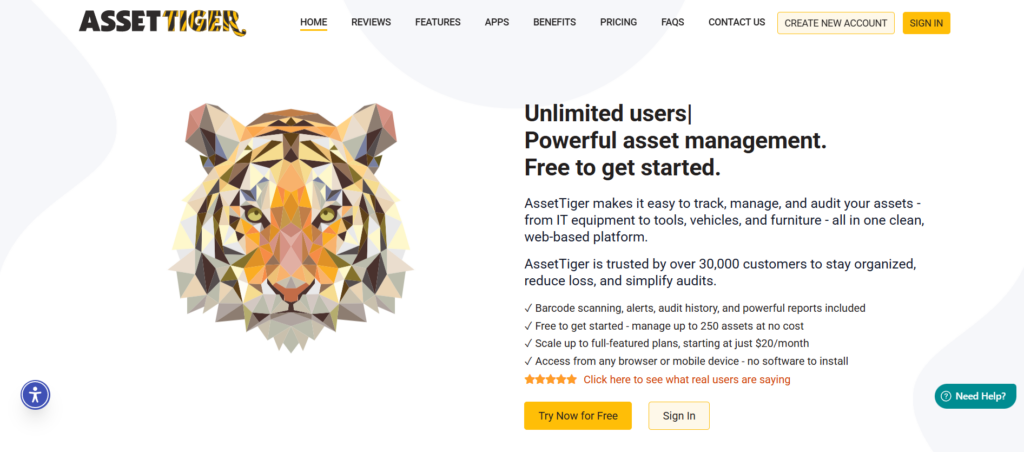
Asset Panda goes further, offering customizable workflows, maintenance tracking, and compliance modules alongside its core asset tracking capabilities.
Both provide real value, but for many businesses, these features are still just pieces of a much larger puzzle. Consider a typical growing business; sure, they need to track their equipment, but they also need to:
- understand the total cost of owning their assets,
- schedule maintenance to prevent downtime,
- handle rental or leasing operations,
- track consumable stock levels,
- manage a fleet of vehicles.
Not to mention coordinating all of this across field teams, office staff, suppliers, and sometimes even customers.
With Asset Panda, you get powerful customization that can accommodate many of these needs, but at the cost of significant setup time and a traditional interface that requires dedicated onboarding.
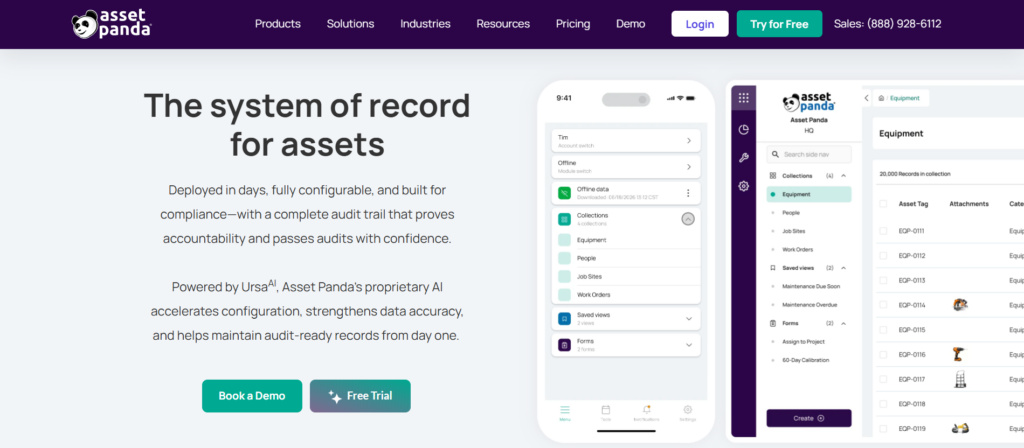
This is precisely why Bulbthings was built differently.
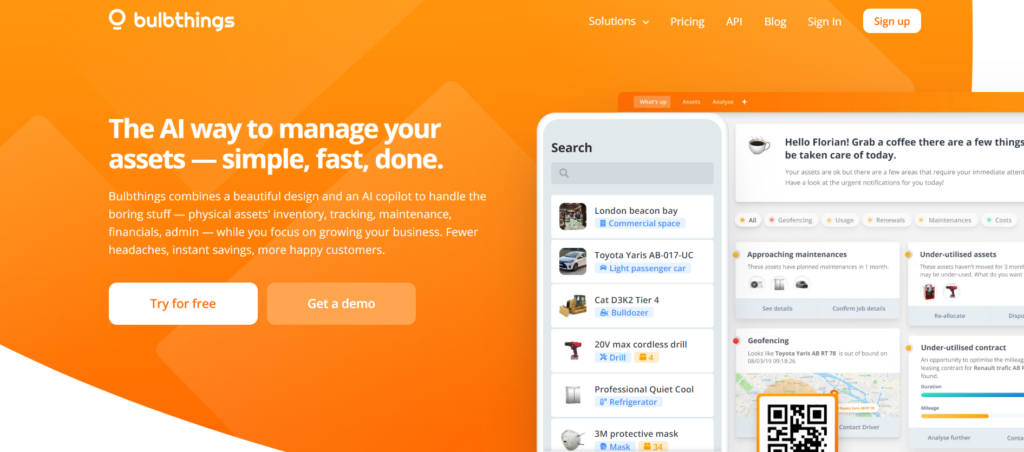
Instead of focusing on individual pieces of the asset management puzzle, it digitalizes asset-centric workflows end-to-end, bringing teams, suppliers, and customers into a single collaborative environment where asset inventory, maintenance (CMMS), stock management, fleet tracking, rental/leasing operations, and financial analytics all connect.
Bulbthings ships with standard templates and workflows organized by industry, which administrators can quickly customize with no training required. When more extensive customizations are needed, the Bulbthings Customer Success Team leverages the platform’s low-code engine and API/SDK to deliver tailored solutions in a cost-effective way.
For businesses that are tired of stitching together multiple tools or fighting siloed information, Bulbthings provides a single source of truth for all operational assets.
Asset Panda wins on customization, AssetTiger wins on price
Asset Panda has built its reputation on being endlessly configurable.
Need custom fields for tracking medical device certifications? Done. Want to build a workflow that automatically triggers actions when a form is submitted, such as generating new records or sending notifications? The automation engine handles it.
The no-code platform allows administrators to create custom fields, forms, workflows, and reports tailored to their exact specifications.
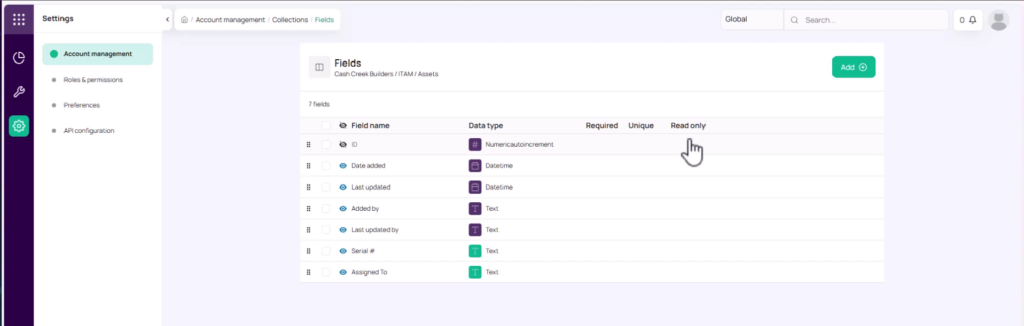
Source: Asset Panda
This flexibility has earned Asset Panda a loyal following across diverse industries, from education and healthcare to government and construction.
The platform serves over 4,000 organizations and tracks more than 20 million assets across over 140 industries. Its mobile apps for iOS and Android offer functionality that covers many common tasks, though some features remain limited to the web version based on available tutorials. The Enterprise plan includes a full offline mode for teams working in areas without connectivity.
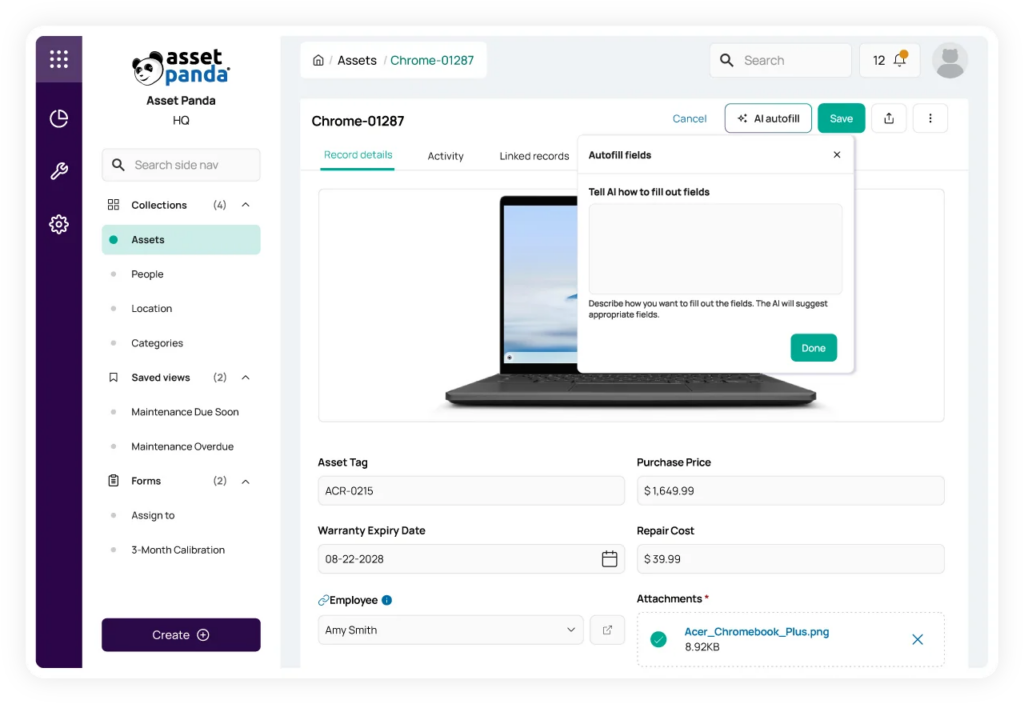
More recently, Asset Panda has introduced Ursa AI, an AI copilot that helps with workflow automation, natural language search, and document scanning, a notable addition that brings AI capabilities to the platform.
Source: Asset Panda
The trade-off is the learning curve.
While Asset Panda markets itself as a “no-code” platform, its customization capabilities, though flexible within their scope, remain constrained by a more traditional architecture. The interface, with its many menus and configuration options, typically requires dedicated onboarding and setup time.
Organizations with highly specific, multi-step workflows that need digitalizing may find they hit limitations or face significant additional costs to get exactly what they need.
The pricing, which starts at $50 per user per month (billed annually) with a 5-user minimum, adds up quickly.
AssetTiger takes the opposite approach: simplicity and affordability above all. Its free plan, which supports up to 250 assets and 2 users, is one of the most generous in the asset tracking market. Even the paid plans are remarkably affordable, starting at just $20 per month for up to 500 assets with no per-user charges.
The platform delivers on the fundamentals.
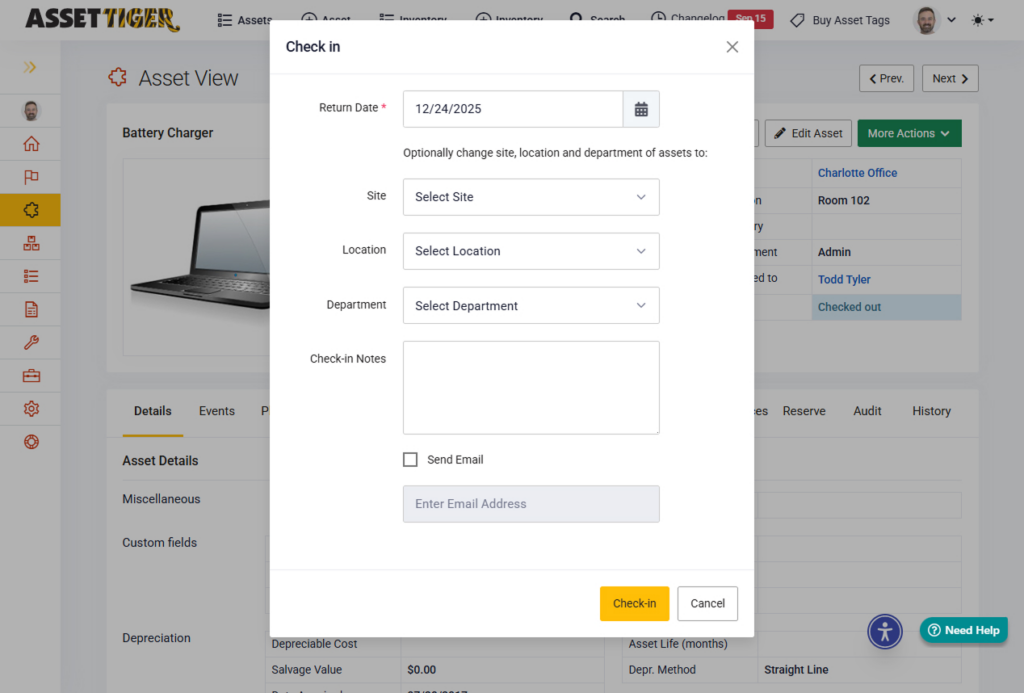
Barcode and QR code scanning, check-in/check-out management, maintenance scheduling, depreciation tracking, and configurable email alerts are all included. The interface is clean and easy to navigate, and most users can get productive within their first session.
Source: AssetTiger
But AssetTiger’s simplicity comes with limitations.
The platform lacks advanced features like GPS tracking, has limited integration capabilities with other business systems, and its mobile app has been described by some users as clunky and occasionally slow.
For small teams with straightforward needs, these trade-offs are acceptable. For growing businesses with evolving requirements, they become constraints.
Bulbthings delivers what both platforms are missing
This is where the comparison gets interesting. While AssetTiger focuses on tracking what you have and Asset Panda extends into customizable workflows and maintenance, Bulbthings takes a fundamentally different approach: it digitalizes the full spectrum of asset-centric workflows and activities, with structured collaboration at its core.
Collaboration across teams, suppliers, and customers
Bulbthings’ standout differentiator is how it enables collaboration across internal teams, suppliers, and customers within the context of your assets.
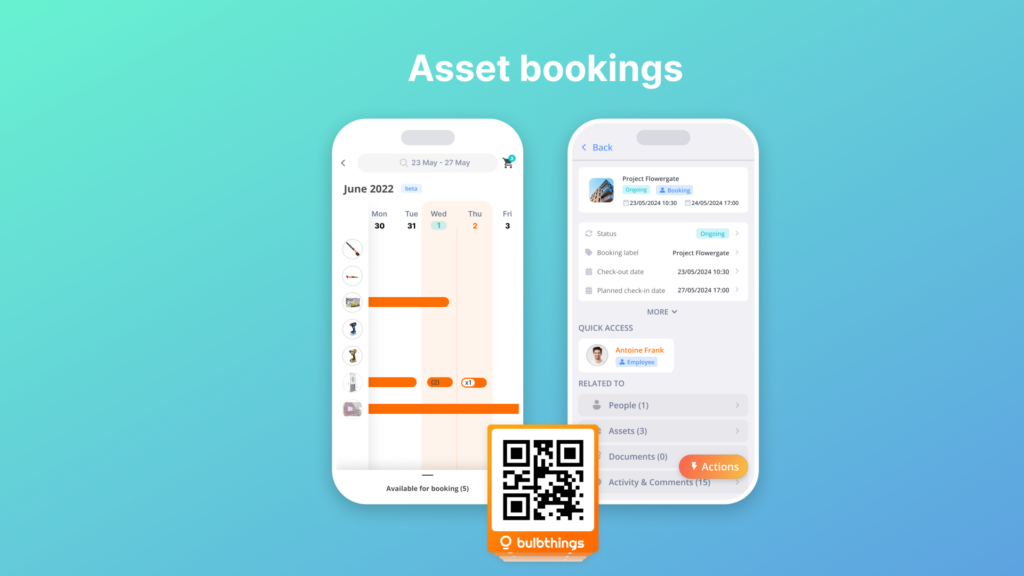
Think of it as “WhatsApp for assets” where conversations, mentions, and image sharing are built directly into asset profiles, work orders, and bookings. But unlike a chat app, everything is structured and organized around the assets themselves, so no information gets lost.
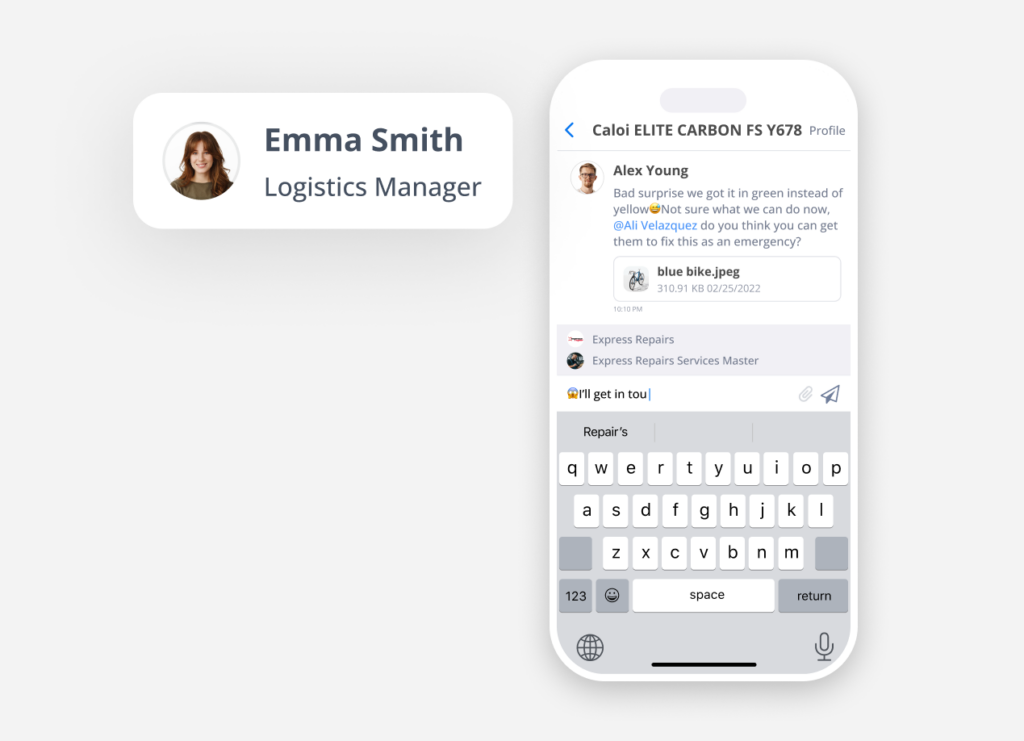
The platform offers granular, fine-tuned roles and permissions that can be configured based on virtually any criteria. This means every stakeholder, whether an internal technician, an external supplier, or a customer, sees only what’s relevant to their role and can only perform actions they’re authorized to take.
For businesses operating across countries, the platform supports multi-language collaboration with unlimited translations (powered by the Google Translate API), which automatically apply to both the web platform and the mobile app, alongside multi-currency and multi-metric support.
When Bulbthings describes offering unlimited users, it’s not just about internal team members, it’s about bringing your entire ecosystem onto one platform without worrying about per-seat costs.
Modern, intuitive design
Where Asset Panda’s traditional interface requires dedicated onboarding, Bulbthings is designed to be intuitive from the start. Users can get started instantly with no training, with their Customer Success Team being available for any help required or more advanced needs.
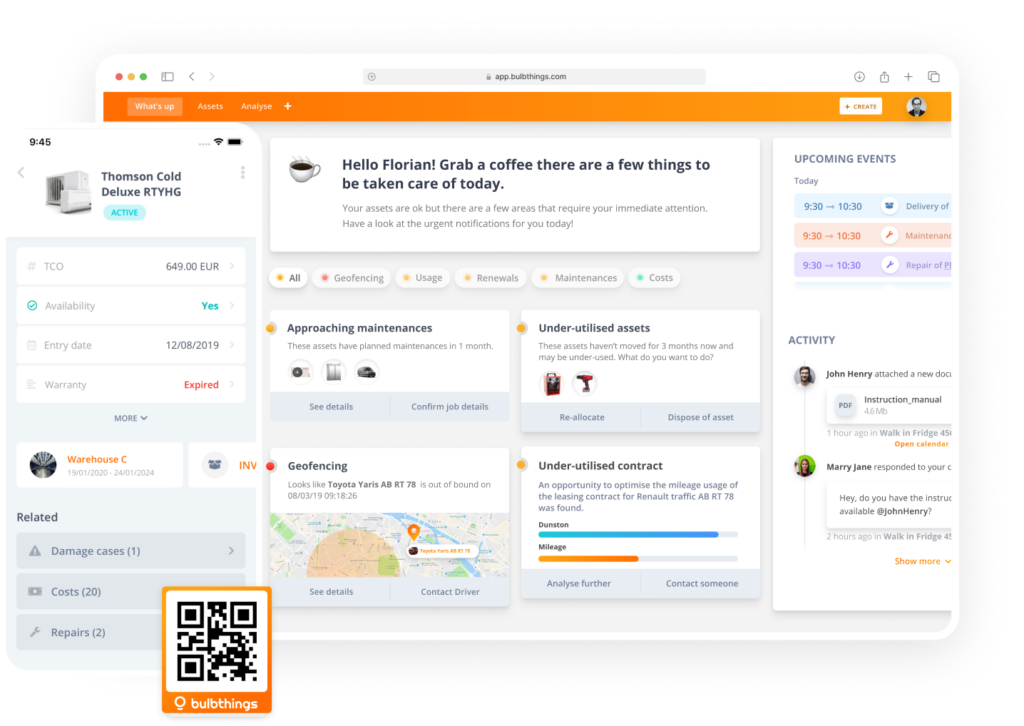
A common “profile” layout means that once you understand how one asset type works, you understand them all, no menus to memorize or special buttons to find. Users describe it as having a “very logical and easy-to-use system” that reduces training time significantly.
Our philosophy is straightforward: anything that is not extremely intuitive and would require training is either handled by the Customer Success team or by the upcoming AI agent developer.
AI-powered asset management
Bulbthings’ Bulb AI agent is a purpose-built copilot designed from the ground up as a core interaction method, not a feature added after the fact.

Users can add assets by taking a photo and letting the AI extract the details. They can log maintenance requests, generate reports, make bookings, and manage asset workflows through natural language commands.
The AI functions at both individual asset and workspace levels, making it useful for quick one-off tasks and bulk operations alike.
While Asset Panda has also introduced AI capabilities with Ursa AI, Bulb AI’s vision goes further: Bulbthings envisions AI becoming the primary interaction method, with the traditional UI shifting from an input interface to primarily a visualization layer for maps, reports, and dashboards.
Advanced stock management
Bulbthings includes advanced stock management for consumables and lower-value items tracked by quantity rather than individually.
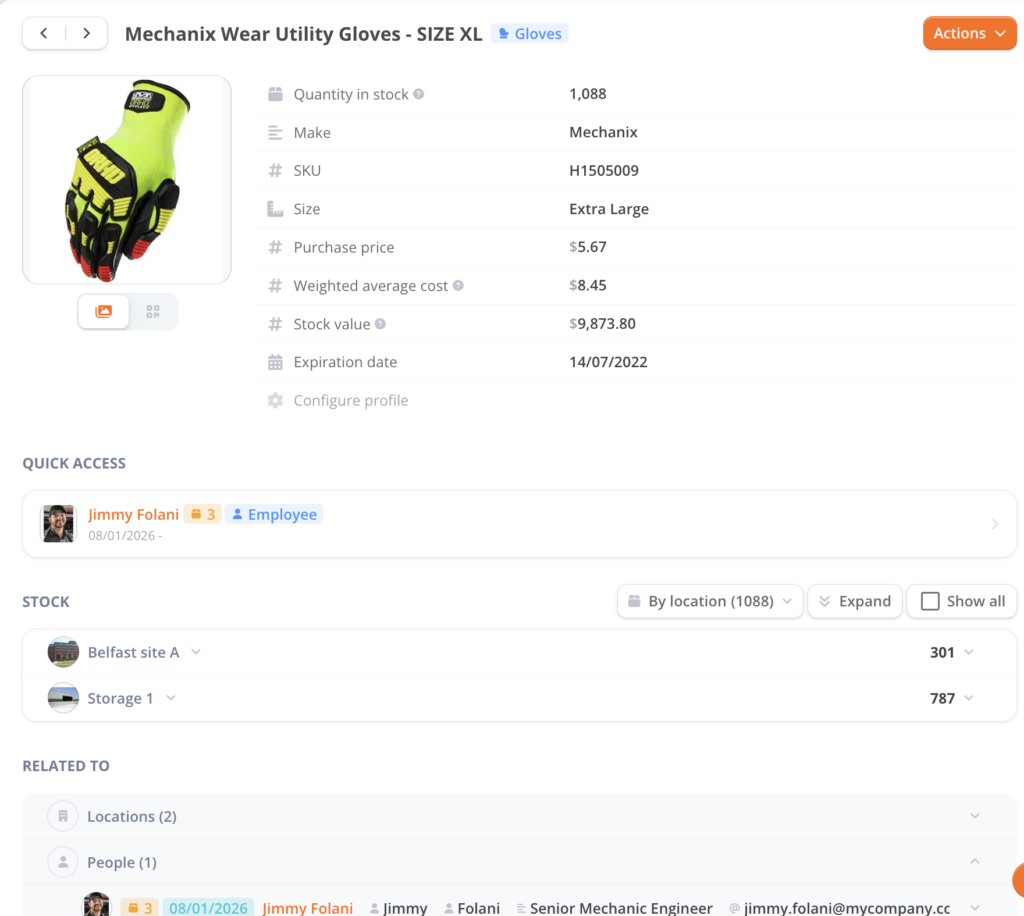
This includes stock intake, stock allocation to locations and people (for example, PPE or materials tracking), stock value calculation, alerts on minimum and maximum stock levels, and stock level trends and reporting. Neither Asset Panda nor AssetTiger offers this level of dedicated stock management functionality.
Vehicles and plant fleet management
For organizations that manage vehicles alongside other assets, Bulbthings provides dedicated fleet management capabilities including mileage tracking, fuel consumption tracking, driver incident reporting, fines and damages management, and end-of-life management.
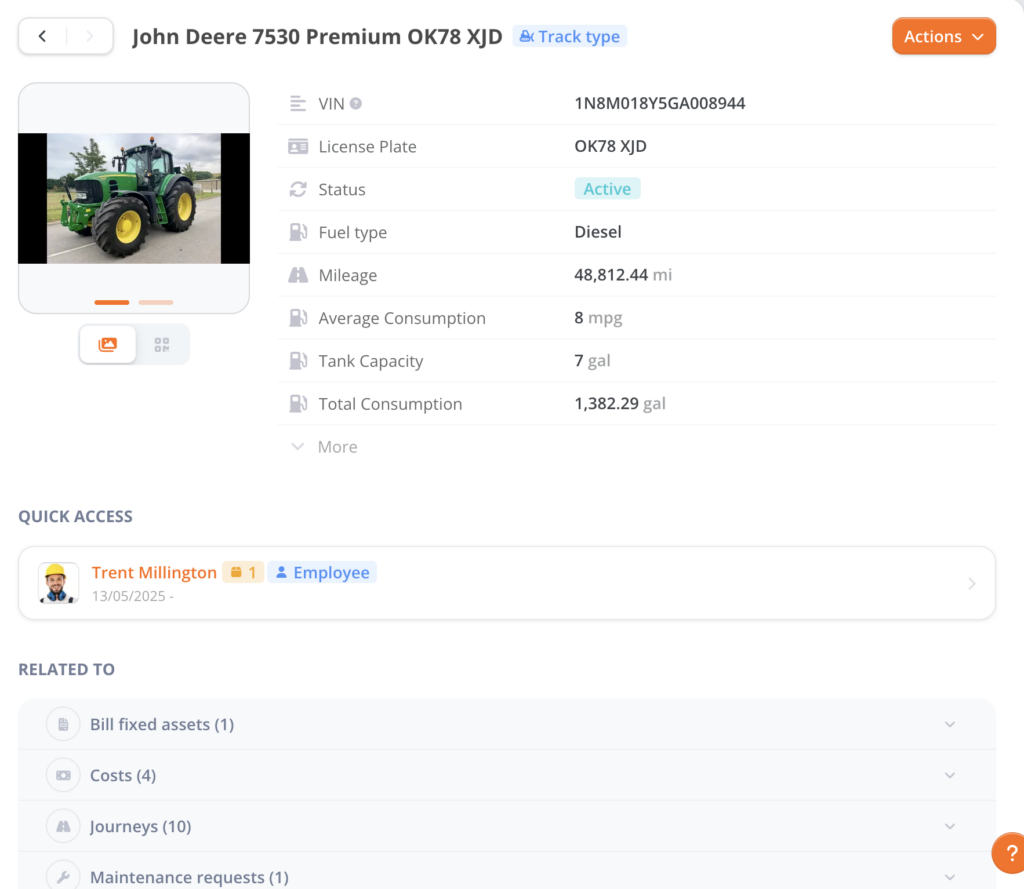
For corporate fleets specifically, the platform supports leasing contract quotation and comparison, ordering from suppliers, fleet cost import (maintenance, fuel, financing or depreciation), and TCO calculation.
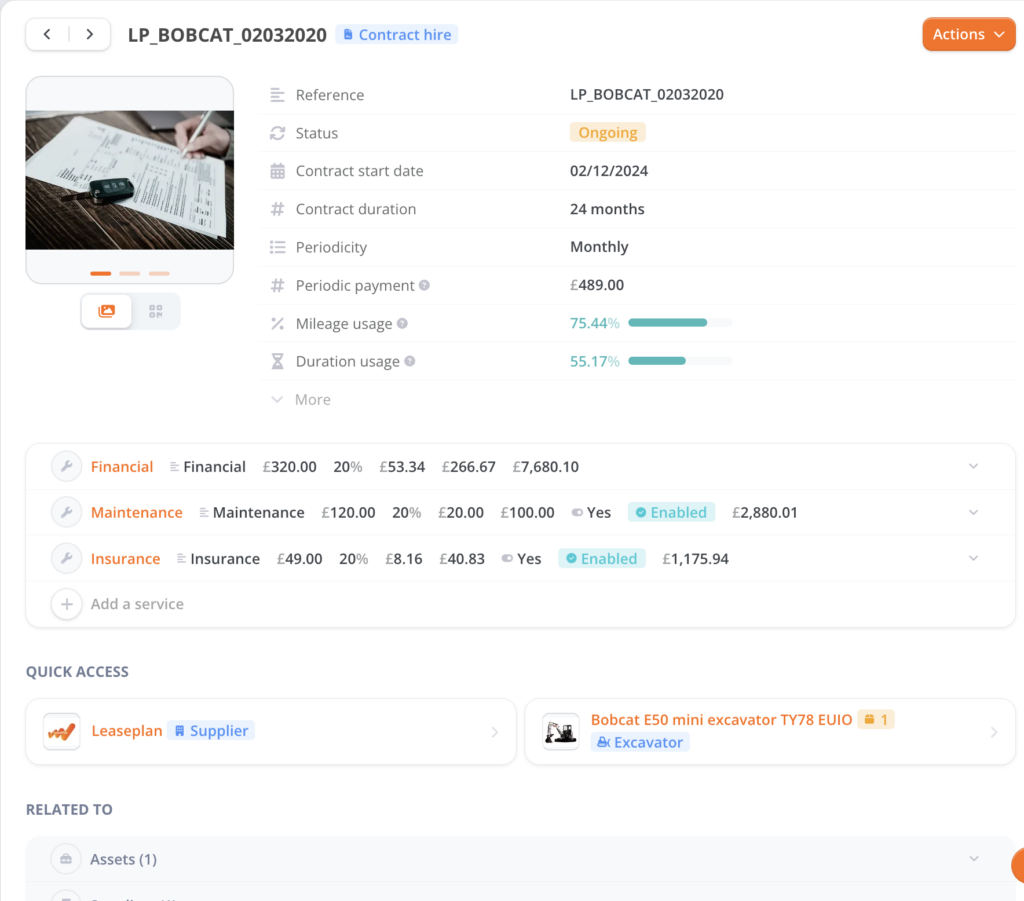
Asset Panda can track vehicles as assets and schedule maintenance based on manual odometer readings, but it lacks these dedicated fleet workflows. AssetTiger has no fleet management capabilities.
Service providers and rental/leasing management
A capability neither competitor offers: Bulbthings includes full rental and leasing management covering three operational areas.
Front-office features include customer records, CRM integration, quotation, and invoicing. Logistics capabilities cover supplier records, orders, delivery management, and end-of-rental checks.
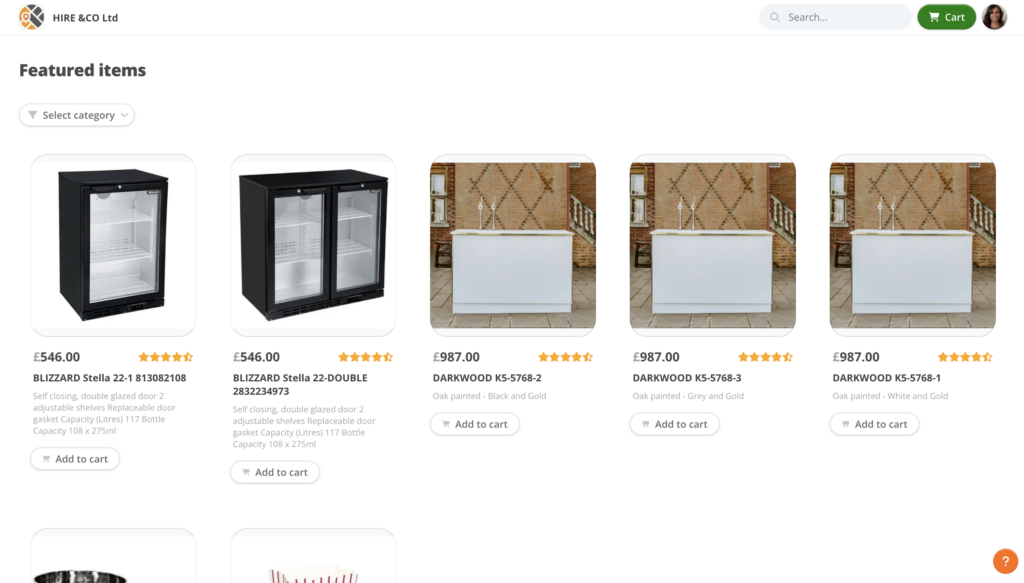
Back-office operations handle stock management, maintenance management, and financial reporting.
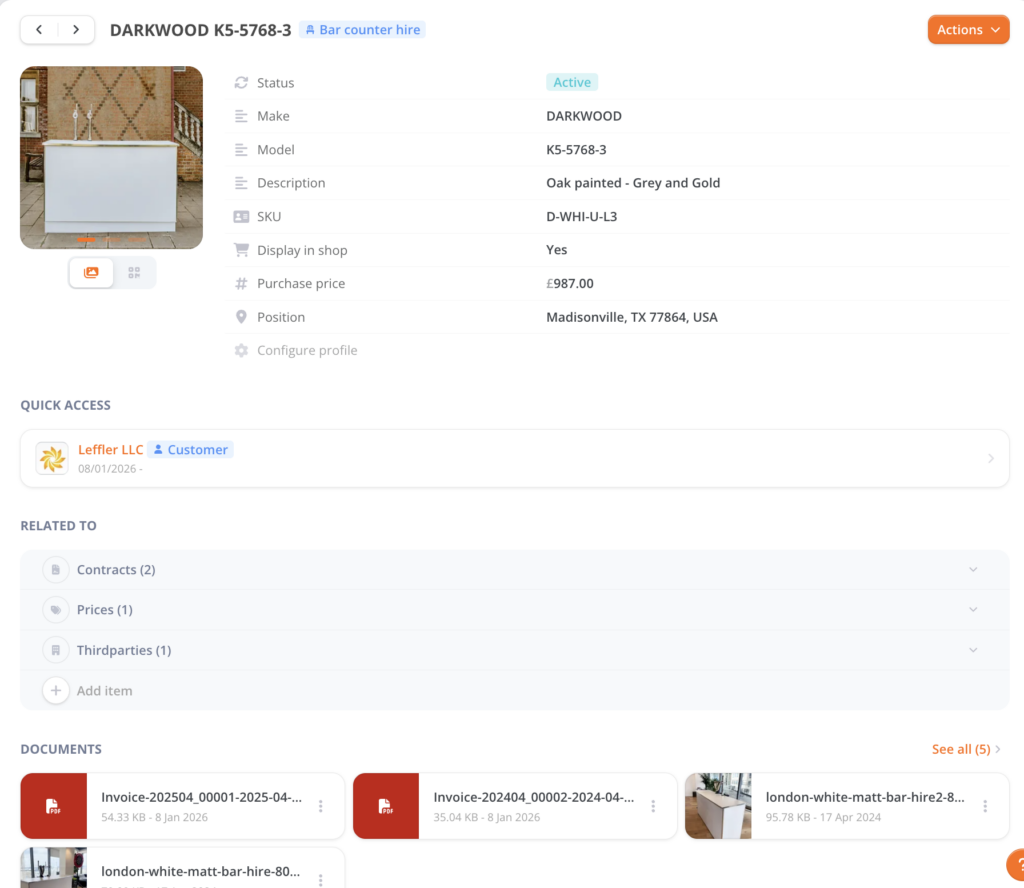
For businesses that rent or lease equipment, this eliminates the need for a separate system entirely.
Financial management and TCO analytics
Bulbthings goes well beyond the depreciation tracking offered by Asset Panda and AssetTiger.
The platform provides Total Cost of Ownership analytics by analyzing usage, contracts, maintenance costs, and bills, helping businesses uncover hidden costs and identify savings opportunities. Combined with invoicing capabilities and the ability to set budget thresholds with notifications to prevent overspending, it gives finance teams and operations managers a comprehensive financial picture of their assets.
Low-code workflow automation
Bulbthings was built on a low-code architecture from the ground up, enabling customization of workflows, validation processes, checklists, and forms without requiring developer resources.
Unlike Asset Panda’s no-code approach, which allows customization of fields and automations within a defined scope, Bulbthings’ low-code platform enables true end-to-end workflow customization with no limitation in scope.
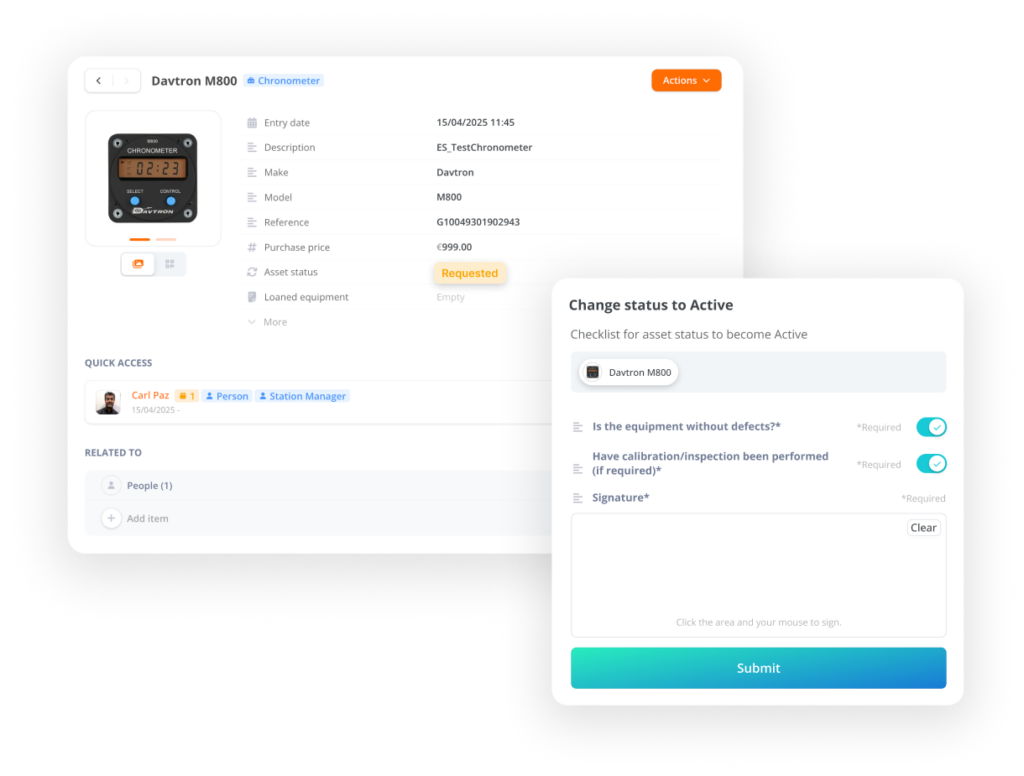
It comes with many off-the-shelf workflows by industry, so customers get pre-built solutions out of the box with the ability to customize further as needs evolve. For organizations that need to go even further, Bulbthings provides an API and SDK, allowing developers to extend the platform or build entirely new applications on top of it.
Optional telematics and IoT connectivity
As an optional add-on, Bulbthings can connect with GPS tracking devices and IoT sensors for real-time asset monitoring.
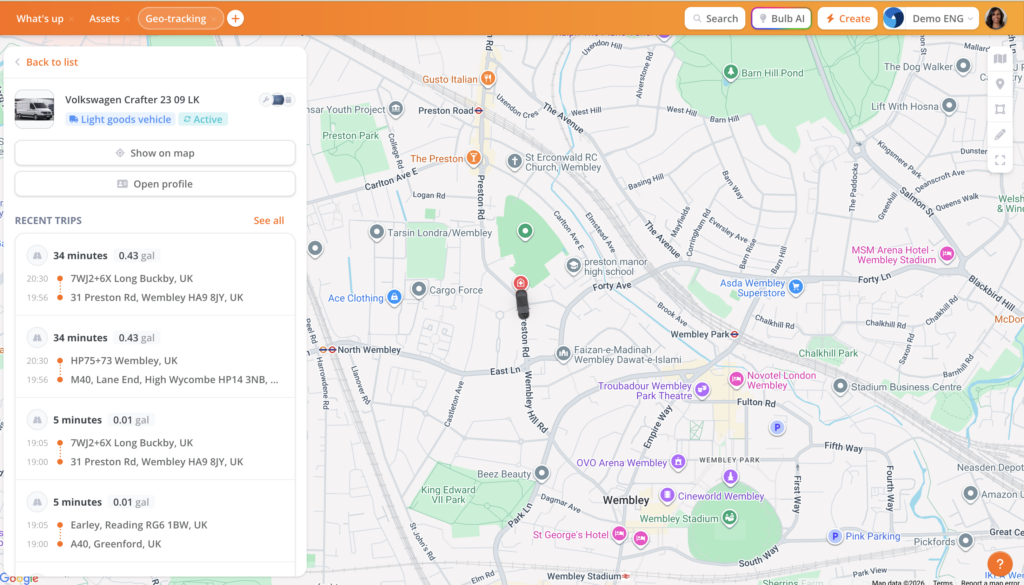
This includes telematics for vehicles and machinery as well as RFID and Bluetooth beacon solutions. It’s worth noting this is a supplementary capability for organizations that need it, not a requirement to get value from the platform.
Multiple asset-related views
The platform provides multiple ways to view your asset data: registers for traditional list views, stock level dashboards, floor maps for indoor location tracking, GPS maps for outdoor tracking, and planning views for bookings and scheduling.

This flexibility means different teams can access the same data in whatever format is most useful for their work.
Maintenance management separates the tools from the platforms
AssetTiger offers basic maintenance scheduling.
You can set up recurring maintenance tasks based on time intervals, receive email alerts when maintenance is due, and log maintenance activities in the asset’s history. It also includes a basic work order form where users can record status, due dates, and costs.
However, it lacks a full CMMS workflow for managing the relationship between maintenance requests, technician assignments, and work execution.
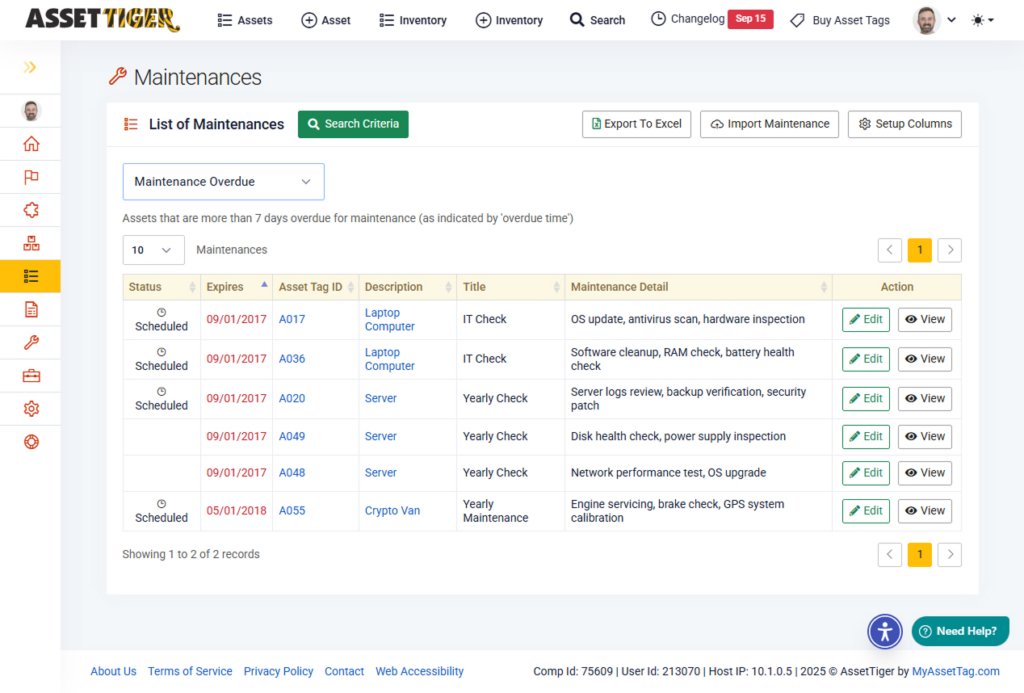
Source: AssetTiger
Asset Panda takes maintenance much further.
Its customizable automation engine allows users to build sophisticated maintenance workflows, from automated work order creation to technician assignment and notification. The system supports both corrective and preventive maintenance, with the ability to track costs, require digital signatures, and maintain a detailed repair history.
For organizations willing to invest the time in configuration, it’s a powerful CMMS alternative.

Source: Asset Panda
Bulbthings provides a purpose-built maintenance management system that combines the power of a dedicated CMMS with the collaborative approach the platform is known for.
Corrective maintenance can be initiated by anyone scanning an asset’s QR code (with the option use public QR codes for non-Bulbthings users) which automatically generates a work order.
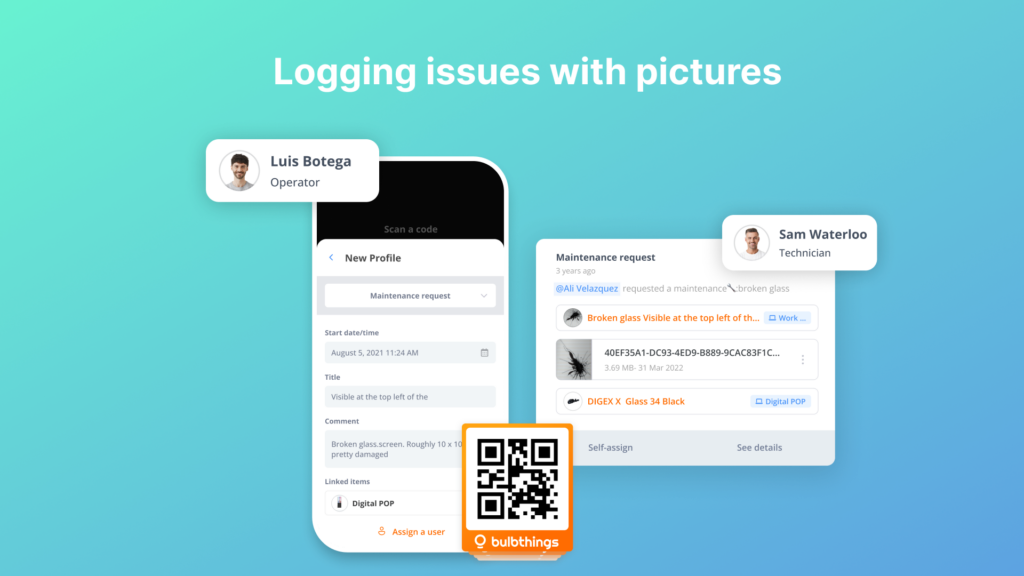
Preventive maintenance can be scheduled based on time intervals or usage-based metrics like mileage or operating hours.
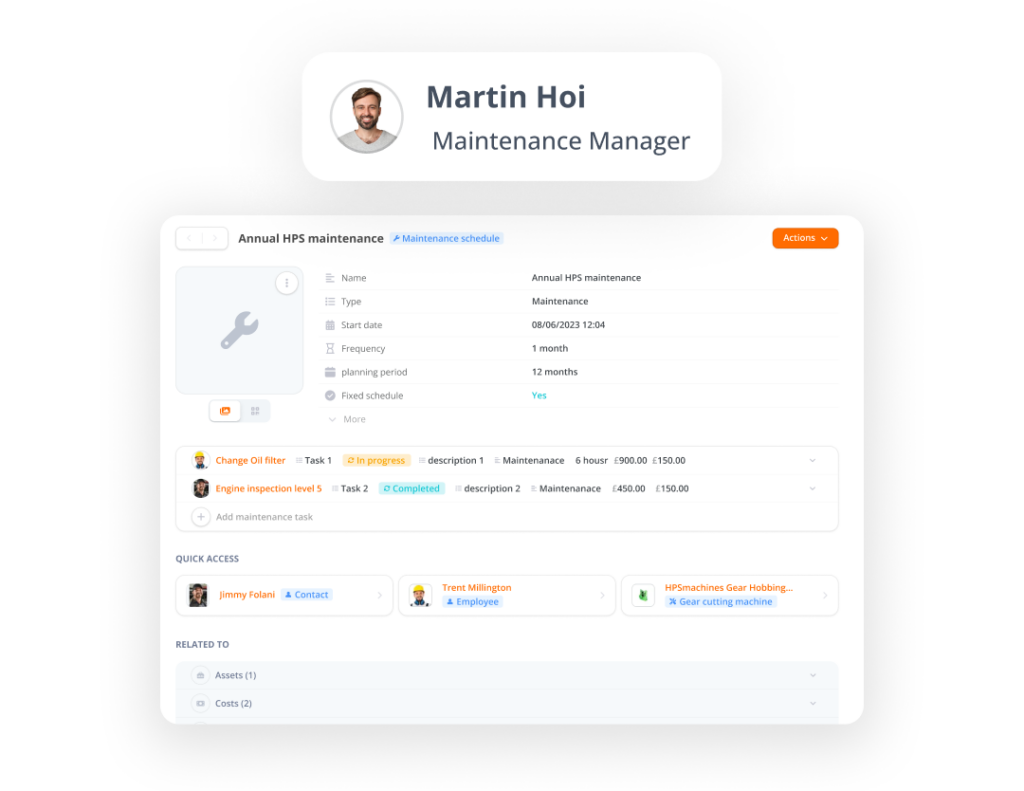
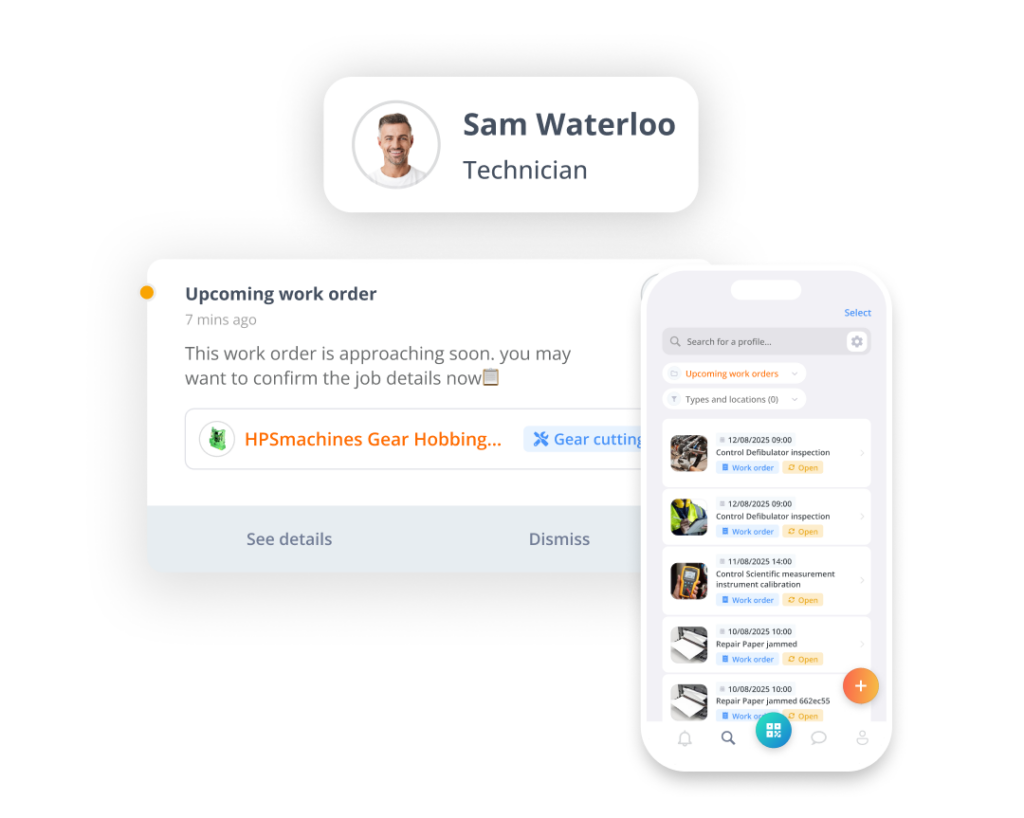
What sets Bulbthings apart here is how maintenance connects to everything else in the platform.
- Suppliers can be brought into the workflow via shared work order links.
- Maintenance costs flow automatically into the Total Cost of Ownership calculations.
- Work orders are visible in planning views alongside asset bookings and assignments.
- Technicians in the field receive notifications on the mobile app and can update task statuses, add photos, and communicate with managers in real time through the built-in conversations feature.
- And the system allows businesses to set budget thresholds and receive notifications to prevent overspending on maintenance.
Mobile capabilities reveal each platform’s priorities
For businesses with field teams, the mobile experience can make or break an asset management platform.
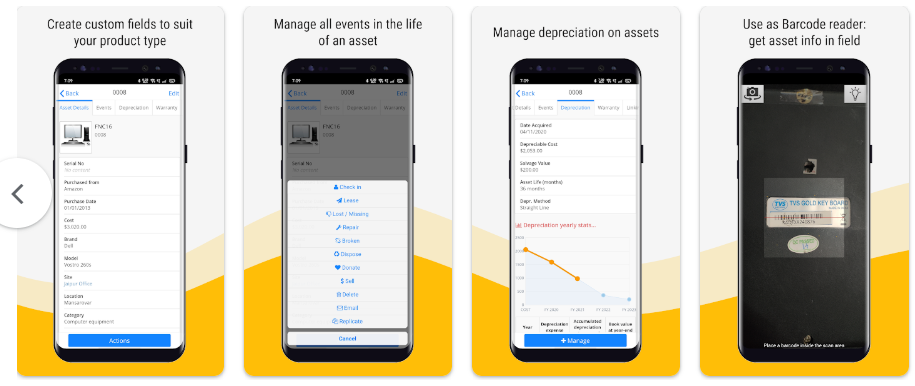
AssetTiger’s mobile apps for iOS and Android provide the core functionality needed for basic field operations: barcode scanning, asset lookup, check-in/check-out, and audit capabilities. The app is functional but has received mixed feedback from users, with some reporting that it can be clunky and slow at times. There is no offline functionality, which means teams in areas with poor connectivity may struggle.
Source: Google Play
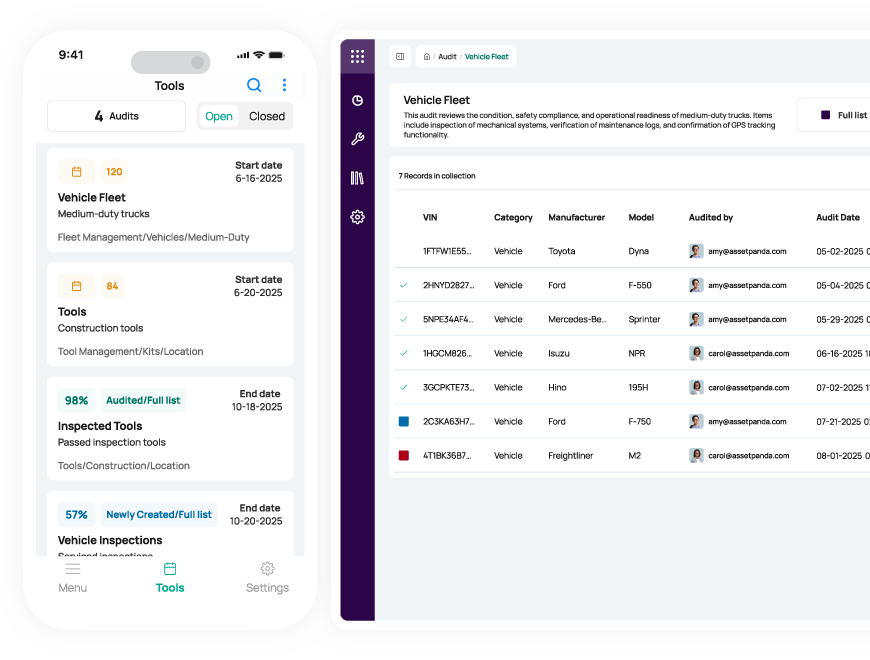
Asset Panda’s mobile apps are more robust, offering functionality that covers many common asset management tasks.
The built-in barcode and QR code scanner eliminates the need for dedicated hardware, and users can attach photos, videos, documents, and voice notes to asset records. The Enterprise plan adds a full offline mode that allows teams to continue working without connectivity, with changes syncing automatically when the connection is restored. GPS tagging captures the device’s location when an action is performed on an asset.
Source: Asset Panda
Bulbthings treats the mobile app as a collaboration hub, not just a data-entry tool.
The app provides access to every asset management feature available on the web platform (except workspace configuration and settings), with functionality tailored to each user’s role and permissions, whether they are managers, technicians, , or inventory managers, customers or suppliers. This includes analytics and reports on mobile.
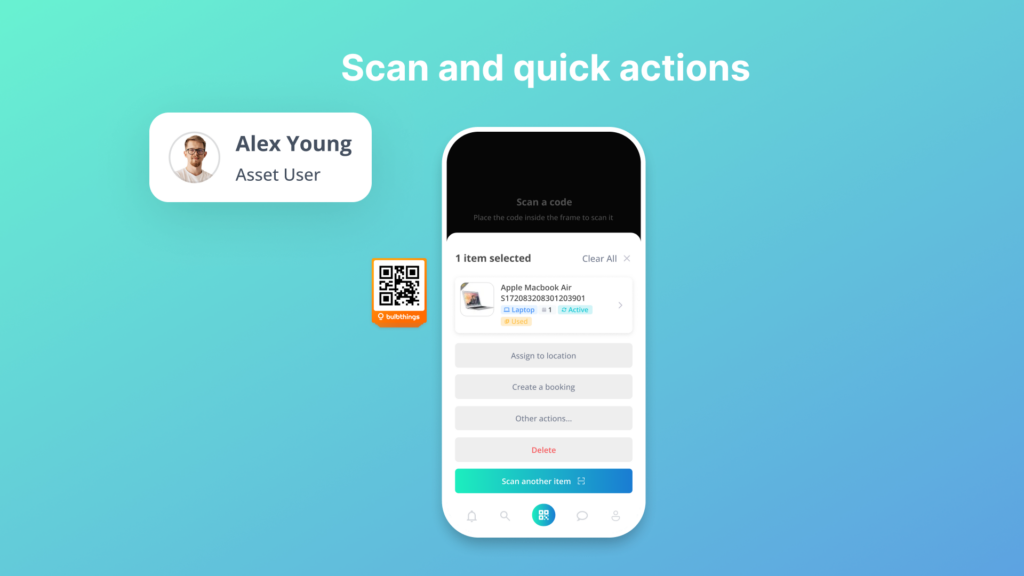
The app supports QR code and NFC scanning, photo capture with Bulb AI integration for instant asset creation, and real-time conversations with mentions and image sharing directly within the context of an asset or work order. Team members, suppliers, and customers can all collaborate from the field.
For fleet management specifically, drivers can log damages, update mileage, and track fuel consumption directly from their mobile devices.
For organizations that need it, optional GPS tracker and IoT sensor integration is available as an add-on for real-time location monitoring of vehicles and high-value equipment. The mobile app has limited offline capabilities, so teams primarily working in connectivity-challenged environments should factor this in.
Pricing models reflect different philosophies
The pricing structures of these platforms tell you a lot about who they’re built for.
AssetTiger leads with affordability.
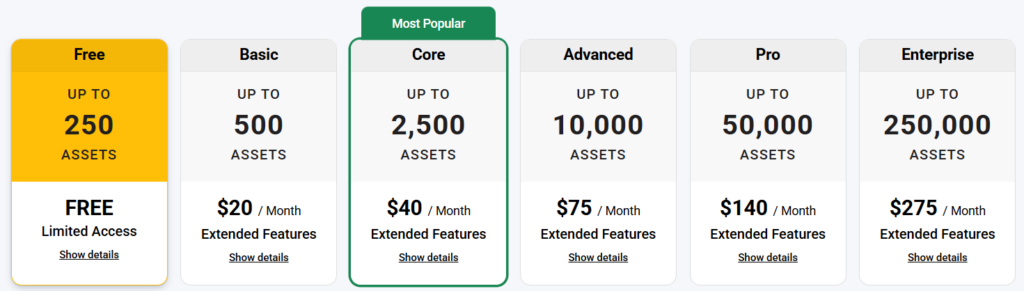
The free plan supports up to 250 assets and 2 users, which is enough for many small teams to operate indefinitely without paying a cent. Paid plans scale based on asset count: $20/month for up to 500 assets, $40/month for up to 2,500, and $75/month for up to 10,000. All paid plans include unlimited users, unlimited sites, and dedicated support.
For organizations watching every dollar, AssetTiger is hard to beat on pure cost.
Asset Panda sits at the premium end.
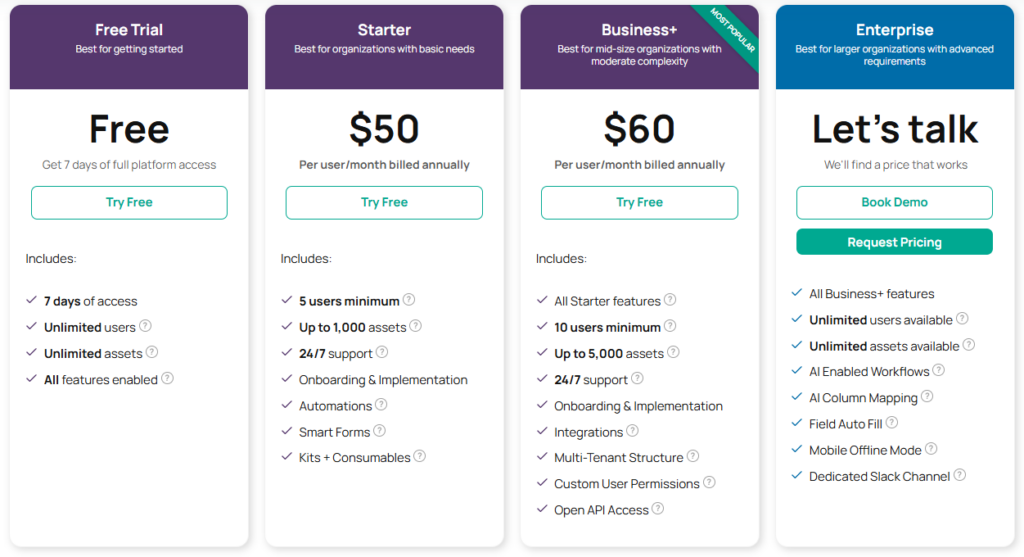
The Starter plan begins at $50 per user per month (billed annually) with a minimum of 5 users and a limit of 1,000 assets, putting the entry point at $250/month or $3,000/year. The Business+ plan jumps to $60 per user per month with a 10-user minimum, adding integrations, multi-tenant structure, and API access.
Enterprise pricing is custom and includes unlimited users and assets, AI features, offline mode, and a dedicated support channel. Collaborator seats for view-only users cost an additional $10 per user per month.
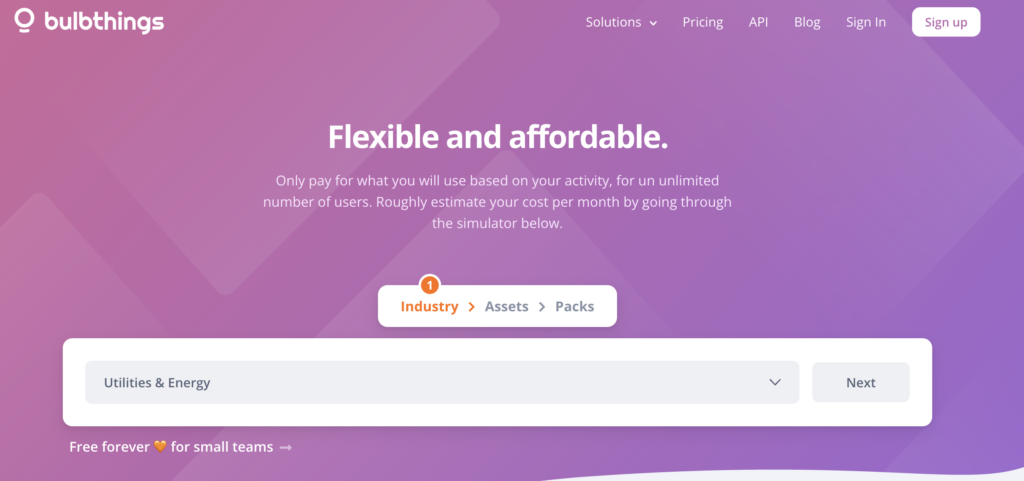
Bulbthings offers a Free Plan for up to 100 assets and 10 users, covering a comprehensive set of features including asset profiles with documents, people profiles, location hierarchy, unlimited custom asset types and fields, asset assignments with full audit trail, a mobile app with QR code and barcode scanning, asset bookings, maintenance requests, preventive maintenance, work order management, public sharing via URL or QR code, and customizable list reports.
For organizations that need more, paid plans take a usage-based approach, with pricing determined by your industry, the number of assets, and the feature packs you select.
The number of users does not affect the price, you can invite your entire team, plus suppliers and customers, at no extra cost. This is particularly significant for businesses that need to collaborate with external stakeholders without worrying about per-seat charges.
Discounts of 15% for annual payments and 10% for semi-annual payments are available, and self-onboarding with online payment is an option for teams that want to get started quickly.
The key comparison: AssetTiger gives you the lowest absolute cost for basic tracking. Asset Panda charges a premium for deep customization. Bulbthings offers comprehensive capabilities, collaboration, stock management, fleet, rental/leasing, maintenance, and financial analytics, at a price point designed for growing mid-sized businesses, with shorter implementation timelines than traditional enterprise solutions.
Reporting and analytics vary dramatically
The value of an asset management platform ultimately depends on the insights it provides.
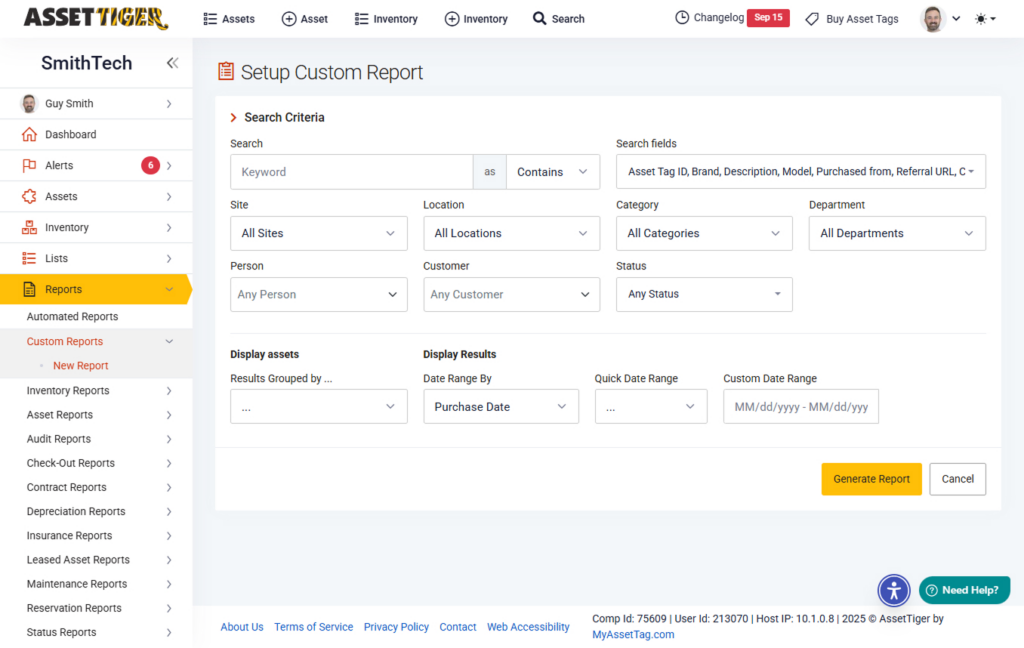
AssetTiger offers predefined and custom reports covering asset status, depreciation, maintenance history, and check-out activity. Reports can be customized and filtered based on various criteria. Users can save and reuse custom report configurations and schedule automated reports via email. It’s sufficient for basic reporting needs but lacks deeper analytical capabilities.
Source: Asset Tiger
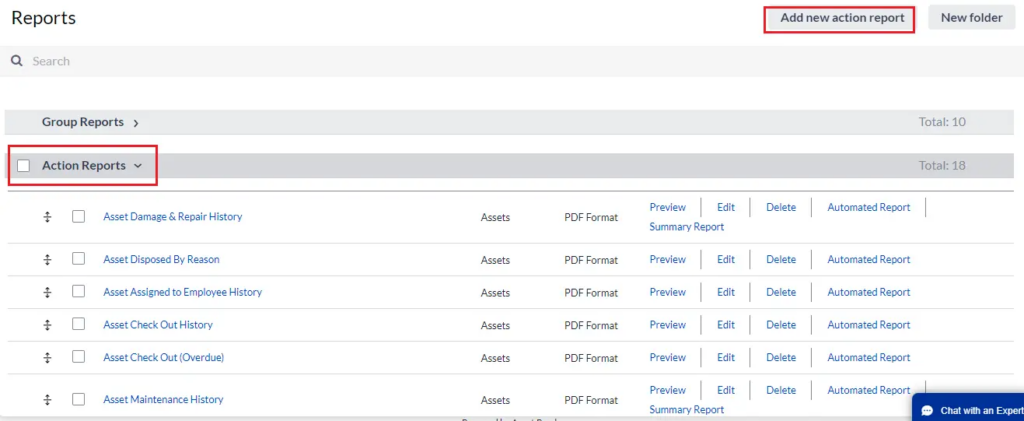
Asset Panda provides a more robust reporting suite with custom report builders, dashboard visualizations (pie charts, bar charts, line charts, record counts), scheduled report delivery, and detailed depreciation calculations supporting five different methods. The platform’s strength in reporting mirrors its strength in customization: powerful but requiring configuration to unlock its full potential.
Source: Asset Panda
Bulbthings approaches analytics from a different angle. Rather than just reporting on what happened, the platform is designed to surface actionable insights. Dynamic reports and dashboards provide real-time visibility into asset utilization, maintenance performance, cost analysis, and stock level trends.

The multiple view options, registers, stock levels, floor maps (indoor), GPS maps (outdoor), and planning views, mean different stakeholders can visualize data in the format most relevant to their role.
Total Cost of Ownership calculations analyze data from multiple sources, including usage, contracts, maintenance costs, and bills, to provide a comprehensive financial picture. Smart alerts proactively notify managers about issues and opportunities. And the Bulb AI agent allows users to generate reports through natural language queries, making data accessible to everyone on the team, not just those comfortable with report builders.
Asset Panda vs AssetTiger vs Bulbthings: Which should you choose?
The right platform depends on your specific situation, priorities, and growth trajectory.
Choose AssetTiger if:
- You have fewer than 250 assets and need a free, functional solution
- Budget is your primary concern and you need the basics covered
- Your asset management needs are straightforward: tracking, check-in/check-out, and simple reporting
- You want a system that’s easy to set up and use without extensive training
- Integration with other business systems is not a priority
Get started with AssetTiger’s free plan for up to 250 assets.
Choose Asset Panda if:
- You need extensive customization to match industry-specific workflows and can afford the time investment to configure and learn the platform
- Your organization (typically larger companies or public entities) has the resources to invest in configuring a powerful platform
- You require deep integration with IT service management tools like Jira, ServiceNow, or Zendesk
- Compliance and detailed audit trails are critical to your operations
- You prefer a traditional app interface and want access to features like offline mode and AI capabilities
Explore Asset Panda’s capabilities with their 7-day free trial.
Choose Bulbthings if:
- You need structured collaboration across internal teams, suppliers, and customers around your assets
- You want instant onboarding with no training required, enabled by a modern interface and a full AI copilot
- You manage consumable stock alongside serialized equipment and need advanced inventory/stock management
- Rental and leasing operations are part of your business model
- You’re a mid-sized company that heavily relies on assets for daily operations or customer services
- You need to manage multiple asset families (equipment, vehicles, consumables, buildings) in one platform
- You need extreme flexibility to adapt the system to your exact workflows, with a Customer Success Team to help enable sophisticated configurations
- You need end-to-end collaborative and mobile asset management workflows with granular roles and permissions
Get started with Bulbthings’ free plan or see how it can digitalize your asset workflows.
The asset management landscape offers clear choices at every level.
AssetTiger is an excellent starting point for small teams watching their budget. Asset Panda delivers deep configurability for larger organizations and public entities with the resources to invest in setup, onboarding, and a steeper learning curve.
But for growing mid-sized businesses that need a modern, collaborative platform that digitalizes asset-centric workflows, bringing teams, suppliers, and customers together around asset tracking, stock management, fleet operations, maintenance, rental/leasing, and financial analytics without the overhead of enterprise software, Bulbthings offers something neither competitor can match: a single system that grows with your business and makes asset management genuinely collaborative and simple.